Carnegie’s Steep Hills Near Tracy
Carnegie SVRA’s hills near Tracy can look manageable from the parking area, then feel much steeper once loose dirt, ruts, and changing traction come into play. This guide explains what to expect on the terrain, how to choose a route for your ATV or UTV, and what to check before you ride so you can plan a safer, less stressful day.
What Carnegie’s terrain is like
Steep slopes and changing traction
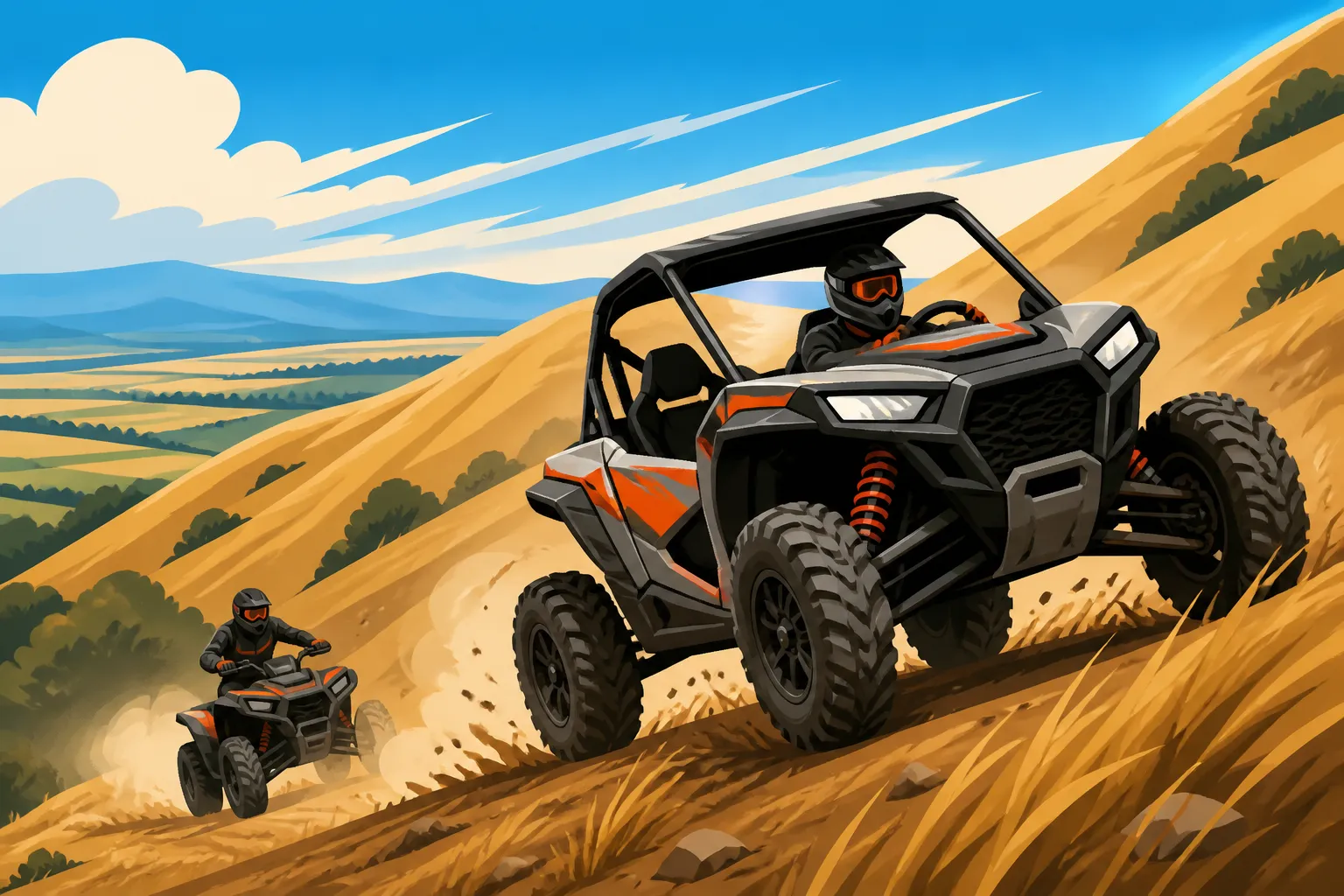
Carnegie State Vehicular Recreation Area sits in the hills east of Livermore, within reach of Tracy and the broader San Joaquin County area. Its landscape is more varied than a flat practice area: riders encounter rolling ground, climbs, descents, and surfaces that can shift from firm to loose. That variation is part of the appeal, but it also means a route that looks easy from a distance may demand more control than expected.
On a slope, traction can change over just a few yards. A dry-looking track may have loose soil on top, while a worn line may be rutted or uneven. A side-by-side’s weight and width can make a narrow or off-camber section feel very different from the same stretch on a smaller quad. Avoid choosing a line simply because another rider took it; their machine, experience, and conditions may be different.
The park’s riding experience is not limited to hills. Carnegie also has other riding features and terrain, so a visit can suit a group with mixed interests. For a broader introduction to the park’s setting and facilities, see Carnegie SVRA in Northern California. If you’re deciding whether the hills are a good fit, think about your experience on similar ground—not just how confident you feel on a level trail.
Why uphill and downhill riding need different plans
Climbing a hill takes steady control. A rider who accelerates abruptly may lose traction, while stopping partway up can make it harder to restart smoothly. Before attempting a climb, look at the visible route, identify a place to turn around if needed, and make sure there is enough room to avoid another rider. If you cannot see the top or what lies beyond it, do not assume the route is clear.
Descending is not simply the reverse of climbing. Gravity can carry a machine faster than the rider expects, especially when the surface is loose or uneven. Keep your speed controlled and avoid sharp steering inputs on a steep grade. If the route looks too steep, rutted, or exposed for your comfort and skill, choosing another route is good judgment—not a failure.
A common mistake is following a group onto a hill before taking time to assess it. If the first rider clears the climb, that does not guarantee the next machine can do so safely. Ask yourself whether you can stop, turn, or recover without blocking the route. For a general framework for judging route difficulty, California Trail Ratings and What They Mean can help you think beyond a trail’s label and consider the actual terrain in front of you.
Choosing a route for your ATV or UTV
Match the ride to your experience
Carnegie’s steep hills can be a poor place to find out that a rider is uncomfortable with elevation, loose surfaces, or uneven ground. Newer riders may be better off beginning on terrain that feels predictable and leaving steeper routes for later, once they have a better sense of how their machine responds. An experienced rider can still get caught out by unfamiliar ground, so confidence should not replace a careful look at the route.
For a family or mixed-skill group, agree on a conservative plan before spreading out. Choose terrain that the least-experienced rider can handle, and make sure everyone knows where the group will stop and regroup. If someone feels uneasy, take that seriously. A group’s plan should adapt to the rider—not pressure them into a climb they do not want to attempt.
Machine type matters, too. A smaller ATV may fit through a tighter line but still require careful balance and throttle control. A side-by-side offers a different seating position and stability profile, but its size can make narrow or uneven routes more challenging. Before choosing a path, consider the machine’s width, turning room, ground clearance, and the driver’s familiarity with it.
Use maps to plan, then confirm on site
A map is useful for understanding the general layout, but it cannot tell you exactly how a hill feels that day. Routes may be affected by recent weather, maintenance, closures, or changing surface conditions. Review California Trail Maps and Where to Get Them before heading out, then check posted signs and park information when you arrive. If a route is marked closed, do not ride around the closure.
Apps such as onX Offroad can help you review mapped routes and orient yourself while planning. Treat any digital map as one planning aid, not permission to ride every line it displays. Confirm that a route is open and appropriate for your machine, and compare what you see on-screen with current park signs. Download or save the information you need before riding, since phone signal and battery life can be unreliable in the field.
A practical map check is simple: identify where you are starting, note the routes that suit your group, and agree on a regrouping point. Keep the plan flexible. If a trail looks steeper or more damaged than expected, turn back or choose another open route rather than trying to make the map fit the ground.
| What you notice | Why it matters | A sensible response |
|---|---|---|
| Loose soil or gravel on a slope | Traction may change quickly under acceleration or braking | Use smooth control and choose a less demanding route if unsure |
| Deep ruts or uneven ground | The machine may be pulled off its intended line | Slow down, assess the full section, and avoid forcing a line |
| A blind crest | You may not see another rider or the route beyond the top | Do not charge over it; approach cautiously and confirm the way is clear |
| A narrow or off-camber section | A wide UTV may have limited room to maneuver | Check machine width and turning space before committing |
| A closure sign or blocked route | The trail is not available for riding | Turn around and use an open, signed route |
| Dust, heat, or fatigue | Judgment and control can deteriorate during the ride | Take a break, hydrate, and shorten the ride if needed |
For more on choosing a suitable first outing, California OHV Areas With Beginner Trails offers a useful comparison point. Carnegie may still work for a beginner if the day is planned around manageable terrain, but a group should not assume every hill is a beginner route.
Prepare for the day and changing conditions
Check access, closures, and weather
Before leaving Tracy, check the park’s official information for access details, operating conditions, and any temporary closures. Conditions can change after rain, maintenance work, or other events. A route shown on a map may not be open when you arrive, and a trail that was comfortable on a previous visit may feel very different after the surface changes.
Rain deserves particular attention. Wet ground can become slippery, while drying conditions may leave ruts or uneven patches. Do not assume that a little moisture makes a steep route easier. Review California Trail Closures After Rain and confirm current access before setting out. If the park or a posted notice closes an area, respect the closure rather than trying to find an informal way around it.
Warm weather also changes the equation. Riding hills takes effort, and heat can affect both people and machines. Bring water, plan breaks, and pay attention to signs of fatigue in yourself and your group. California Riding in Summer Heat covers additional preparation for hot-weather trips. If the day becomes uncomfortable or visibility worsens because of dust, a shorter ride may be the safer choice.
Check your machine and required equipment
A pre-ride inspection is especially worthwhile when you expect climbs, descents, or rough ground. Check tires for obvious damage and suitable pressure, confirm that brakes respond properly, and look for loose components or leaks. Make sure the fuel level is adequate for the planned ride and that any protective equipment is secured. A problem that is easy to manage in the parking area can become much harder to handle on a steep trail.
Bring the required safety equipment and make sure each rider understands the basics of operating their machine. On public riding areas, helmet and other rules may apply; check the requirements for your vehicle and the area before riding. If your route could cross brush-covered land, review California Spark Arrester Rules and ensure your machine meets the applicable requirements.
Keep registration or permit information and other required documents accessible. Do not leave essential paperwork or safety items buried under camping gear. A little organization before the ride can prevent a frustrating scramble at the entrance or during a ranger check. For a general look at what riders should verify before using public land, [California OHV Permits Explained] is a helpful companion.
Ride with space and communicate clearly
On steep or dusty terrain, spacing between machines matters. Riding too close can leave the following rider with little time to react if the person ahead slows, stops, or loses traction. Leave room, keep other riders in sight where practical, and avoid stopping in a place where you block a narrow route or create a hazard for people approaching from either direction.
Agree on simple signals and regrouping points before the group leaves the staging area. In a UTV, confirm that passengers are seated and secured according to the vehicle’s safety requirements. On an ATV, ride within your own ability and do not carry a passenger unless the machine is designed for it and the rules allow it. Clear communication helps prevent the familiar problem of one rider taking a different route while the rest of the group assumes everyone is together.
If someone gets stuck or has a mechanical issue, pause and assess the situation before attempting a recovery. Avoid putting people in the path of a moving vehicle or on an unstable slope. If the terrain makes a recovery risky, seek appropriate assistance rather than turning a minor issue into a more serious one.
Making Carnegie a better ride
Build a conservative itinerary
A good day at Carnegie does not need to include every hill. Start with a route that gives the group time to settle in, check how the machines handle the surface, and gauge everyone’s comfort. Then decide whether to continue to more challenging terrain. This approach is especially useful when some riders are new, the group has different vehicle types, or nobody knows how recent conditions have affected the routes.
Set a turnaround point or a time to reassess before fatigue sets in. It is easy to keep riding because the group has already traveled to the park, but tired riders may make poorer decisions on steep ground. Plan breaks, carry water, and leave enough time to return without rushing. If a route takes longer than expected, shorten the plan rather than hurrying through the final section.
For riders interested in the park’s motorcycle terrain and riding style, Carnegie for Two-Stroke Riders may offer a useful perspective. Whatever you ride, the main principle stays the same: choose open routes that match your machine and experience, check conditions as you go, and be willing to change plans.
Know when to turn around
Turning around is the right call when you cannot see a safe line, when the surface is beyond your comfort level, or when another rider in the group is struggling. It is also sensible if weather, dust, fatigue, or a mechanical issue has changed the day’s conditions. The hill will still be there on a future visit; getting everyone back safely matters more than completing a route.
A helpful question is: “If I need to stop here, do I have a safe way to do it?” If the answer is no, do not commit to the climb or descent. Take another look, give yourself room, and choose a route with a clear exit. This small pause can prevent a rider from becoming committed to terrain they cannot comfortably manage.
Carnegie’s hills are part of what makes the area appealing to riders near Tracy, but they reward patience more than bravado. Check park information, match the route to the least-experienced rider, inspect your machine, and let the ground—not peer pressure—set the pace. With that approach, you can enjoy the challenge while keeping the day manageable for the whole group.
Disclaimer
This article is for general informational purposes only and does not constitute professional advice. Laws, prices and regulations vary by location and change over time. Consult a qualified professional for guidance on your specific situation.