California Riding in January
January can be a great month for California ATV and UTV riding, but winter weather makes planning less predictable. A trail that was open last weekend may be muddy, storm-damaged, snow-covered, or temporarily closed today. This guide helps you choose a region, check conditions, prepare your machine, and make a sensible backup plan before you tow.
Choose a California riding region for January
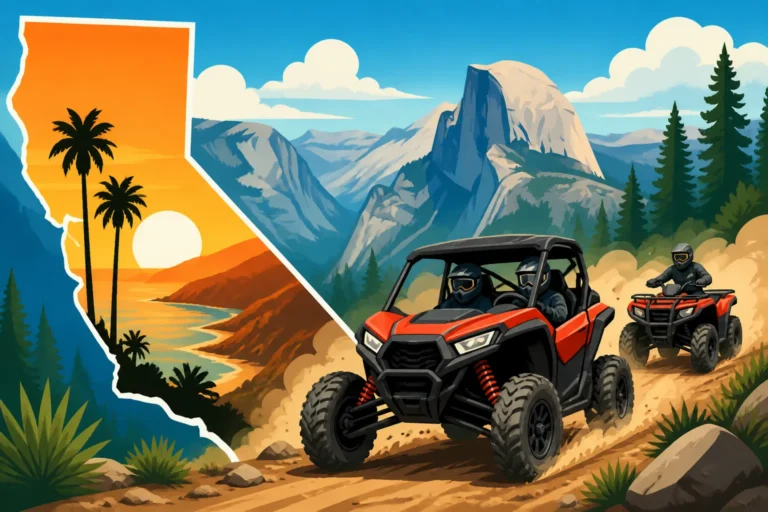
Winter riding conditions vary dramatically across California. The coast, desert, foothills, and mountains can all have very different weather on the same weekend, so choosing a destination is less about finding the warmest place and more about matching your plans to the conditions.
Desert riding offers a winter alternative
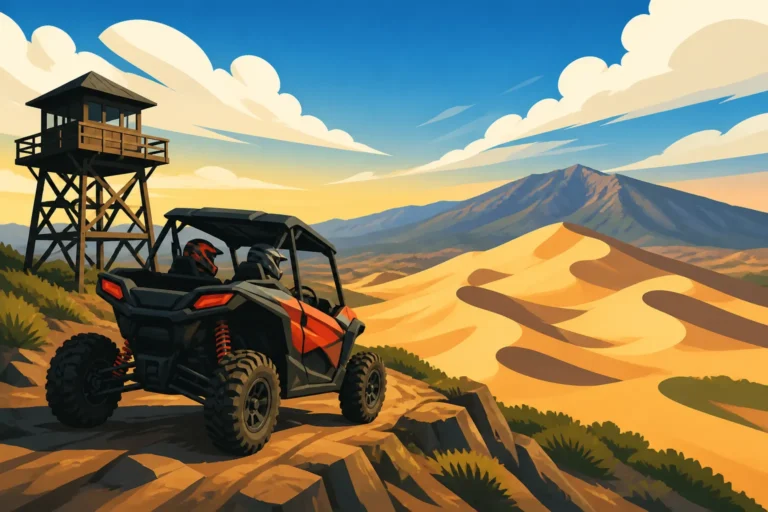
For riders looking to avoid cold mountain weather, California’s desert areas are a natural place to start planning. The Imperial Sand Dunes, including the Glamis area, and Ocotillo Wells are well-known destinations for off-highway recreation. January can bring comfortable daytime riding conditions, but desert weather is not automatically mild: cold mornings, wind, blowing sand, and chilly evenings can all change how a trip feels.
At a dune area, visibility and traffic deserve special attention. A popular weekend can mean more riders on shared routes and busy dunes, while wind can make it harder to see other machines. Pack eye protection, warm layers for early starts, and enough water for the whole outing. Before leaving camp, talk through a meeting point in case your group gets separated.
Glamis is a substantial trip for many riders, so check access and riding requirements before you load the trailer. The guide to [Glamis From October to April] can help you think through the seasonal side of a visit. For a different desert experience, [Ocotillo Wells in Spring] describes a region that riders may also consider when planning a broader desert trip; don’t assume conditions or access will be identical in January.
The desert is not one big open riding area. Routes, boundaries, and permitted riding zones matter. Use a current map, follow posted signs, and avoid treating tire tracks as proof that a route is legal. A tool such as onX Offroad can help with trip planning, but check its map information against the land manager’s current notices and on-the-ground signs.
Coastal, foothill, and mountain areas need a weather check
Coastal riding has its own winter trade-offs. At Oceano Dunes, for example, wet sand, fog, tides, and changing access conditions can affect the day. A sunny forecast inland does not guarantee clear weather at the coast. Check the area’s official notices and access information before traveling, and be prepared to change plans if conditions or closures make riding unsuitable.
In the foothills, winter rain can turn a familiar route into a slippery, rutted, or muddy ride. That can be hard on both the trail and your machine, and it can make recovery more difficult if a vehicle gets stuck. Hollister Hills is one area riders may research, but recent weather and the park’s posted conditions should guide the final decision. See [Hollister Hills After Winter Rain] for more on why post-storm conditions deserve special consideration.
Mountain and national forest routes bring another set of concerns. Snow, ice, fallen branches, and seasonal road restrictions may affect access, sometimes within a short distance of lower, drier areas. A route shown on a map may not be open to motor vehicles or passable in current conditions. For background on planning in these areas, read [California OHV Areas in the National Forests] and [California Trail Maps and Where to Get Them].
Check conditions before you load the trailer
One of the most frustrating parts of a January trip is discovering that the trail is closed after you’ve already driven for hours. Winter conditions can change quickly, so make your destination check part of the trip itself—not something you do once when you first pick a place.
Confirm access, closures, and recent weather
Start with the land manager responsible for the specific riding area. Check official alerts, road and trail closures, recreation notices, and any instructions about storm damage or weather-related restrictions. A general weather forecast can tell you about rain or snow, but it cannot tell you whether a particular trail is open or safe to ride.
Look at recent weather along your actual route, not just the forecast for the nearest town. Conditions can differ between a valley, a ridge, and a high-elevation trailhead. Ask yourself practical questions: Did heavy rain fall in the area? Is snow expected at elevation? Could wind reduce visibility? Are temperatures likely to drop below freezing overnight?
After storms, closures may be used to protect riders, roads, and natural resources. Riding around a closure or taking an unmarked bypass can create a safety problem and damage land. Before you set out, review [California Trail Closures After Rain] and [California OHV Areas After a Storm] for useful planning context.
Build a backup into your weekend. If your first choice is muddy, closed, or snowed in, choose a second location with different elevation or terrain—and check its conditions too. A backup is only useful if it is open, accessible, and appropriate for your machine.
Match the map to the land and the ride
A map helps with planning, but it is not a substitute for checking the rules at the riding area. Pay attention to the land boundary, designated routes, trail difficulty, and any notes about vehicle types or seasonal access. If you use onX Offroad to explore possible routes, confirm your planned route with official information before riding. Save the relevant map details ahead of time, especially if you expect limited cell service.
Think about your group’s experience as well as the route’s distance. A steep, narrow, or rocky trail can feel very different to a newer rider than it does to someone familiar with the area. For a beginner outing, choose a route with room to stop, turn around, and regroup. [Hungry Valley Trails for Beginners] offers a useful example of the kind of trail considerations to review when choosing a route for a mixed-experience group.
Share your plan with someone who is not riding with you. Include the riding area, intended route or general zone, who is in the group, and when you expect to return. If the plan changes, let that person know when you can. A paper map or offline map can be a practical backup if a phone loses signal or battery power.
| January concern | What to check before the trip | Practical response |
|---|---|---|
| Recent rain | Official closures, trail conditions, and access roads | Postpone muddy routes or choose a confirmed open alternative |
| Snow or ice | Elevation, overnight lows, and road access | Avoid routes that require travel through unsafe or restricted conditions |
| Wind or blowing sand | Local forecast and visibility risks | Bring eye protection and be ready to stop if visibility deteriorates |
| Limited cell service | Map access and group communication plan | Save maps in advance and agree on a meeting point |
| Busy riding area | Parking, access instructions, and group spacing | Ride predictably, keep sight of your group, and avoid blind crests |
Prepare your ATV or UTV and your group
A January ride can start cold, warm up in the afternoon, and turn chilly again after sunset. Preparing for those shifts takes more than throwing an extra sweatshirt in the truck. Think through the machine, the route, your clothing, and what you would do if the day takes longer than expected.
Inspect the machine for winter conditions
Give your ATV or UTV a basic pre-ride inspection before departure. Check tires for damage and appropriate pressure, brakes, lights, steering, controls, and visible fluid leaks. Make sure the battery is secure and the machine starts reliably. Follow the owner’s manual for maintenance and cold-weather operation rather than guessing at adjustments.
Dust, mud, and water can create different problems depending on where you ride. At a sandy destination, make sure protective equipment is in good shape and that your machine is ready for the terrain. After a muddy ride, clean the machine and inspect areas where debris can collect. If you encounter water or mud deeper than expected, don’t assume the route ahead is equally safe.
Carry basic recovery and repair supplies suited to your machine and the trip. That might include a tire repair kit, tools, a tow strap, and a way to communicate for help. The right kit depends on the vehicle and the route, so avoid carrying equipment you don’t know how to use. If your group includes multiple vehicles, make sure everyone knows where the recovery gear is and who is comfortable operating it.
Leave room in your schedule for a slower pace. Cold hands, muddy sections, unfamiliar terrain, or a minor mechanical issue can turn a short route into a long one. A ride plan that depends on finishing just before dark is a poor fit for a January day.
Dress for changing temperatures and make a group plan
Use layers that you can adjust as the day changes. A warm base layer, a wind-resistant outer layer, gloves that still let you control the machine, and suitable eye protection can make a ride more comfortable. For dune riding, goggles can help with blowing sand; in colder or wetter conditions, prioritize clothing that keeps you warm if you stop moving.
Bring water and food even when the air feels cool. Riders may not notice thirst as readily in cold weather, and a longer-than-planned outing can make a small snack supply inadequate. Keep a warm layer available in the tow vehicle for the ride back, and consider packing an extra pair of gloves or socks if your plans include damp conditions.
Before riding, agree on simple group rules: who leads, who rides last, how often you regroup, and what to do if someone has a problem. Keep enough distance to react to sudden stops, and slow down near blind turns, crests, and busy intersections. On a UTV outing, confirm that passengers understand how to sit securely and follow the driver’s instructions.
For family trips, choose terrain and ride length that match the least experienced person in the group. A child or new rider may need more frequent breaks, and a route that looks easy on a map can feel demanding in cold, wet, or windy weather. If conditions are uncomfortable or visibility is poor, shortening the ride is a sensible decision, not a failed trip.
Make a safer January ride plan
Winter recreation rewards flexibility. A good plan accounts for the weather, the official rules, and the possibility that the conditions you find will differ from what you expected at home.
Use a simple go-or-change checklist
Before heading out, work through the following checks:
- Confirm the area is open. Review official notices for the specific riding area, trail system, and access road.
- Check the local forecast. Look at conditions for the riding area and the route there, including wind, precipitation, and overnight temperatures.
- Review the route. Confirm that it is open to your type of vehicle and suitable for the group’s experience.
- Prepare navigation. Save maps or route details before losing service, and carry a backup plan.
- Inspect the machine. Check the basics and bring recovery equipment appropriate to the ride.
- Pack for delays. Bring layers, water, food, and a way to contact someone if plans change.
- Set a turnaround point. Decide in advance when you will turn back if weather, trail conditions, or daylight become a concern.
If rain has left a route soft or rutted, take a moment to consider what riding there may do to the trail. Even where access has not been formally closed, conditions may make a route a poor choice. [California Riding in Winter] provides broader seasonal context, while [California's State Vehicular Recreation Areas] can help you identify managed riding areas to research for a future trip.
Keep the day flexible
When you arrive, take time to observe conditions before unloading. Look for standing water, mud, ice, poor visibility, or signs that the route is more difficult than expected. Ask staff or check posted information when available. If the actual conditions don’t match your group’s ability or equipment, choose another route or call the ride off.
Use onX Offroad or another mapping resource as one part of your preparation—not as permission to cross a closed route, private property, or an area where motorized travel is prohibited. Follow signs and instructions at the site, and be ready to turn around even if your planned route looked clear on a screen.
A January ride is most enjoyable when you can adapt without feeling pressured to “make the trip worth it” at any cost. Choose a safer route, take a longer break, or head back early if the weather or terrain turns. That flexibility helps protect your group, your machine, and the riding area—and gives you a better chance of enjoying the next trip, too.
Disclaimer
This article is for general informational purposes only and does not constitute professional advice. Laws, prices and regulations vary by location and change over time. Consult a qualified professional for guidance on your specific situation.