California Dune Riding Areas
California’s dune-riding choices range from Oceano’s coastal sand to the vast Imperial Sand Dunes near Glamis, and each place has its own access rules, terrain, and preparation needs. This guide compares the main California areas, explains what to check before unloading, and helps you choose a destination that fits your machine, experience, and riding plans.
California’s Main Dune Riding Areas
Oceano Dunes offers a coastal ride
Oceano Dunes SVRA, near Pismo Beach, is California’s distinctive option for riding on coastal sand. Its setting is part of the appeal: you can experience open dunes and, where access is allowed, ride on the beach. That mix also means the boundaries between riding areas, beach access, and protected habitat matter. Don’t assume that a route you used on an earlier visit is still open. Check the park’s current information and posted signs before riding.
The surface and conditions can change with tides, wind, weather, and park operations. A route that looks straightforward from the staging area may lead toward soft sand, water, or a restricted section. Plan your ride around the areas currently designated for vehicle use, and turn back if conditions or signs make the boundary unclear. The guide to [Oceano Dunes: California's Only Sand Beach Ride] can help you get familiar with what makes the area different from inland dune destinations.
Oceano is also a place where logistics can affect your day. Consider whether you’re bringing your own machine or arranging a rental, where you’ll unload, and how you’ll get back to your vehicle if your group separates. Fog can reduce visibility, and a busy riding area calls for extra care when crossing tracks or approaching crests. For beach-specific details, see [Driving Onto the Sand at Oceano] and [Tides and Riding the Oceano Sand].
The Imperial Sand Dunes suit a bigger desert trip
The Imperial Sand Dunes Recreation Area, often associated with Glamis, offers a very different experience: an extensive desert landscape with dunes, open sand, and named areas that riders use as landmarks when planning a trip. It may suit groups looking for a longer outing or a camping-centered weekend, but the scale can be intimidating if you arrive without a route plan. Study the area before you go, and agree on a meeting place in case your group gets separated.
Glamis is not one small riding loop. Conditions and crowd levels can vary across the dunes, and your intended route should match your group’s ability, machine, fuel range, and recovery equipment. Check access information for the particular area you plan to visit rather than treating every part of the Imperial Sand Dunes as interchangeable. Start with [Glamis and the Imperial Sand Dunes] and [California Rules for Riding Imperial Sand Dunes] to understand the area and the rules that may apply.
Within the broader Imperial Sand Dunes region, places such as Gecko Road, Gordon’s Well, Buttercup, and Mammoth Wash can offer different starting points and trip styles. They are not guaranteed to have the same facilities, access, or riding conditions. Before picking a base, think about your group’s experience, where you plan to camp, and how far you’re comfortable traveling over sand. These guides can help you compare options: [Gecko Road, Glamis and Buttercup] and [Mammoth Wash for a Quieter Ride].
Heber Dunes is a smaller-area option
Heber Dunes in Imperial County can be worth considering if you’re looking for a smaller designated riding area rather than planning around a vast dune field. Its scale may make it easier to organize a short outing, but smaller doesn’t mean that rules or conditions can be ignored. Confirm that the area is open, identify where vehicles may be operated, and check what facilities are available before you set out.
It’s also useful to be precise about what you mean by “dune riding.” Some areas have sand features but aren’t a substitute for a large open dune destination. If your group expects expansive riding terrain, compare the area against your expectations before committing to a long drive. For location-specific details, see [Heber Dunes in California's Imperial County].
| Area | Riding experience | Good fit for | What to check before leaving |
|---|---|---|---|
| Oceano Dunes SVRA | Coastal sand and dunes, with access depending on current conditions and rules | Riders who want a beach-and-dune setting | Current access, boundaries, tides, weather, and staging arrangements |
| Imperial Sand Dunes near Glamis | Large desert dune region with multiple named areas | Groups planning a larger ride or camping trip | Permit requirements, chosen access point, closures, camping, and route plan |
| Heber Dunes | Smaller designated riding area in Imperial County | Riders looking for a more contained outing | Operating status, riding boundaries, facilities, and machine requirements |
Match the Riding Area to Your Group
Choose based on terrain and experience
The most impressive-looking destination isn’t always the best first ride. A newer rider may feel more comfortable starting with a simple plan, staying within sight of the group, and avoiding steep faces or unfamiliar routes. Experienced riders may want more varied terrain, but they still need to account for changing sand, visibility, and the location of other riders. In either case, pick a route that leaves room to turn around without forcing anyone into terrain they aren’t ready to handle.
Think about the whole group, not just the most confident rider. If one person is new to sand, build in time for practice and keep the first ride modest. A long loop that sounds exciting at the camp table can become stressful when someone gets stuck, runs low on fuel, or loses sight of the group. For a first outing, agree on a conservative turnaround point and keep the pace comfortable.
Your machine matters too. A quad, dirt bike, and side-by-side may each handle sand differently, and their size affects where they can safely travel. Check for width restrictions, vehicle rules, and any area-specific requirements before loading up. If you’re riding a UTV, don’t assume every dune route is appropriate for a wider machine. Guides such as [California Trails for a Wide Side-by-Side] can help you think through that fit.
Plan around distance, camping, and support
A day ride and a weekend in the dunes require different preparation. For a day trip, estimate the time needed to unload, inspect machines, ride, and return before dark. For a camping trip, confirm the area’s camping rules and plan where your group will meet if people arrive separately. On a large landscape, “we’ll find you at camp” is not a reliable plan if you haven’t settled on a specific location and a way to communicate.
Consider how you’ll respond to a minor breakdown. A puncture, loose part, or machine stuck in soft sand can turn into a lengthy recovery if the group has no basic tools or nobody knows where you are. Carry enough water, supplies, and fuel for the route you actually intend to ride, not just the shortest route on your map. If a rider needs to stop, make sure the rest of the group knows where to wait and how to regroup.
A mapping app such as onX Offroad can help you review terrain and plan a route before the trip, especially when riders are unfamiliar with the area. Use it as a planning aid, not permission to ride anywhere the screen shows a track. Compare your route with current official maps, signs, and closure information. A line on a map may not reflect a temporary restriction, a private boundary, or a route that is unsuitable for your vehicle.
Check Permits, Registration, and Area Rules
Confirm what your machine needs
Before towing to a California riding area, check that your machine’s identification and registration are appropriate for where you intend to ride. California OHV requirements can depend on the vehicle and the rider’s circumstances. A sticker, registration, or permit that works in one situation may not satisfy the requirements for another. If you’re unsure about the basics, start with [California OHV Permits Explained] and [Do You Need a Green Sticker on Private Land?].
Visitors bringing a machine from another state should not assume that an out-of-state plate or decal automatically covers every California requirement. Review the rules that apply to your registration and intended riding area well ahead of the trip. The information in [California's Nonresident OHV Use Permit] can help nonresident riders understand what to investigate, including whether an exception or permit applies to them.
At the Imperial Sand Dunes, check for area-specific permit requirements as well as general OHV requirements. Those can be separate questions: having the right identification for your machine does not necessarily mean you’ve completed every step required to use a particular recreation area. Confirm requirements for the current season and the specific place you plan to enter. If you’re towing, check whether any rules apply to the tow vehicle as well.
Use official maps to verify access
A trail line or route suggested by a friend can be useful as a starting point, but it isn’t proof that riding is allowed. Access may change because of closures, habitat protection, land-management decisions, or safety concerns. Before departing, look for current information from the agency responsible for the area and check the signs at the site. If you find conflicting directions, follow posted restrictions and ask an official contact for clarification rather than guessing.
You can use onX Offroad to get oriented and identify possible routes, then compare those routes with official area maps and notices. Make a plan that works even if a route is closed: choose a backup area, leave extra time, and tell someone where you expect to ride. This is especially helpful when a group has driven a long distance and feels pressure to make the original plan work.
For broader mapping preparation, see [California Trail Maps and Where to Get Them]. For a first-time trip, mark your starting point, likely turnarounds, and meeting location before you unload. Save or carry the information in a form you can use if your phone loses service. Navigation tools are helpful, but they don’t replace local signs or the responsibility to stay within designated riding areas.
Ride Safely on California Sand
Prepare for visibility and changing conditions
Dunes can hide other riders from view. A crest that looks empty from below may conceal traffic on the other side, so approach carefully and avoid charging over the top without checking what lies beyond it. Keep a safe distance from other machines, slow down in crowded areas, and make deliberate choices when crossing tracks. At Oceano, changing coastal conditions add another layer: fog, tides, and soft sand can affect visibility and route options.
If you’re riding in a group, decide in advance how you’ll handle stops and separation. Choose a regrouping point and make sure everyone knows what to do if they lose sight of the lead rider. Avoid splitting into separate routes without agreeing on a time and place to meet. These small decisions can prevent a minor wrong turn from becoming a long search in unfamiliar terrain.
Take the time to check your machine before riding. Look for loose parts or obvious damage, confirm that your equipment is ready for the conditions, and make sure each rider understands how to stop and signal the group. Carry water and dress for the weather, including changes between a hot afternoon and cooler evening conditions. On desert trips, plan conservatively if temperatures, wind, or dust make riding harder than expected.
Follow dune-specific equipment and riding rules
Dune areas may have requirements for safety equipment, permits, or how machines are operated. Check the rules for your destination and for each rider, especially when children or first-time riders are involved. Don’t rely on what was required at a different park or on a prior trip; requirements can depend on location and circumstances.
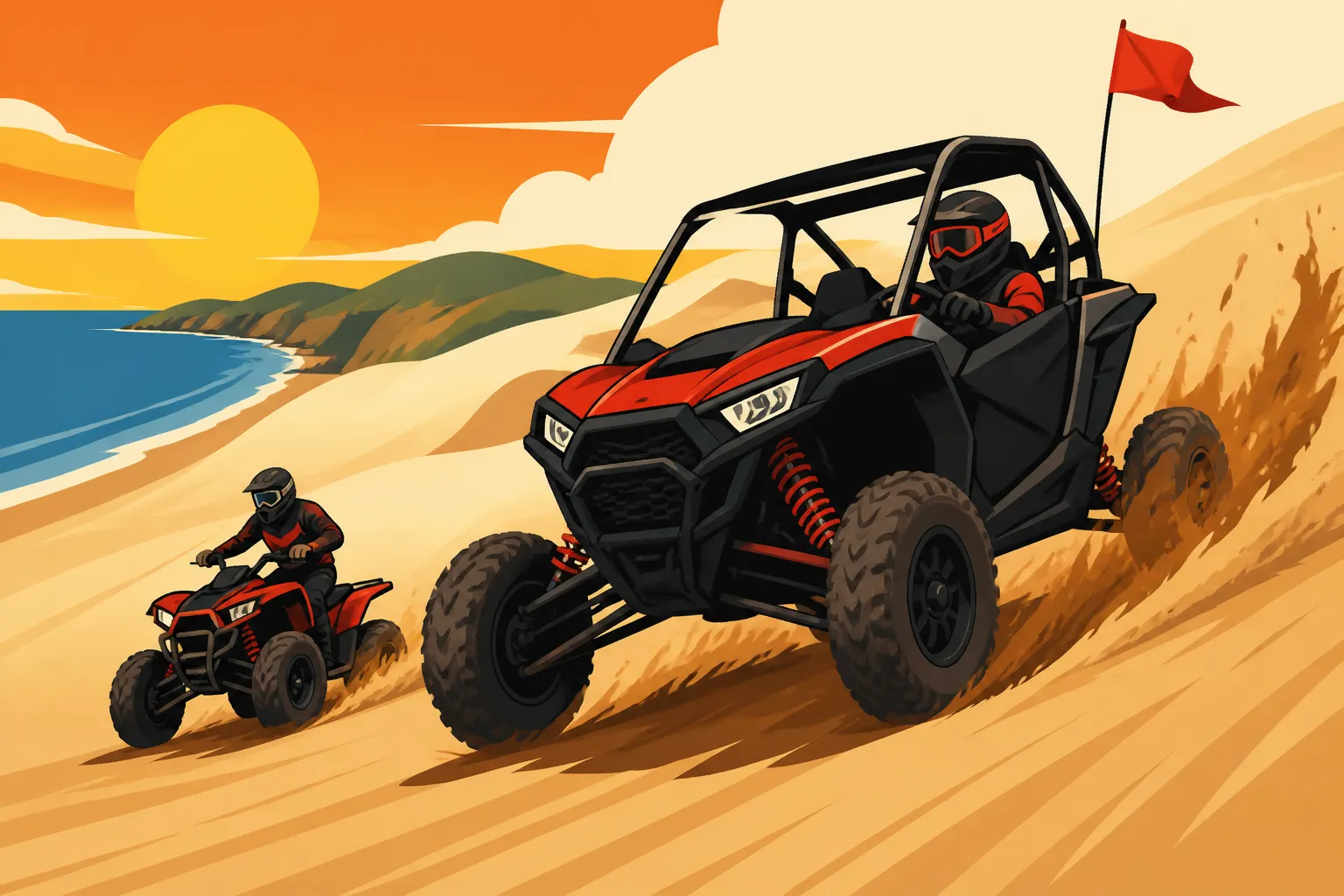
Some dune areas require a whip and flag so riders can see one another over the sand. Make sure the equipment meets the applicable requirements and is securely attached before riding. A flag is a visibility aid, not a substitute for slowing down at crests or watching for other people. Review [California Dune Flag Requirements] and [California Whip Height Requirements] before packing your machine.
Finally, treat closures and boundaries as part of the ride plan, not as obstacles to work around. Riding around a barrier or into a signed restricted area can create safety problems and may harm places that are being protected. When a route is closed, use an approved alternative or call it a day. A little advance checking—and a flexible plan—can make the difference between an enjoyable trip and a frustrating one.
Disclaimer
This article is for general informational purposes only and does not constitute professional advice. Laws, prices and regulations vary by location and change over time. Consult a qualified professional for guidance on your specific situation.