Camping Near a California OHV Area
A California riding weekend can unravel quickly when the campsite is miles from the legal riding area, the trailer will not fit, or the water and waste facilities you expected are not available. This guide explains how to choose a camp style, match it to an OHV destination, plan for your ATV or UTV, and avoid common access and safety headaches.
Choose a camping style that fits your ride
Developed campgrounds for predictable facilities
A developed campground is often the easiest starting point for a first trip, a family outing, or a group with several trailers. You may have defined sites, restrooms, potable water, and an established check-in process, though the actual facilities vary by location. Confirm what is available at the specific campground rather than assuming that every site has the same amenities.
The tradeoff is less flexibility. Sites can have limits on vehicle length, number of vehicles, generators, fires, or quiet hours. A roomy motorhome site may still be awkward for a truck, toy hauler, and an extra ATV trailer. Before reserving, check the site dimensions and rules, and ask whether the trailer can remain at the site while you ride.
Developed camping may also put you near a staging area or trail access, but “near” does not always mean you can ride directly from camp. Some locations require you to tow your machine to a designated staging area. Review [Camping at a California SVRA] and the individual park’s rules so you know where riding can begin and where vehicles must stay parked.
Dispersed camping for more space and independence
Dispersed camping can suit riders who want a quieter, more self-contained base, especially in parts of the desert or national forests where camping is permitted. It usually means fewer services and more responsibility: bring what you need, pack out waste, and be prepared to manage uneven ground, wind, dust, and limited cell coverage.
The biggest mistake is treating open-looking land as automatically available for camping. Land ownership and designated-use rules can change over a short distance. A flat patch beside a route might be private land, a closed area, a sensitive habitat, or simply outside the permitted camping zone. Check the land manager’s map and restrictions before setting up.
Use onX Offroad as one planning reference when comparing routes and potential camping areas, then confirm boundaries and current access with the responsible agency. A phone map is not permission to camp or ride. Download the information you need before leaving coverage, and carry a backup map or written directions if you are traveling into remote terrain.
Match the campsite to the group
Think about who is coming before choosing a campground. A group with young children may need nearby restrooms, shade, and a simple walk to the campsite. A large group of friends may care more about trailer access, room to unload, and clear rules about generators and late-night noise. A remote site can be peaceful, but it can make small problems—like a dead battery or an empty water container—much harder to solve.
Also consider how many machines and tow vehicles the group is bringing. Some campgrounds restrict extra vehicles or require them to use a separate parking area. If everyone arrives in a truck with a trailer, the campsite may feel much tighter than it did when one person booked it.
Talk through expectations before departure: who is bringing drinking water, recovery gear, tools, first aid supplies, and lighting? Agree on a meeting point if riders get separated. A little coordination at home can prevent the familiar campsite argument over who packed the extension cord, who has the map, and whether anyone brought enough water.
Match the destination to the kind of trip you want
Coast and beach riding near Oceano
Oceano Dunes is a distinctive choice because riding and camping can be closely connected to the beach experience. That setting also calls for careful planning. Sand, wind, fog, tides, and changing access conditions affect the day in ways that do not apply to a typical forest campground. Read [Oceano Dunes: California's Only Sand Beach Ride] before making plans, and check the managing agency’s current information for access and camping rules.
A beach campsite can be exposed. Wind may blow sand into cooking areas, bedding, and equipment, while fog can reduce visibility and make it harder to see other riders. Pack secure containers, warm layers, eye protection, and a plan for keeping sleeping gear clean and dry. Keep food and loose items contained rather than leaving them where wind can scatter them.
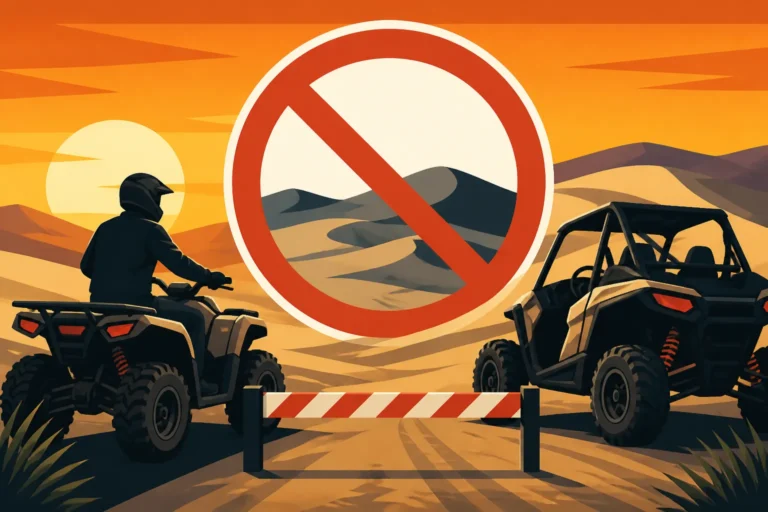
Do not assume that every part of the beach is open for every use. Boundaries, habitat protections, and temporary restrictions can affect where people may camp or ride. Keep your machine on authorized routes, follow posted instructions, and respect barriers and fenced areas. If you are renting rather than bringing your own ATV or UTV, confirm the rental company’s allowed riding area and return logistics before you book.
Desert camping around Glamis and Ocotillo Wells
Desert destinations offer expansive riding, but the campsite can be harsh if you arrive unprepared. Around Glamis, wind, soft sand, dust, and busy holiday periods can shape the experience as much as the riding itself. [Glamis and the Imperial Sand Dunes] is a useful starting point for understanding the area; verify the rules for the particular access point and camping location you plan to use.
At a desert camp, shade and hydration are basic planning needs, not nice extras. Bring more drinking water than you expect to use, secure canopies properly, and keep a way to monitor changing weather. A gust can turn an unsecured shade structure into a hazard, and a vehicle can become difficult to recover if it is parked in soft sand without a practical exit plan.
Ocotillo Wells offers a different desert feel, but do not assume the same rules or facilities apply at every staging area. Identify your camp location, fuel plan, nearest services, and meeting point before the group spreads out. Use [California Trail Closures to Check First] to build the habit of checking closures and restrictions before each trip, especially when weather or land-management decisions could affect access.
Foothill and forest-area trips
For riders who prefer trees, varied terrain, or a less dune-focused weekend, consider areas such as Hollister Hills or Hungry Valley. The character of a trip can change with elevation, weather, and trail conditions, so match your machine and the group’s experience to the terrain. Start with [Hollister Hills Day Use and Camping] or [Hungry Valley's Designated Campgrounds] and confirm which facilities and riding areas are open for your planned dates.
In forested areas, a campsite may sit near roads that are open to regular vehicles but not to OHVs. A road on a map is not automatically an approved riding route. Use official motor-vehicle maps and posted signs to distinguish vehicle access roads from OHV routes. [California OHV Areas in the National Forests] can help you think through how forest access differs from riding within a designated recreation area.
Weather can also change the plan. Rain may make trails muddy or lead to closures, while cold nights can catch desert-oriented campers off guard at higher elevations. Keep a backup activity or alternate riding area in mind. onX Offroad can help you review route options during trip planning, but compare the information with the land manager’s maps and notices before you ride.
| Camping style | Often suits | Plan for | Check before booking |
|---|---|---|---|
| Developed campground | Families, first-time visitors, groups wanting established facilities | Site limits, quiet hours, shared facilities | Site size, water, restrooms, vehicle and trailer rules |
| Dispersed camping | Self-contained campers seeking more space | No services, remote access, land boundaries | Whether camping is allowed, closures, waste rules |
| Beach or dune camping | Riders looking for a coastal or sand-riding trip | Wind, sand, visibility, changing access | Camping zones, riding boundaries, local conditions |
| Forest-area campground | Riders seeking foothill or forest terrain | Weather shifts, route restrictions, muddy conditions | Trail status, access roads, fire rules, elevation |
Plan the campsite logistics before you leave
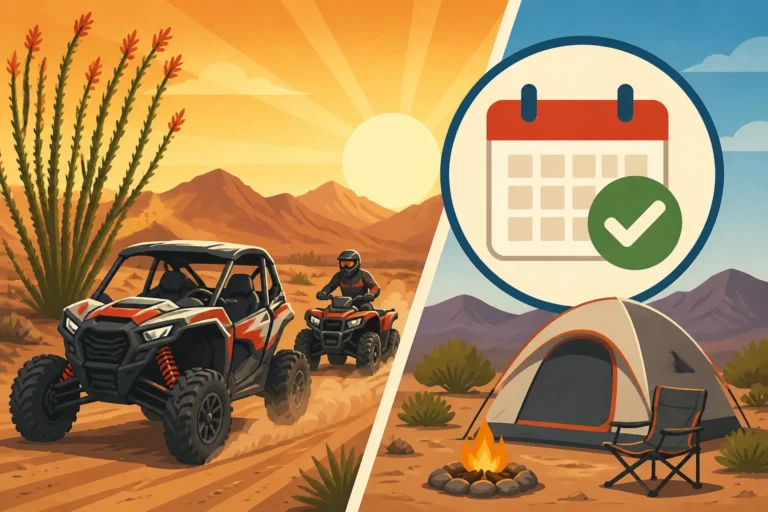
Check reservations, seasons, and access details
Start with the land manager’s information for the exact campground or staging area. Do not rely only on a search result, an old trip report, or what a friend remembers from last season. Facilities, access, reservation procedures, and restrictions can vary by site and may change. If a campground has a reservation system, read the rules for arrival times, cancellations, vehicle limits, and site occupancy.
For a destination inside a State Vehicular Recreation Area, look at the park’s information as well as the campsite details. The park may have separate rules for camping, vehicle staging, riding hours, and trail access. [California's State Vehicular Recreation Areas] provides broader context, but the individual park’s instructions should guide your plans.
Have a backup if your first choice is full or unavailable. Choose an alternate campground or a different riding area before the trip, rather than improvising after a long drive with a loaded trailer. Keep the backup realistic: a nearby site may not allow the same kind of riding, and a campsite outside the riding area may require trailering every machine to the entrance.
Make sure your truck, trailer, and machine fit
Measure the full setup, not just the trailer. Include the tow vehicle, trailer, machine width, and space needed to unload or turn around. A narrow entrance, soft shoulder, steep approach, or tight site can make a trip stressful even when the campground technically accepts trailers. If you have a wide side-by-side, check for width restrictions on trails as well as space at camp.
Decide where machines will be parked overnight and whether they need to be secured. Bring locks or other security measures appropriate to your equipment, and keep keys and essential documents somewhere they will not be lost in camp. At busy destinations, avoid leaving machines or riding gear scattered across shared areas where they could block traffic or create a trip hazard.
Plan the route from camp to the riding area. If the campground is not connected to an authorized OHV route, you may need to trailer the machine. Never assume that a public road, campground lane, or connecting track is legal for an unregistered or off-highway machine. Check the specific route rules, and use [California Trail Maps and Where to Get Them] as a reminder to consult authoritative maps instead of relying on a vague pin on a phone.
Bring water, waste supplies, and the right equipment
Facility labels can be misleading if you do not confirm what they mean. A campground may have toilets but no showers, or water may be available for washing but not designated as potable. Carry enough drinking water for the group, including a reserve for delays, heat, or a ride that takes longer than expected. If you expect to use a water source, confirm whether it is available and safe for drinking.
Think about waste before packing. Remote camps may not have trash service, and not every site has a dump station. Bring bags for rubbish, a plan for human waste where facilities are absent, and supplies for cleaning up spills. Leave the campsite as you found it, and do not dump gray water or waste in a place where it is prohibited.
Facilities matter differently to different groups. A family with small children or a rider with mobility needs may want to prioritize accessible paths and nearby restrooms. A self-contained camper may be comfortable with fewer amenities. For a quick comparison, [California OHV Areas With Vault Toilets] can help you identify a practical question to ask when researching a destination: what sanitation is actually available at the place you intend to camp?
Camp and ride responsibly
Keep camping, staging, and riding in their designated places
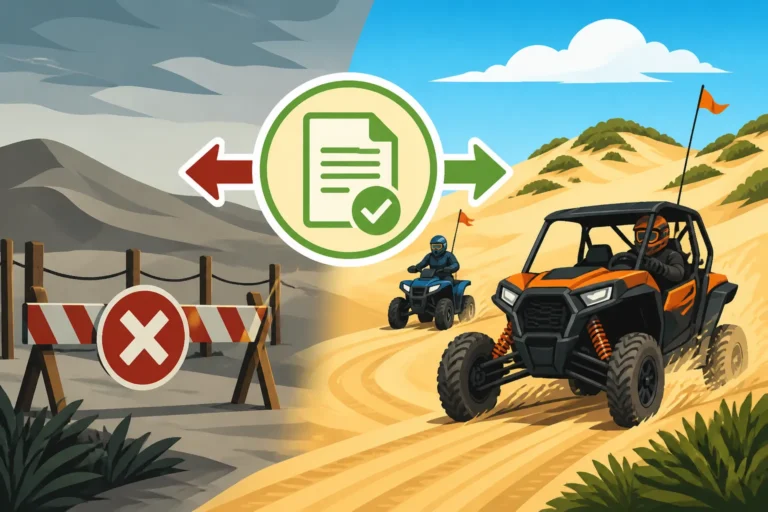
A campsite is not automatically a riding area, and a staging area is not always a place to camp. Follow posted boundaries, park signs, and staff directions. Keep machines on authorized routes, and do not cut across vegetation to reach a trail or shortcut back to camp. A tempting track made by another vehicle is not proof that the route is open.
Set expectations with your group before anyone starts riding. Identify the approved route out of camp, the meeting point, and a time to check back in. If a rider takes a different trail, the rest of the group should know the plan. This is especially helpful in open desert or dune terrain, where familiar-looking landmarks can be hard to distinguish after dust, changing light, or a long ride.
For a State Vehicular Recreation Area, learn where the riding area ends and camping or day-use areas begin. Rules can differ across the boundary, even if the landscape appears continuous. The campground map, posted signs, and park staff are more useful than assumptions based on what other visitors are doing.
Follow fire, food, and quiet-hour rules
Fire rules depend on location and conditions. Some places may limit fires or require a specific fire ring; others may prohibit them during high-risk periods. Check the current instructions for the land you are visiting, and do not assume that a portable stove or fire pan is allowed just because it is self-contained. Keep any permitted flame attended and fully extinguished before leaving it.
Store food and rubbish in a way that keeps wildlife and pests from getting into it. In some areas, food left outside can attract animals; in others, wind and scavengers can scatter trash across the site. Avoid feeding wildlife, and do not leave food scraps near the campsite. A clean camp is safer and more pleasant for the next group.
Noise travels farther than many people expect, particularly in open desert camps and quiet forest settings. Follow posted quiet hours, keep music contained, and be thoughtful about generators and engine warm-ups. If your group wants to talk late, arrange camp so sleeping areas are not right beside the loudest gathering spot.
Prepare for weather, breakdowns, and separation
Check the forecast for the campground and riding area, not just the nearest large city. Conditions can differ with elevation, coastal fog, desert wind, or afternoon storms. Pack layers, sun protection, gloves, and clothing that can handle dust or rain. Carry enough food and water to absorb a delayed return, a closed gate, or a mechanical problem.
Before riding, inspect tires, brakes, controls, lights, fuel, and any safety equipment required for your machine and route. Bring basic tools and recovery equipment suited to your vehicle, and know how to use them. If a rider becomes stranded, decide in advance who stays with the machine, who can safely go for help, and how the group will communicate.
Cell service should not be your only emergency plan. Share the itinerary with someone who is not on the trip, agree on check-in times, and keep essential directions available offline. onX Offroad may be useful as a map reference when preparing routes, but make sure every rider understands the route and carries the information they need independently. A group is less vulnerable when one dead phone does not leave everyone guessing where camp is.
Build a practical trip plan
Use a pre-departure checklist
The most useful checklist is one that reflects your particular site and group. A desert weekend may call for extra water, shade, and sand recovery gear; a forest trip may call for warm bedding and rain protection. Start with the campground rules, then add the items your machines and riders require.
- Confirm the campground is open and that your site or arrival plan is valid.
- Check riding-area access, route restrictions, and closures with the land manager.
- Verify campsite dimensions, trailer rules, vehicle limits, and available facilities.
- Plan fuel, drinking water, food, waste disposal, and a backup location.
- Inspect machines, trailers, tie-downs, tires, lights, and essential tools.
- Share the route, camp location, and check-in plan with every rider.
- Download or carry maps and directions, and save the land manager’s contact details.
- Pack for the likely weather and bring a reserve for delays.
A quick family example: before leaving San Jose for Hollister Hills, a group might confirm site access, check whether its trailer fits the selected space, and decide which adult carries the first-aid kit. A desert group heading toward Glamis might focus more on water, shade, secure tie-downs, sand recovery, and a clearly agreed meeting point. The checklist changes, but the habit of checking details does not.
Have a backup plan and know when to change it
A good plan includes a clear reason to pause or switch destinations. That could be a closure, unsuitable weather, a campsite that cannot accommodate the trailer, or a rider who is tired or uncomfortable. Agree on the backup before you leave so nobody feels pressured to continue simply because the group has already driven for hours.
Keep the backup close enough to be useful. A campground in another region may be too far away to solve a same-day problem, while a nearby site may not have legal OHV access. Check whether the alternate area allows the kind of riding your group expects and whether you will need to transport machines between camp and the trailhead.
Finally, leave room in the schedule. Rushing to unload, ride, cook, and pack up can turn a relaxing weekend into a string of small frustrations. Arrive with daylight if possible, set camp before heading out, and leave enough time to secure machines and organize gear after the ride. A campsite that fits your group, a verified route, and a little flexibility usually do more for a successful trip than trying to squeeze in one more trail.
Disclaimer
This article is for general informational purposes only and does not constitute professional advice. Laws, prices and regulations vary by location and change over time. Consult a qualified professional for guidance on your specific situation.