Trailering Instead of Riding in California
It's a familiar scenario for many of us: you've got your ATV or UTV gleaming, the sun is out, and all you want to do is hit the trails. But the moment you consider just riding it from your garage to that perfect spot down the road, you're hit with a wall of legal questions, safety concerns, and the very real risk of a hefty fine. This guide is here to walk you through why trailering your off-highway vehicle (OHV) in California isn't just a good idea, but often the only smart and legal way to get your machine to where it truly belongs: off the pavement.
Why Trailering Is Your Best Bet for Riding in California
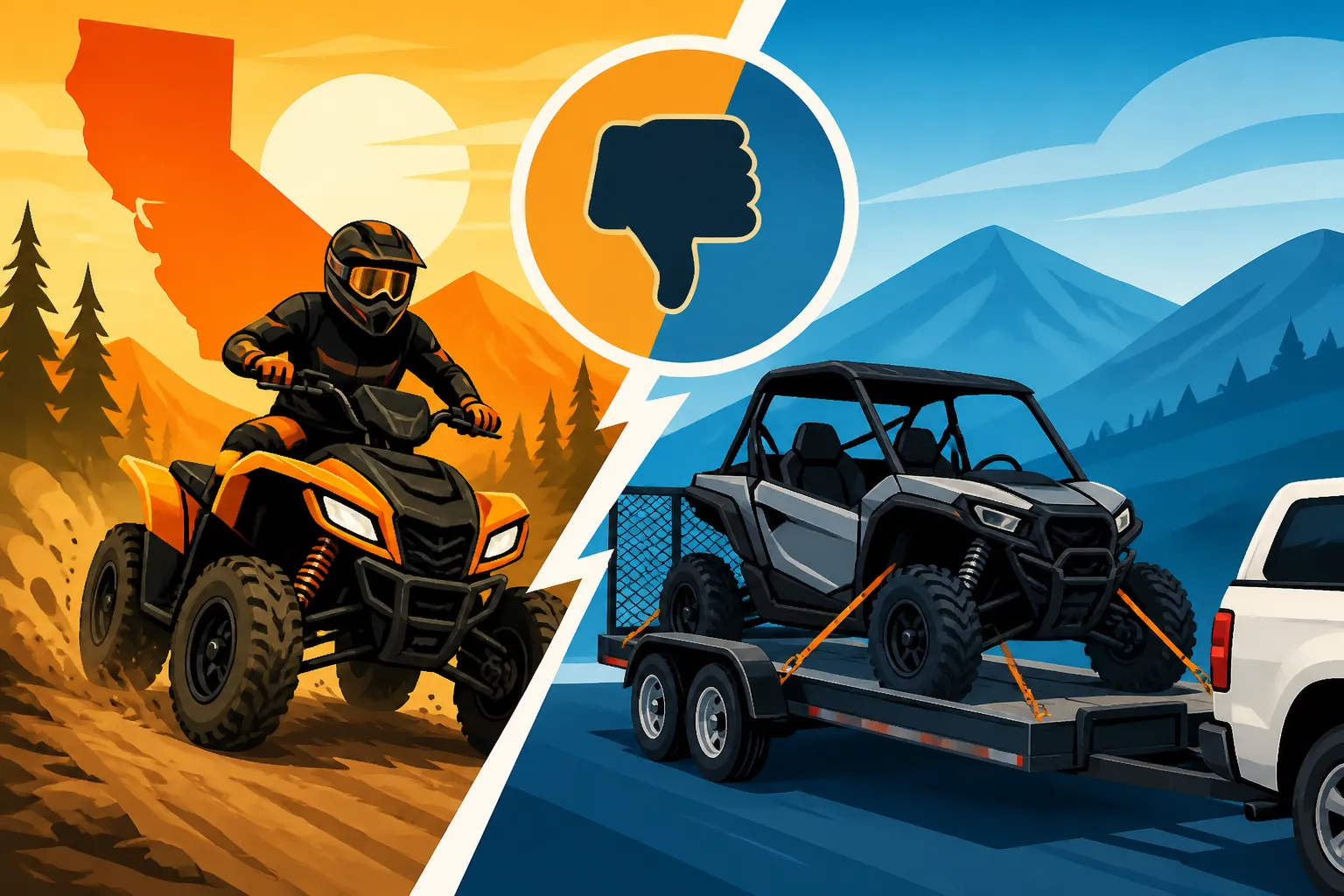
Let's be honest, the dream of cruising your quad or side-by-side down a scenic country road to reach the trailhead sounds idyllic, right? But in California, that dream quickly collides with reality. The state has some of the most stringent rules about OHV use on public roads, and for good reason—safety and environmental concerns are paramount. Trailering is often the most practical, safest, and legally sound method to transport your pride and joy, saving you from potential citations and keeping your machine in peak condition for the dirt.
Navigating California's Strict Road Rules
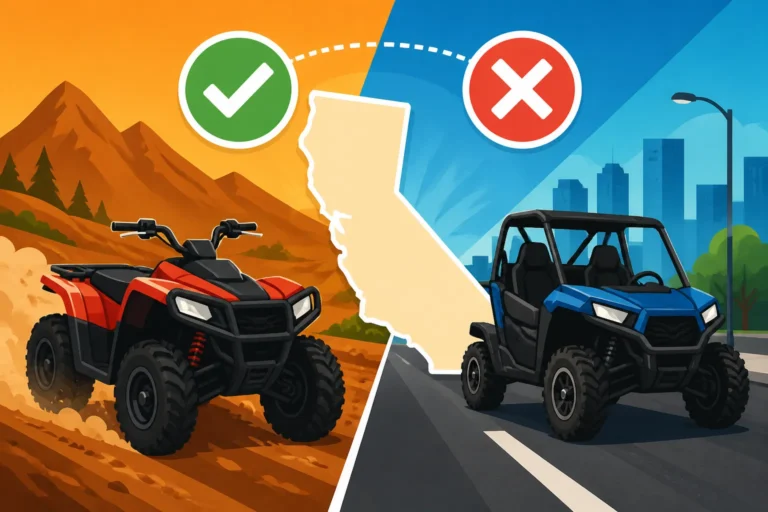
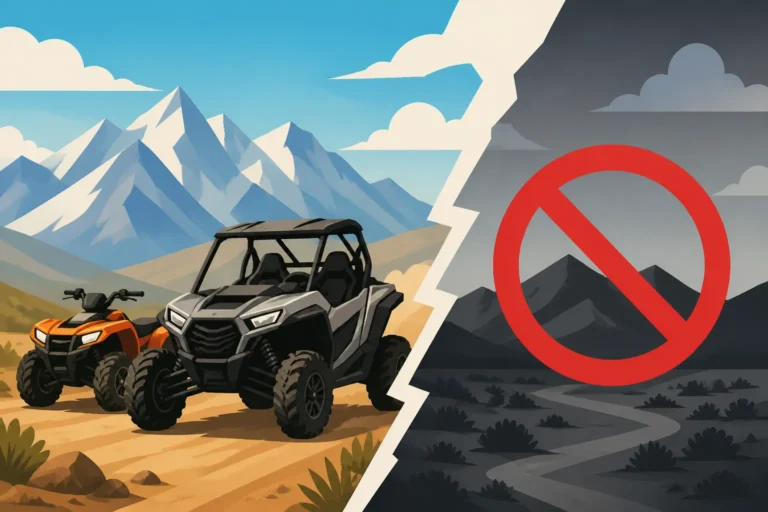
California's Vehicle Code is pretty clear: most OHVs are not designed, manufactured, or intended for use on public highways. This isn't just about whether your machine has headlights or turn signals; it's about fundamental design, emissions, and safety features. While there are a few very specific, limited exceptions, such as designated [California's Combined-Use Highways] or crossing a road, these are rare and come with a whole host of caveats and restrictions that can make them more trouble than they're worth. You can't just slap a license plate on your UTV and call it street legal; that's a common misconception.
Trying to ride your OHV on a public road where it's not explicitly permitted can lead to significant penalties. We're talking fines, potential impoundment of your vehicle, and even points on your driver's license. It's a risk many seasoned riders just aren't willing to take, especially when getting pulled over can ruin an otherwise perfect day of riding. Plus, an accident involving an unregistered or illegally operated OHV on a public road could open you up to serious liability issues, far beyond the cost of a ticket.
Protecting Your Investment and Enhancing Your Ride Experience
Think about your machine: it's built for dirt, rocks, mud, and sand, not asphalt. Riding your ATV or UTV on paved roads can quickly wear down knobby tires, stress suspension components designed for off-road impacts, and cause overheating in engines that rely on airflow at higher off-road speeds. It's simply not what they're made for. By trailering, you preserve your tires for the terrain they're meant to conquer, reduce unnecessary wear and tear on your drivetrain, and ensure your machine is in top shape when you finally reach that glorious dirt.
Beyond protecting your machine, trailering vastly expands your riding horizons. It unlocks access to incredible places like Glamis, Oceano Dunes, Hungry Valley, or the vast network of trails in the national forests that are often many miles from the nearest town. Without a trailer, you'd be severely limited to only areas directly accessible from your home or a short, legal hop. Trailering transforms your OHV from a local toy into a ticket for adventure across the entire state.
Understanding California's OHV Road Restrictions
It's a common frustration to own a powerful off-road machine and feel like you can't use it to its full potential due to road restrictions. California's laws are complex, but understanding the basics is key to staying legal and safe. Generally, if it's not explicitly designated for OHV use, consider it off-limits for riding.
What Constitutes a "Public Road" in California?
In California, a "public road" or "highway" isn't just the freeway; it includes almost any way publicly maintained and open to the public for vehicular travel. This means county roads, city streets, and even many unpaved rural roads fall under this definition. The key here is "open to the public" and "vehicular travel." So, that gravel road leading out of your subdivision, or the paved route to your local riding area, is very likely considered a public highway for the purposes of OHV laws. It's not about the surface, but the designation and maintenance.
There's a big distinction between public roads and designated [Fire Roads and California OHV Access] or OHV trails within a managed riding area. While many fire roads might look like public roads, they are often part of the designated off-highway vehicle network and are managed by agencies like the Bureau of Land Management (BLM) or the U.S. Forest Service. Always consult a current Motor Vehicle Use Map (MVUM) for national forests or local SVRA maps to confirm what is truly legal to ride on. When in doubt, assume a road is a public highway and needs a street-legal vehicle to traverse.
Limited Exceptions: Crossing and Combined-Use Highways
Yes, there are a few very specific instances where an OHV might legally touch pavement, but they are exceptions, not the rule. The most common allowance is for crossing a public road. This means traversing the road at a right angle, stopping completely before you cross, and doing so only when safe and where crossing is permitted. This isn't riding on the road; it's getting from one legal off-road area to another. You can't just cruise for a mile to get to the other side.
California also has a limited number of "combined-use highways" where OHVs are permitted. These are rare, highly specific segments of public roads, generally very short—often just a few miles—that connect two otherwise separate off-road trail systems or provide access to amenities like lodging or fuel. They are explicitly designated by local authorities with CHP approval, and you'll typically see signage indicating their status. Riding on a combined-use highway usually requires your OHV to be registered, have proper lighting, a spark arrester, and often an orange whip flag, even during daylight hours. Always check local ordinances and current signage, as these designations can change. For the vast majority of your riding, assume public roads are off-limits for your non-street-legal OHV.
Choosing the Right Trailer for Your Off-Road Machines
Selecting the right trailer is crucial for safe and efficient transport. It's not a one-size-fits-all situation, and what works for a single dirt bike might be wholly inadequate for a large side-by-side or multiple ATVs. Investing in the right gear upfront will save you headaches and potential hazards down the road.
Open Trailers vs. Enclosed Trailers
The first big decision you'll face is between an open or enclosed trailer. Both have their pros and cons. Open trailers, like utility trailers or flatbeds, are generally lighter, more affordable, and easier to maneuver. They provide excellent visibility of your machines, and loading is often straightforward with ramps. However, your OHVs are exposed to the elements, road grime, and potential theft. If you're frequently traveling long distances or through varied weather, your machines will arrive covered in dust, mud, or rain.
Enclosed trailers offer protection from weather, road debris, and provide a secure, lockable space for your OHVs and gear. They're fantastic for longer trips, deterring theft, and keeping your machines pristine. Many riders even outfit them with toolboxes, spare tire mounts, and custom shelving, turning them into mobile base camps. The downsides are higher cost, heavier weight (requiring a more capable tow vehicle), and increased wind resistance, which can impact fuel economy. Visibility can also be an issue, requiring extended mirrors.
Single-Axle vs. Multi-Axle Trailers
Another important consideration is the number of axles. Single-axle trailers are lighter, less expensive, and easier to maintain. They're perfectly adequate for hauling one or two lighter ATVs or a smaller UTV. Their lighter weight means less wear on your tow vehicle and easier manual maneuvering once unhitched. However, they have a lower weight capacity, and a flat tire on a single-axle trailer means you're completely stranded until it's fixed. Weight distribution is also more critical, as too much tongue weight or tail weight can significantly impact handling.
Multi-axle trailers (tandem or triple axle) are designed for heavier loads, offering increased stability and peace of mind. If you're hauling a large side-by-side, multiple machines, or plan to carry a lot of extra gear, a multi-axle trailer is usually the way to go. If one tire goes flat, the other tires on the same side can often support the load, allowing you to safely pull over. They handle road imperfections better and are less prone to sway. The trade-off is higher cost, increased weight, more tires to maintain, and they can be more challenging to maneuver in tight spaces. For larger OHVs, like a four-seat UTV with a full load of fuel and gear, a tandem-axle trailer is almost always a necessity for safety.
Equipping Your Tow Vehicle and Ensuring Safe Towing Practices
Simply having a hitch on your truck isn't enough; safe towing involves understanding your vehicle's capabilities, proper setup, and adhering to best practices on the road. Don't underestimate the forces involved when hauling hundreds or thousands of pounds behind you.
Matching Your Vehicle to Your Trailer and Load
This is paramount. Every tow vehicle has a Gross Vehicle Weight Rating (GVWR) and a Gross Combined Weight Rating (GCWR), which specify the maximum allowable weight of the vehicle itself, plus its cargo and passengers, and the total weight of the tow vehicle and trailer combined. You absolutely must know your vehicle's towing capacity and ensure your fully loaded trailer (OHVs, fuel, gear) does not exceed it. Overloading can lead to excessive wear on your transmission, brakes, and suspension, and critically, it can compromise your ability to control the vehicle, especially in an emergency.
Beyond weight, consider your hitch class. Hitches are rated by class, from Class I (light duty) to Class V (heavy duty). Make sure your hitch, ball mount, and hitch ball are all rated for the maximum weight you plan to tow. Also, don't forget your trailer brakes. If your trailer and its load exceed a certain weight (usually around 1,500 pounds in California, but check current regulations), it's legally required to have its own independent braking system. These systems often rely on an electronic brake controller installed in your tow vehicle, which allows you to manually apply the trailer brakes or have them automatically activated with your vehicle's brakes. [Towing a Trailer With a UTV in California] and other OHVs is a serious undertaking that demands respect for these numbers.
Pre-Trip Checks and On-the-Road Safety
Before you even pull out of the driveway, a thorough pre-trip inspection is non-negotiable. Check your tire pressure on both the tow vehicle and the trailer—underinflated tires are a huge cause of blowouts and sway. Test all lights: brake lights, turn signals, and running lights on both your vehicle and the trailer. Ensure your hitch connection is secure, the safety chains are properly crisscrossed beneath the tongue, and the breakaway cable (for trailers with electric brakes) is attached. Make sure your OHVs are securely tied down—we'll cover that more in the next section.
On the road, towing requires a different mindset. Increase your following distance significantly, as it will take much longer to stop. Anticipate turns and lane changes, making them gradually and smoothly. Be mindful of your increased length and width, especially when navigating gas stations, tight corners, or crowded parking lots. Watch for trailer sway, particularly at higher speeds or in windy conditions; if it occurs, gently apply the trailer brakes (if you have a controller) to help straighten things out, and slow down. Always drive defensively, and consider taking a practice run with your loaded trailer before a long trip. Having your cell phone mounted and using navigation apps like Waze or Google Maps can help you spot potential traffic issues ahead of time, allowing for smoother adjustments.
| Checkpoint | Tow Vehicle | Trailer | OHVs (on trailer) |
|---|---|---|---|
| Tires | Pressure, tread, lug nuts | Pressure, tread, lug nuts | Proper inflation for riding |
| Lights | All working (head, brake, turn) | All working (brake, turn, running) | N/A |
| Hitch & Connection | Securely latched, greased ball | Safety chains, breakaway cable | N/A |
| Brakes | Functioning, trailer brake controller | Functioning, even wear on pads | N/A |
| Fluids | Engine oil, coolant, transmission fluid | N/A | Fuel, oil, coolant levels checked |
| Tie-Downs | N/A | Securely strapped, no slack | All machines individually secured |
| Mirrors | Extended for full visibility | N/A | N/A |
| Cargo (inside truck) | Secure, not obstructing view | N/A | Loose gear stowed, not in cab |
Mastering the Art of Loading and Securing Your OHV
Getting your expensive machine onto a trailer and ensuring it stays there is perhaps the most critical part of trailering. A properly secured OHV won't budge, no matter how bumpy the road. A poorly secured one, however, can quickly become a dangerous projectile.
Ramp Safety and Positioning
Loading an OHV, especially a heavy UTV, onto a trailer requires care and attention. Always use sturdy, properly rated ramps that are long enough to provide a gentle incline. Short, steep ramps increase the risk of your machine tipping backward or high-centering. Position the ramps correctly, ensuring they are securely attached to the trailer and spaced appropriately for your machine's wheel width. Many trailers have integrated ramps or dedicated attachment points, which is ideal. If using portable ramps, make sure they won't slip off the trailer as you drive up.
When loading, approach the ramps slowly and deliberately. For ATVs, many riders prefer to drive up in a low gear. For UTVs, the approach is similar, but always be aware of the center of gravity and ensure a smooth, controlled ascent. If you're nervous or have a particularly heavy machine, consider using a winch (either trailer-mounted or on your OHV) for a safer, more controlled load. Never rush this process, especially if it's wet or muddy. Once on the trailer, position your OHV to achieve proper tongue weight—typically 10-15% of the total loaded trailer weight—which helps prevent sway. Often, this means positioning the heaviest part of the OHV slightly forward of the trailer's axle(s).
The Right Way to Tie Down Your Machines
This is where many people go wrong. Cheap, flimsy ratchet straps might seem adequate, but they're not. Invest in high-quality, heavy-duty ratchet straps with a sufficient working load limit (WLL) for your OHV's weight. Many experienced riders recommend at least four straps per machine, one at each corner, pulling outwards and downwards. For larger UTVs or multiple machines, you might need more. Look for straps from reputable brands that can withstand the stresses of road travel.
Attach straps to the main frame components of your OHV, not to suspension arms, handlebars, or flimsy plastic. The goal is to compress the OHV's suspension slightly, creating tension that will keep the machine from bouncing and shifting during transit. Never rely solely on strapping down the wheels; the suspension can still allow the frame to move. Check your straps periodically during long drives, especially after the first 15-20 minutes, as they can sometimes loosen slightly from initial road vibrations. SuperATV offers heavy-duty tie-down solutions and accessories that can make securing your machines both easier and more robust, ensuring they arrive just as you loaded them.
Parking, Unloading, and Post-Ride Considerations
You've made it to the riding area, navigated the parking lot, and now it's time to unleash your machines. But the journey isn't quite over until your OHVs are safely offloaded and your trailer is properly parked.
Strategic Parking and Safe Unloading Procedures
When you arrive at a busy SVRA or popular staging area like those at [Ocotillo Wells: California's Free SVRA] or [Glamis and the Imperial Sand Dunes], finding appropriate parking for your truck and trailer can be a challenge. Look for designated trailer parking areas, which are often longer and wider than standard spots. If you're parking on the side of a road or in an overflow area, ensure you're not blocking traffic, trail access, or emergency routes. Always be mindful of other vehicles and people.
Unloading your OHVs follows the reverse process of loading, but with equal emphasis on safety. Double-check that your trailer is securely parked, ideally on level ground, with the parking brake engaged and potentially chocks behind the wheels. Lower your ramps, ensuring they are stable and properly attached. Then, carefully and slowly back your machines down the ramps. Take your time, especially if it's dusty or you have onlookers. Once unloaded, store your ramps securely so they don't become a trip hazard or get lost. Many trailers offer dedicated storage spots for ramps, keeping them out of the way.
Post-Ride Cleanup and Maintenance
After a fantastic day of kicking up dirt, your machines and trailer will likely be covered in grime. While it might be tempting to just pack up and head home, a little post-ride care can go a long way. Before loading your OHVs back onto the trailer, consider knocking off any large clumps of mud or sand. This reduces the weight you're hauling and prevents excessive debris from getting flung onto your tow vehicle during the drive home.
Once you're back home, give your OHVs and trailer a thorough wash. This isn't just about aesthetics; it helps prevent corrosion, especially if you've been riding in sandy or muddy conditions. Inspect your tie-down straps for any signs of wear or damage. Check your trailer tires for any punctures or uneven wear. Lubricate your hitch ball and inspect your trailer's wiring and lights for any issues that might have developed during the trip. This routine maintenance ensures your equipment is ready for your next adventure and helps extend its lifespan. For those using their UTVs frequently, having easily accessible cleaning supplies and a pressure washer can make this chore much simpler, keeping your machines in prime condition whether you're heading to the [Hollister Hills, California's Oldest SVRA] or out to the desert.
Disclaimer
This article is for general informational purposes only and does not constitute professional advice. Laws, prices and regulations vary by location and change over time. Consult a qualified professional for guidance on your specific situation.