What a California Sheriff Checks Roadside
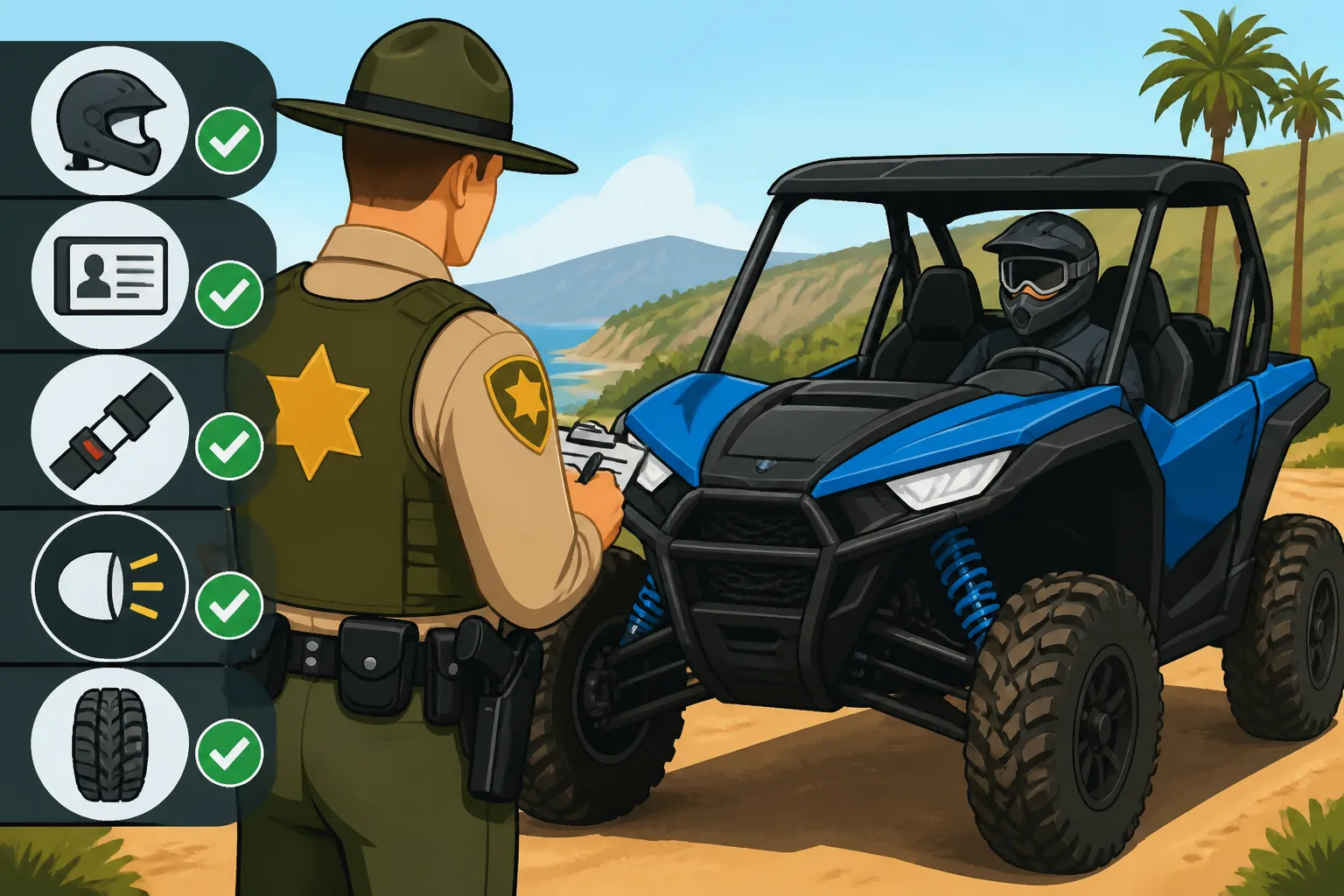
It's happened to all of us. You're out enjoying a fantastic ride on your ATV or UTV, cruising through the beautiful California landscape, when suddenly you see those flashing lights in your rearview. Your heart sinks a little, a mix of "what did I do?" and "am I even legal right now?" It's a frustrating, nerve-wracking experience, especially when the rules for off-highway vehicles can feel like a labyrinth. This guide is here to unravel the mystery and help you understand exactly what a California Sheriff, or any law enforcement officer, might be looking for during a roadside stop.
Understanding the Scope of Authority: Who Can Stop You?
When you're out on the trails or exploring designated OHV areas, it's not just California Highway Patrol (CHP) you might encounter. Various law enforcement agencies have the authority to pull you over, and knowing who's who, and why they might intervene, can certainly ease some of the apprehension.
Sheriff vs. Ranger: Knowing the Difference
In California, you could be stopped by a city police officer, a county sheriff's deputy, a CHP officer, or even a State Park Ranger or a Bureau of Land Management (BLM) ranger. Each of these agencies has jurisdiction over different types of land and roads, but they all share the common goal of enforcing laws, including those pertaining to off-highway vehicles. A sheriff's deputy, for example, operates within a specific county's unincorporated areas and county roads, which are often where OHV riders traverse.
State Park Rangers, on the other hand, are focused on State Vehicular Recreation Areas (SVRAs) like Hungry Valley or Ocotillo Wells, or other state park lands. BLM rangers enforce regulations on the vast expanses of federal public lands, such as the Imperial Sand Dunes. While their uniforms and vehicles might differ, their authority to check your compliance with OHV laws is generally the same. It's crucial to remember that regardless of the agency, they are enforcing state and local statutes designed to ensure safety and preserve the environment.
Why They Might Pull You Over
The reasons for a roadside stop can range from obvious infractions to simple checks. Sometimes, an officer might observe a clear violation, such as riding in a restricted area, excessive speed, or operating a machine without proper safety equipment. They might also pull you over if your machine appears to be making too much noise or if you don't have a visible OHV ID plate or sticker. Other times, it could be part of a routine checkpoint at the entrance to a popular riding area, or just a general observation that something seems amiss, even if you’re riding perfectly safely.
Don't take it personally; these stops are often about ensuring everyone is following the rules that keep our riding areas open and safe for all. For instance, if you're riding a UTV and an officer observes what appears to be an underage passenger without proper restraints or a helmet, that's a valid reason for a stop. They are also looking out for machines that might be illegally modified, or those that are clearly not meant for the trails you're on, such as a machine without a required spark arrester.
Your Rights During a Stop
Just like in a passenger vehicle, you have rights during an OHV roadside stop. The officer needs a reasonable suspicion to pull you over and probable cause to conduct a search. Always remain calm and polite, and be cooperative. You will likely be asked for your identification, the machine's registration, and possibly proof of ownership. Keep these documents readily accessible, perhaps in a waterproof bag on your machine.
You do not have to answer questions beyond providing identification, but refusing to cooperate entirely can escalate the situation. If asked, you can decline to answer questions that might incriminate you, but you must still provide the necessary documentation. It's helpful to understand that officers are primarily looking for compliance with safety, environmental, and registration laws. They're trying to ensure everyone's safety and that the riding areas are being used responsibly, so be prepared to show your [California's Green Sticker Explained] or other identification and be transparent about your machine's setup.
Registration and Identification: Is Your Machine Legal?
One of the most common reasons for a roadside check is to confirm that your off-highway vehicle is properly registered and identified for use on California's public lands. This is fundamental, and rangers at the entrance gates of SVRAs or BLM land checkpoints will often verify this before you even hit the dirt.
The All-Important California OHV Sticker
Every OHV operating on public lands in California must display a valid California OHV identification sticker. These aren't just pretty decals; they signify that you've paid the required fees and that your machine is recognized by the state. You'll often see three main types: the Green Sticker, the Red Sticker, and sometimes a Tan Sticker for specific sanctioned events. A sheriff will immediately look for this sticker, and its color tells them a lot about your machine's compliance.
For instance, a Green Sticker means your machine meets California Air Resources Board (CARB) emission standards for year-round use on public lands. If you have a [Red Stickers and What Changed in California], it generally means your machine has higher emissions and is restricted to certain seasonal use areas, especially if it's a newer model. Having the correct, current sticker, properly affixed to your machine in the designated spot, is non-negotiable. Without it, you could face a citation and be turned away from riding areas. This includes machines like a [California OHV Registration for a Dirt Bike] or a [California OHV Registration for a Side-by-Side], all requiring proper identification.
Proof of Ownership and Identity
Beyond the sticker, officers may ask for proof of ownership. This typically means your Certificate of Title or registration card for the OHV. Just like with a car, this shows that you are the legal owner or have permission to operate the machine. It's smart to carry a copy of your registration card, not the original title, in a secure, waterproof location on your machine or on your person.
They'll also be checking the Vehicle Identification Number (VIN) on your machine against the paperwork to ensure everything matches. This is a crucial step to deter theft and ensure the machine isn't reported stolen. Discrepancies here can lead to a much longer stop, and potentially, your machine being impounded. Make sure your VIN is clear and accessible, and that all your documentation is up-to-date and reflects the machine you are operating.
The Dreaded Out-of-State Machine
If you're visiting California from another state, you might be thinking your home state's registration is all you need. Unfortunately, that's often not the case. California has specific rules for nonresidents. While some states have reciprocity agreements – meaning California honors their OHV registration – many do not. Currently, only Oregon and Nevada have such agreements.
If you arrive from, say, Arizona or Utah, with only your home state's registration, a sheriff will expect you to have purchased a California Nonresident OHV Use Permit. This permit is mandatory for machines not registered in California, Oregon, or Nevada, that wish to ride on California's public lands. An officer will be looking for this permit to be properly displayed. Don't assume your [A Utah Plate That Means Nothing in California] will cut it; it's a common misconception that can lead to a fine and an unwelcome end to your riding trip. [Do Nonresidents Need California OHV Registration?] The short answer is usually yes, via the nonresident permit.
Safety Gear and Equipment: Are You and Your Machine Prepared?
Beyond paperwork, a sheriff is intensely interested in your safety and the safety of your machine. This means checking that you have the right personal protective equipment and that your OHV meets California's mandated equipment standards.
Helmet Laws and What Applies to You
California has strict helmet laws for OHV operators and passengers, and officers take these very seriously. Generally, anyone operating or riding as a passenger on an ATV or dirt bike on public lands must wear a safety helmet that is properly fitted and securely fastened. For ATVs, this applies to everyone, regardless of age. For UTVs (or ROVs – Recreational Off-highway Vehicles) there can be slight variations, particularly for adults in certain types of machines equipped with roll cages and seatbelts, but the general rule is to wear one.
A sheriff will be checking that your helmet meets Department of Transportation (DOT) standards. This means looking for the DOT sticker on the back of your helmet. Not wearing a helmet, or wearing one that isn't DOT-approved, is a quick way to receive a citation. It's not just about the law; it's about protecting your head. We've all seen nasty spills, and a good helmet can be the difference between a bad day and a life-altering injury. So, make sure you and all your passengers are properly geared up before you even start the engine. Consult [California Helmet Law for ATV Riders] for more details on specific requirements.
Spark Arresters and Noise Limits
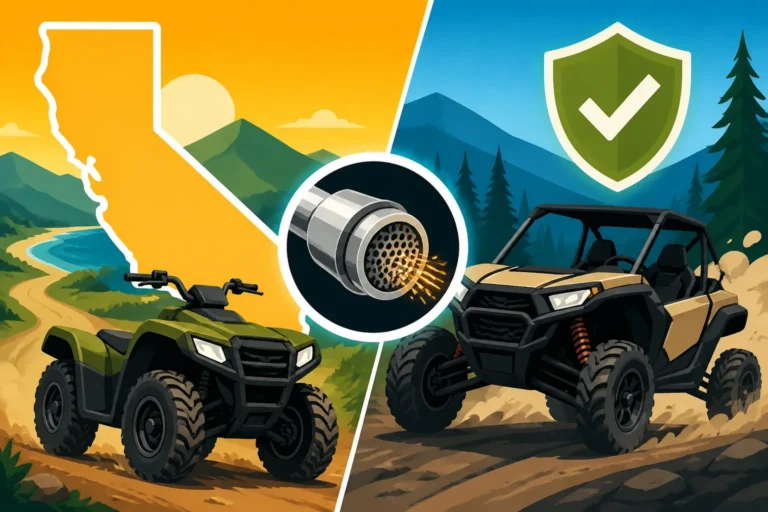
California is particularly sensitive about noise and fire prevention, especially in its beautiful, often dry, environments. Every OHV operating on public land must be equipped with a US Forest Service approved spark arrester. This device prevents hot carbon particles from escaping your exhaust and potentially igniting dry vegetation, which is a huge fire hazard. A sheriff can and will inspect your exhaust to ensure a spark arrester is present and in good working order.
They will also be listening. California has strict noise limits for OHVs. Machines manufactured before a certain date (usually 1998) have a higher permissible decibel limit (101 dB), while newer machines must meet a lower standard (96 dB). Officers are equipped with sound meters and can perform a stationary sound test right there on the trail. If your machine is too loud, especially if you have an aftermarket exhaust system without proper baffling, you could be cited. Many riders opt for aftermarket exhaust systems that are still spark-arrester compliant, and companies like SuperATV offer parts that can help ensure your machine stays within legal limits. So, before you hit the trails, ensure your machine isn't just fast, but also respectful of the environment and the law. [California Spark Arrester Rules] and [California Noise Rules at an SVRA Gate] are essential reading.
Lights, Whips, and Other Essential Gear
Depending on where and when you're riding, other equipment might be mandatory. For instance, if you're riding in dune areas like Glamis or Oceano Dunes, an eight-foot whip with a red or orange flag is required. This flag helps increase your visibility over the rolling terrain, preventing collisions. If you're out riding at night, functional headlights and taillights are obviously necessary, but some areas might have specific requirements for additional lighting or illuminated whips.
A sheriff will also check for seatbelts in UTVs; if your machine came with them, they must be worn. Passengers in UTVs, particularly children, must also be properly restrained. For any modifications, ensure they enhance safety and do not compromise the vehicle's integrity. For example, installing robust roll cages or larger tires from a brand like SuperATV might enhance performance and safety, but always confirm they comply with any local regulations, especially if they alter the vehicle's width or height significantly. It’s all about making sure your ride is safe for you, your passengers, and everyone else enjoying the outdoors.
Riding Rules and Conduct: Staying Within the Lines
A significant part of a sheriff's roadside check involves assessing whether you're riding responsibly and in compliance with general conduct rules on public lands. This includes where you ride, who you ride with, and your state of mind while operating your OHV.
Where You're Allowed to Ride
This is perhaps one of the most fundamental things an officer will assess. Are you on a designated OHV trail, in an SVRA, or are you venturing into areas that are closed to motorized vehicles, like wilderness areas, private property, or protected habitats? California has extensive mapping for OHV routes, and rangers and sheriffs are intimately familiar with these boundaries. Riding off-trail, around closed gates, or in sensitive ecological areas is a major infraction.
You might be stopped if you're observed riding in an area that isn't clearly marked for OHV use. For example, crossing a natural area to get from one legal trail to another is generally illegal unless there's a specifically designated connecting route. Always check local maps, especially Motor Vehicle Use Maps (MVUMs) for national forests, or SVRA maps, before you head out. These maps clearly delineate what's open to OHVs. Understanding these boundaries is critical not just for avoiding tickets, but for preserving the very lands we love to ride on.
Passenger Rules for ATVs and UTVs
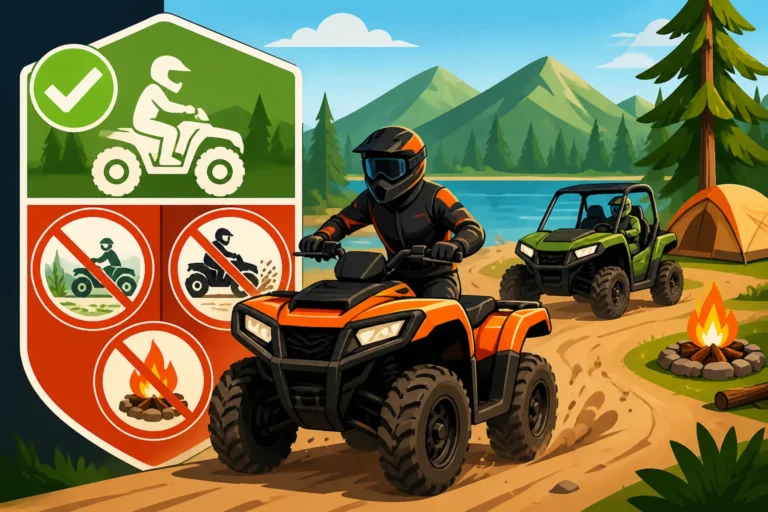
California has clear and often misunderstood rules regarding passengers on off-highway vehicles. For ATVs, the rule is quite simple and very strict: no passengers. ATVs are designed for a single operator, and carrying an additional person is illegal on California public lands. This means no "doubling up" on a single-rider quad, even if it feels like there's enough space. A sheriff will absolutely pull you over for this. [California ATV Passenger Ban Explained] delves into this in more detail.
UTVs (side-by-sides) are different, as they are designed to carry multiple occupants. However, passengers must be seated in manufacturer-designed seating positions and use the provided seatbelts. This also includes rules for child passengers, who must often be of a certain age and size to ride, and may require booster seats or specific restraints, just like in a regular car. Officers check to ensure that all passengers, especially children, are safely secured and that no more people are in the UTV than it was designed to carry.
Impairment and Open Container Laws
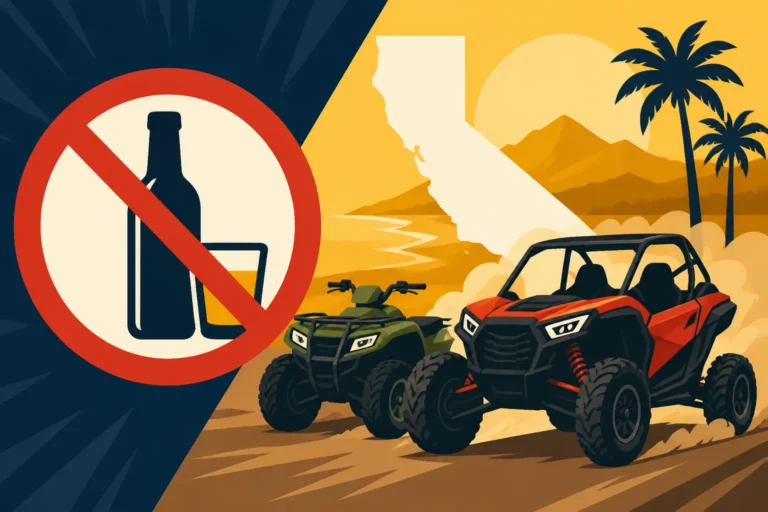
Just like operating a street-legal vehicle, operating an OHV under the influence of alcohol or drugs is strictly prohibited and extremely dangerous. California's DUI laws apply to OHVs on public lands. A sheriff or ranger can administer field sobriety tests, and if you're found to be impaired, you'll face severe penalties, including fines, license suspension, and potential jail time, mirroring those for driving a car while intoxicated.
Furthermore, open container laws apply to OHVs. You cannot have an open container of alcohol in your possession or within reach while operating or being a passenger in an OHV on public lands. This doesn't mean you can't have a cooler with unopened beverages for later, but drinking while riding, or having an open beer can in the cup holder, is a definite no-go. Officers are trained to spot signs of impairment and will act to keep everyone safe.
Navigating Combined-Use Roads and Crossing Highways
California has some nuanced rules about where OHVs can and cannot interact with paved, public roads. Understanding these specifics is vital, as this is often where confusion, and thus roadside stops, occur.
The Nuances of Combined-Use Segments
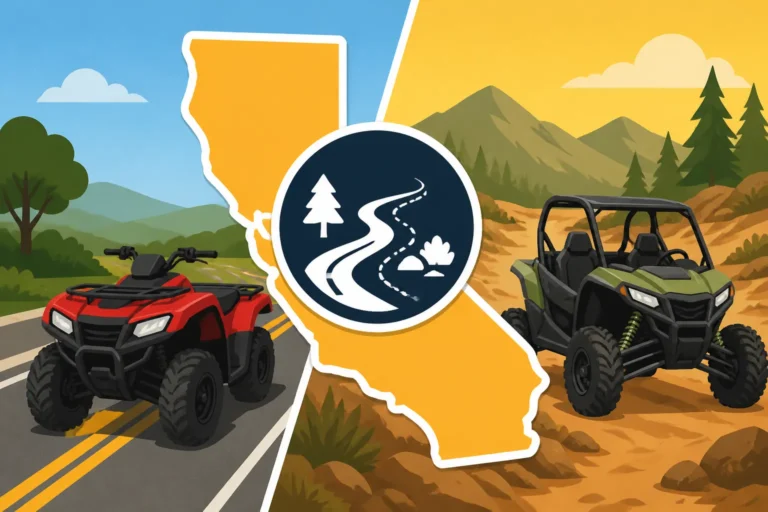
In specific, limited circumstances, California law allows OHVs to operate on designated "combined-use" highway segments. These are typically short stretches of county or state roads that connect one OHV trail to another, or to a staging area or services. These segments are usually designated by a local agency in consultation with CHP and clearly marked with signs. You can't just decide any paved road is a combined-use route.
A sheriff will be checking that you are indeed on a designated combined-use segment, not just an arbitrary road. They'll also be looking for adherence to specific rules on these segments, such as wearing a helmet (even if the UTV has a roll cage, the rules for road use can be stricter), observing speed limits, and following all traffic laws as if you were in a regular car. For example, if you're riding a UTV that has been upgraded with a windshield, mirrors, and maybe even turn signals from a brand like SuperATV, it might look more road-worthy, but that doesn't automatically grant you permission to ride it on any public road. Always confirm the specific designation of the route. You can find more information about these routes in [California Combined-Use Highway List].
Crossing Public Highways: Doing It Right
Even if you're not on a combined-use segment, there are rules for crossing public highways to get from one legal OHV area to another. This is often allowed, but with very strict conditions. You must typically cross at a right angle, stopping completely before entering the highway, yielding to all traffic, and crossing as directly and safely as possible. It is absolutely not an excuse to drive down a highway for any significant distance.
An officer observing you crossing a public road will be scrutinizing your approach and execution. Did you stop? Did you look for traffic? Did you cross directly, or did you briefly travel down the highway? Any deviation from the strict interpretation of "crossing" can result in a stop and a citation. These rules are in place because OHVs are not designed for highway speeds or traffic and can pose a significant danger to themselves and other motorists if not operated with extreme caution during a crossing. Be sure to study [California Rules for Crossing a Public Road] to avoid any mishaps.
What a Street-Legal UTV Isn't in California
This is a point of major confusion for many riders, especially those moving to California from other states where UTVs can be easily made "street legal." While you might see UTVs with license plates from Arizona or Utah, or even those modified with turn signals, mirrors, and windshield wipers, these modifications generally do not make your UTV street-legal in California in the same way a car is. California has very specific and stringent requirements for vehicle classification, and converting a UTV to a street-legal vehicle is almost impossible under current state law.
Therefore, if a sheriff sees you operating a UTV with a license plate (especially an out-of-state one that isn't for a combined-use segment) on a California public road that isn't specifically designated as combined-use, they will likely pull you over. They'll check your registration and quickly determine that, despite appearances, your UTV is not legally registered for general street use in California. The modifications, while perhaps improving safety or comfort (many SuperATV accessories fall into this category), do not change the underlying legal classification of the vehicle for street use. The takeaway here is clear: don't assume that because your UTV looks like it could be street legal, it actually is in California.
Common OHV Checks Summary
To help you remember, here's a quick reference table of common things a California Sheriff or ranger will be checking for during a roadside stop:
| Category | Specific Check Points | Why It Matters (Compliance & Safety) |
|---|---|---|
| Registration & ID | Valid California OHV Sticker (Green, Red, Tan) | Mandatory for public land use; indicates emissions compliance and paid fees. |
| Proper Display of Sticker/Plate | Must be visible and correctly affixed to the machine. | |
| Current Registration Card / Proof of Ownership | Verifies legal ownership and authority to operate. | |
| VIN Match to Documentation | Prevents theft; ensures the machine is correctly identified. | |
| Nonresident Permit (if applicable) | Required for out-of-state machines from non-reciprocal states. | |
| Safety Gear | DOT-Approved Helmet (for operator/passenger) | Mandatory for head protection; often age-specific rules apply. |
| Eye Protection (goggles, visor) | Protects from dust, debris, and impacts. | |
| Appropriate Clothing (long sleeves, pants, boots, gloves) | Recommended for abrasion and impact protection, though not always legally mandated. | |
| Machine Equipment | USFS Approved Spark Arrester | Prevents wildfires; mandatory on brush-covered public lands. |
| Noise Limits (96 dB for newer, 101 dB for older machines) | Reduces environmental impact and disturbance; avoids citations. | |
| Functional Headlights/Taillights (for night riding) | Ensures visibility to others and allows you to see the trail. | |
| Eight-Foot Whip with Red/Orange Flag (in dune areas) | Increases visibility over dunes, critical for collision avoidance. | |
| Functional Seatbelts (for UTVs) | Mandatory for occupant safety; must be worn. | |
| Riding Conduct | Riding on Designated Trails/Areas Only | Prevents environmental damage, trespass, and ensures safety. |
| ATV Passenger Prohibition | ATVs are single-operator vehicles; carrying passengers is illegal. | |
| UTV Passenger Seating/Restraint Compliance | Ensures all passengers are safely seated and secured. | |
| No Operating Under the Influence (DUI) | Critical for safety; severe legal penalties. | |
| No Open Containers of Alcohol | Prevents public intoxication and unsafe operation. | |
| Road Interaction | Legal Use of Combined-Use Routes | Must be on designated, signed routes; all traffic laws apply. |
| Proper Highway Crossing Procedure | Strict rules for stopping, yielding, and crossing directly at a right angle. | |
| No Unauthorized Street Riding (for non-street-legal OHVs) | OHVs are generally not street-legal in California, even with modifications. |
Disclaimer
This article is for general informational purposes only and does not constitute professional advice. Laws, prices and regulations vary by location and change over time. Consult a qualified professional for guidance on your specific situation.