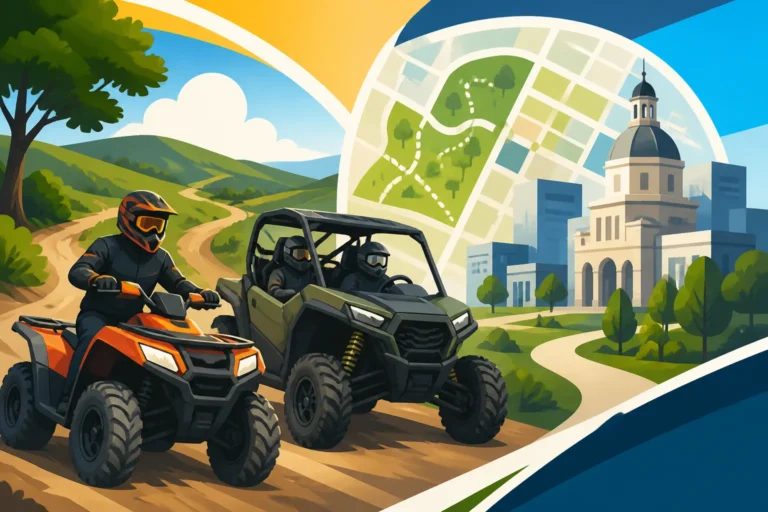
California’s First Neighborhood Vehicle Plan
It's a common dream for many of us who love the off-road lifestyle in California: the idea of hopping on our ATV or UTV and simply cruising down the local street to a friend's house, or perhaps to grab some ice cream. But the reality often hits hard when we realize our beloved machines, designed for dirt and dunes, aren't welcome on most public roads. This guide will walk you through California's complex relationship with off-highway vehicles on paved surfaces, specifically diving into the history and specifics of the state's pioneering approach to neighborhood electric vehicles and what that means for your off-road dreams.
The Street-Legal Dream: Why California OHVs Face Uphill Battle
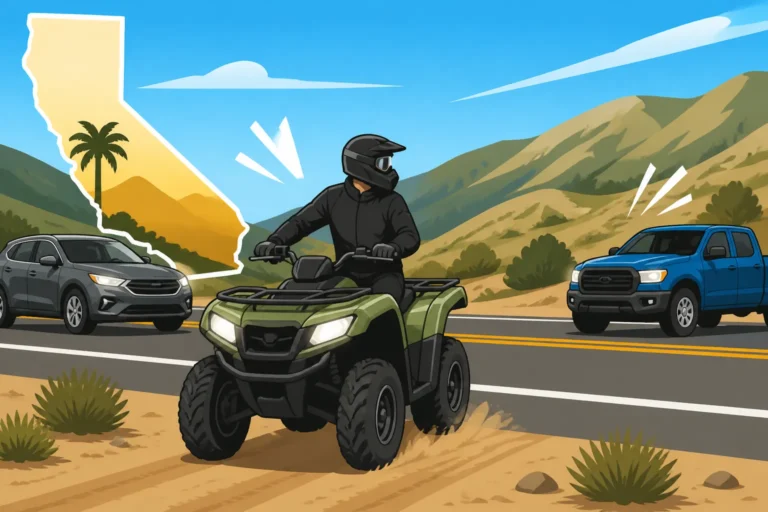
Let's be honest, the thought of making your ATV or UTV street legal in California is incredibly appealing. Imagine the convenience, the ability to connect trails, or just avoid trailering for short hops. But the cold, hard truth is that for the vast majority of off-highway vehicles (OHVs) – your quads, dirt bikes, and side-by-sides – achieving true street legality in California is an almost insurmountable challenge. It’s not just a matter of adding turn signals; it’s a deep dive into regulatory differences that often invalidate the entire premise.
Many enthusiasts look at the array of aftermarket parts available, perhaps from companies like SuperATV, and wonder if a lift kit, wider tires, and a windshield could magically transform their UTV into a road-worthy vehicle. While these modifications certainly enhance the off-road experience and can make your machine even more capable in the dirt, they simply do not address the fundamental legal requirements for street legality in California. The state has very specific, often stringent, rules for vehicles operating on public roads, and OHVs, by their very design and certification, do not meet most of them.
The Fundamental Hurdles for ATVs and UTVs on Public Roads
The primary reason ATVs and UTVs can't be made street legal in California comes down to their original certification and design. These machines are manufactured and sold as "off-highway vehicles," meaning they are not built to meet the Federal Motor Vehicle Safety Standards (FMVSS) that all street-legal vehicles must adhere to. This includes everything from crumple zones and airbags to specific lighting requirements, emissions standards, and even tire ratings designed for highway speeds and conditions. Converting an OHV to meet these standards would often require rebuilding the entire vehicle, making it impractical and cost-prohibitive.
Think about the rigorous testing and design that goes into a car or truck, ensuring it can safely operate at high speeds, protect occupants in a collision, and meet strict emissions protocols. OHVs are designed for low-speed, off-road terrain where different safety considerations apply. For example, the emissions systems on most OHVs are not certified for highway use, and the process to get a unique vehicle certified as street legal can involve costly engineering and testing that individual owners simply cannot undertake. This is why you often hear the definitive answer: [Are ATVs Street Legal in California?] and [Can You Make a UTV Street Legal in California?] typically result in a resounding "no" for genuine street legality.
Limited Exceptions: The Reality of Combined-Use Paths
While full street legality is largely a pipe dream for most OHVs, there are extremely limited and specific exceptions that allow these vehicles to briefly interact with public roads in California. These are not about making your machine street legal, but rather about granting permission for very particular, short-distance uses under controlled conditions. The most common exception is the concept of a "combined-use highway" or designated connector route.
California Vehicle Code (CVC) 38026 allows local authorities (cities and counties) and federal agencies (like the Forest Service) to designate specific, limited segments of public roads for OHV use, typically to connect one off-road trail to another, or to allow access from a staging area to a riding area. These segments are usually short, clearly marked, and have speed limits appropriate for OHV operation. You won't be cruising down a major boulevard, but rather a short stretch of rural road or a paved connector within a specific riding area. The intent is strictly utilitarian: to facilitate access to off-road opportunities, not to enable general street use. Always check the specific signage and rules for any area you plan to ride, as the regulations are very granular. You can learn more about these exceptions in articles like [California's Combined-Use Highways].
Understanding Neighborhood Electric Vehicles (NEVs) in California
While your gas-powered ATV or UTV might not be hitting the streets, California has, for many years, allowed a different type of low-speed vehicle on certain public roads: the Neighborhood Electric Vehicle, or NEV. This is where the concept of "California's First Neighborhood Vehicle Plan" truly comes into play, highlighting a specific category of vehicle designed from the ground up for limited street use, completely separate from off-highway vehicles.
NEVs fill a niche for short-distance, low-speed transportation, often within planned communities, small towns, or defined districts. They offer an eco-friendly alternative to a full-size car for running errands, visiting neighbors, or commuting short distances to work. Understanding NEVs is crucial because they represent a successful model for integrating certain types of non-traditional vehicles into the public road system, which is a stark contrast to the challenges faced by OHV owners.
What Defines a Neighborhood Electric Vehicle (NEV)?
An NEV, as defined by California law, is a four-wheeled electric vehicle that has a maximum speed of 25 mph. It must meet federal safety standards for low-speed vehicles, which are less stringent than those for regular automobiles but more robust than for golf carts. These vehicles come equipped with headlamps, tail lamps, stop lamps, turn signals, reflectors, mirrors, a parking brake, a VIN, and safety glazing, among other requirements. They are often registered with the DMV, just like a regular car, and typically carry a standard license plate.
It’s important to understand that an NEV is not an ATV or a UTV, even if some modern UTVs might resemble them visually. NEVs are built specifically for street use at low speeds and are not designed for off-road terrain. They have completely different chassis, suspension, tire, and emissions (or lack thereof) characteristics. You won't be taking an NEV to Glamis, and you won't be making your Polaris RZR into an NEV. For more detail, you can check out [California NEV Street Rules] and [Neighborhood Electric Vehicles on 35 mph Streets].
California's Framework for NEV Implementation
California's legal framework allows local governments (cities and counties) to designate specific public streets with speed limits of 35 mph or less for NEV operation. This means that NEVs cannot simply go anywhere a car can; their use is restricted to certain types of roads. The process involves local authorities conducting engineering and traffic surveys, making findings of safety, and then adopting an ordinance to permit NEV use on specific streets. This localized approach ensures that NEV routes are established where it's deemed safe and appropriate for both NEV operators and other road users.
This framework reflects a proactive effort by California to encourage alternative transportation methods in suitable environments. It acknowledges that not all transportation needs require a full-speed, highway-capable vehicle. The careful designation of routes by local municipalities is key to the success and safety of NEV programs, providing a structured way for these vehicles to coexist with traditional traffic.
The City of Lincoln: A Blueprint for California's First NEV Plan
When we talk about "California's First Neighborhood Vehicle Plan," the City of Lincoln often comes to mind as a pioneering example of how a community embraced NEVs to reshape local transportation. Located in Placer County, Lincoln recognized the potential of NEVs to serve its growing population, particularly within its master-planned communities featuring extensive golf courses and local amenities. Their innovative approach provided a blueprint for other California cities considering similar initiatives.
Lincoln's plan wasn't just about allowing NEVs; it was about integrating them thoughtfully into the city's infrastructure and lifestyle. They understood that for NEVs to be truly useful, there needed to be a comprehensive network of designated routes that connected homes to commercial centers, parks, and recreational facilities. This foresight was critical in making NEVs a practical and popular mode of transport within the city.
Lincoln's Vision: Connecting the Community with NEVs
The City of Lincoln's NEV Master Plan was born out of a desire to create a more connected and sustainable community. With several large, master-planned communities like Sun City Lincoln Hills, the city had a demographic that appreciated easy, low-speed access to local amenities. The vision was to allow residents to use NEVs to get to the grocery store, the golf course, the community center, or to visit neighbors without having to use a conventional car for every short trip. This not only reduced traffic congestion and carbon emissions but also fostered a greater sense of community and outdoor activity.
The plan systematically identified specific streets with speed limits of 35 mph or less that could safely accommodate NEV traffic. These routes were carefully chosen to ensure continuity and practical utility, creating a functional network rather than isolated segments. This intentional planning set Lincoln apart and showcased how NEVs could genuinely enhance the quality of life in a suburban environment. You can explore [Inside the City of Lincoln's NEV Master Plan] for a deeper dive.
Overcoming Challenges and Crafting the Master Plan
Implementing California's first comprehensive NEV plan wasn't without its challenges. City planners had to conduct thorough traffic studies, assess safety concerns, and work with residents to gain support. Key considerations included ensuring adequate signage, educating both NEV operators and traditional vehicle drivers about sharing the road, and addressing potential liability issues. The planning process involved collaboration between various city departments, local law enforcement, and community stakeholders to build a robust and safe system.
The master plan also included provisions for future expansion as the city grew and new communities developed. It demonstrated a long-term commitment to NEV integration, showing that with careful planning and community engagement, it was possible to create a functional and popular NEV network. This proactive approach to urban planning, embracing a new mode of transportation, cemented Lincoln's reputation as a forward-thinking city.
Lessons Learned from Lincoln's Pioneering Approach
Lincoln's success with NEVs provided valuable lessons for other California communities. It highlighted the importance of:
- Comprehensive Planning: A patchwork of disconnected routes isn't enough; a true network is essential for utility.
- Safety First: Thorough traffic studies and clear signage are non-negotiable.
- Community Engagement: Involving residents and addressing their concerns fosters acceptance and compliance.
- Clear Definitions: Distinguishing NEVs from golf carts and OHVs is crucial for regulatory clarity and public understanding.
The Lincoln model proved that with thoughtful application of California's vehicle code, NEVs could become a viable and cherished part of a community's transportation fabric. It's a testament to how local innovation can effectively adapt state regulations to meet specific community needs.
Golf Carts and Local Road Use: A Separate Category
When discussing low-speed vehicles on California's roads, it's easy to conflate Neighborhood Electric Vehicles (NEVs) with golf carts. While both are low-speed, electric-powered vehicles, they operate under distinctly different legal frameworks and have different design standards in California. Understanding this distinction is vital, especially since many OHV owners might mistakenly think their UTV could qualify as a "golf cart" for street use. The answer is almost always no, as [Why a Stock UTV Cannot Be Plated in California] makes clear.
Golf carts, by their nature, are designed for golf courses and very limited, specific street use under specific conditions, often with more local variation in rules than NEVs. They typically lack many of the safety features required for NEVs, and their top speed is generally lower.
Specific Regulations Governing Golf Cart Operation
In California, a "golf cart" is defined as a motor vehicle designed to carry golf equipment and up to two people (or more if modified) and has a maximum speed of 20 mph. Unlike NEVs, which must meet federal low-speed vehicle safety standards, golf carts operate under a separate set of regulations. Cities and counties can permit golf cart operation on designated roadways where the speed limit is 25 mph or less, often within one mile of a golf course. This is a much more restrictive allowance than for NEVs.
Golf cart operators are also typically required to have a valid driver's license. The local ordinances dictate where golf carts can be driven, usually involving signing the streets appropriately. The intent behind these allowances is almost exclusively to facilitate golf-related activities or local movement within very specific, golf-oriented communities. Any attempt to modify an OHV to act as a street-legal golf cart would face the same fundamental design and certification hurdles as trying to make it a street-legal car. [California Golf Cart Street Rules] outlines these distinctions in detail.
Palm Desert's Model for Golf Cart-Friendly Communities
Just as Lincoln pioneered with NEVs, Palm Desert in Southern California stands out as an excellent example of a city that has successfully integrated golf carts into its transportation network. Known for its numerous golf courses and retirement communities, Palm Desert recognized the value of golf carts for local mobility and created an extensive system of designated golf cart lanes and crossings.
Palm Desert's approach involves clearly marked lanes and routes that connect residential areas, golf courses, and commercial centers, allowing residents to use their golf carts for daily errands. The city has invested in infrastructure, including specific golf cart crossings at intersections, to ensure safe passage. This commitment has made golf carts a central part of the city's lifestyle, demonstrating how a community can adapt its infrastructure to embrace low-speed transportation when it aligns with local needs and geography. This kind of comprehensive plan is what makes it work, as highlighted in [Palm Desert's Golf Cart Lanes].
Beyond NEVs and Golf Carts: Other Limited Road Access for Off-Highway Vehicles
So, if full street legality is out, and NEVs and golf carts are completely different vehicle categories, what about the very few, specific instances where an actual OHV might legally touch a paved road in California? These situations are extremely narrow, strictly regulated, and are not about making your OHV "street legal" but rather about granting temporary, highly controlled permission for specific purposes. This is where the frustration can really set in for OHV owners, realizing how restrictive the rules truly are.
Even with robust aftermarket parts from a company like SuperATV designed for enhancing off-road performance, like heavy-duty axles or portal gear lifts, these additions do nothing to qualify an OHV for general road use. The state is clear: OHVs are for off-highway. The only exceptions are pragmatic and limited, designed to facilitate off-road recreation, not supplant conventional transportation.
The Strict Rules for Crossing a Public Road
Perhaps the most common, yet strictly regulated, instance of an OHV interacting with a public road is when you need to cross it to get from one off-road section to another. California Vehicle Code (CVC) 38025 allows for such crossings, but under very specific conditions:
- Right Angle Only: You must cross at approximately a 90-degree angle to the roadway. No riding along the shoulder, no U-turns, no cruising.
- Safely and Directly: The crossing must be made safely and directly, after stopping and yielding to all traffic.
- No Other Options: The crossing is permitted only if there is no other reasonable way to get to the other side of the highway.
- No Divided Highways: Generally, you cannot cross a divided highway unless there's a specific, designated crossing point.
This isn't an invitation to ride your ATV or UTV a block down the street; it's a very brief, controlled maneuver to overcome a barrier to your off-road journey. Misinterpreting this rule is a common way to get a citation. For detailed guidance, consult [California Rules for Crossing a Public Road].
Designated Trailhead Connectors and Forest Roads
Beyond brief crossings, the other primary (and still very limited) opportunity for OHVs on paved or maintained roads involves designated trailhead connectors or certain Forest Service roads. As mentioned earlier, local or federal agencies can designate specific segments of public roads for OHV use to connect off-road areas. These are often rural roads with low traffic volumes and are clearly marked with signage indicating OHV access.
Additionally, within national forests and other federal lands, there are sometimes "mixed-use" roads or segments of roads that allow OHV travel to access trails or designated riding areas. These are typically dirt or gravel forest roads, but some might be paved. It is absolutely crucial to consult a Motor Vehicle Use Map (MVUM) for any National Forest you plan to visit, as these maps specifically delineate which roads are open to which types of vehicles and under what conditions. Never assume a road is open to OHVs without verifying it on an official map, as unauthorized travel can lead to significant fines and environmental damage. [Riding to a California Trailhead on the Road] offers more information on this.
Practical Considerations and What It Means for OHV Owners
So, what does all this complex information boil down to for you, the California ATV or UTV owner who simply wants to enjoy their machine? The main takeaway is clear: focus your riding on designated off-highway areas and accept that street legality for your OHV is, in almost all cases, unattainable. Trying to force a square peg into a round hole when it comes to vehicle regulations in California can lead to frustration, fines, and even vehicle impoundment.
Embrace the fantastic off-road opportunities California offers, from the dunes of Glamis to the trails of Hungry Valley, and understand that these areas are specifically designed and managed for your machines. While the dream of street-legal OHVs might persist, the reality points to a different path for truly road-worthy low-speed vehicles.
| Feature | Off-Highway Vehicle (OHV) | Neighborhood Electric Vehicle (NEV) | Golf Cart |
|---|---|---|---|
| Designed For | Off-road terrain | Low-speed street use | Golf courses; very limited street use |
| Max Speed | Varies, usually above 25 mph | 25 mph | 20 mph |
| Certification | Off-highway | Federal Low-Speed Vehicle Standards | Specific golf cart standards |
| Street Legal in CA | No (with rare, limited exceptions) | Yes, on designated 35 mph or less streets | Yes, on designated 25 mph or less streets (often near golf courses) |
| Emissions | CARB standards for OHVs | Zero tailpipe emissions | Zero tailpipe emissions |
| License Plate | OHV ID plate (sticker) | Standard vehicle plate | None, or local permit/registration |
| Driver's License | Required for public land use (youth safety certs) | Required (standard driver's license) | Required (standard driver's license) |
| Example | ATV, UTV, dirt bike | Polaris GEM, Club Car LSV | Standard golf cart |
Why OHV Modifications Won't Create a Street-Legal Machine
Many riders, fueled by forum discussions or anecdotes from other states, try to modify their ATVs or UTVs with street-style accessories, hoping to achieve legal road status. They might add windshields, mirrors, horns, turn signals, and even DOT-approved tires. While these accessories might meet some of the requirements for street use in some states, they fundamentally fail to address the core issue in California: the original manufacturer's certification and compliance with Federal Motor Vehicle Safety Standards (FMVSS) and California's stringent emissions regulations.
No amount of bolt-on parts, even high-quality ones from respected manufacturers, will change the fundamental classification of your OHV as an off-highway vehicle. California will not simply "convert" an ATV or UTV to street legal status by inspecting its aftermarket parts. The state takes a very firm stance on this, and it’s why you'll often hear that [Why California Will Not Convert a UTV] is the hard truth for UTV owners. Your best bet is to enjoy the significant performance enhancements from aftermarket parts for their intended purpose: making your machine even better for off-road adventures.
The Enduring Value of Dedicated Off-Road Riding
Ultimately, California offers some of the most diverse and exciting off-road riding opportunities in the country. Instead of fighting the uphill battle of street legality, embrace the designated State Vehicular Recreation Areas (SVRAs), the vast BLM lands, and the network of trails in national forests. These areas are specifically designed, maintained, and often funded by your OHV registration fees to provide a safe and enjoyable environment for your machines.
Focus on responsible riding, getting your [California's Green Sticker Explained] or Red Sticker, and exploring the amazing natural landscapes California has to offer. The pleasure of riding an OHV truly comes alive away from pavement and traffic, where these machines are designed to excel. While the idea of a street-legal ATV or UTV might be a common fantasy, the reality in California points to keeping our off-highway adventures where they belong: in the dirt.
Disclaimer
This article is for general informational purposes only and does not constitute professional advice. Laws, prices and regulations vary by location and change over time. Consult a qualified professional for guidance on your specific situation.