Side-by-Side Passengers and California Rules
It's incredibly exciting to load up the side-by-side, gather the whole crew, and head out for an epic day of tearing up the trails or cruising the dunes. But if you’re riding in California, the Golden State has its own unique set of rules when it comes to who can ride in your UTV, where they can sit, and what safety gear they need. It can feel like navigating a legal maze just to ensure your family and friends are safely and legally along for the adventure, and believe me, many riders share that frustration! This guide is here to untangle those specific California regulations regarding side-by-side passengers, helping you understand how to keep everyone safe and avoid unexpected citations.
The Core Question: Can You Have Passengers in a Side-by-Side in California?
One of the biggest draws of a side-by-side (often called an ROV, or Recreational Off-Highway Vehicle, in California law) is its multi-passenger capability. Unlike ATVs, which generally prohibit passengers on public lands, UTVs are designed from the ground up for two or more occupants. This feature makes them perfect for family outings, group adventures, or even just sharing the experience with a buddy. However, California’s rules aren't simply a blanket "yes" to all passengers; there are crucial distinctions to understand.
General Rules for OHV Parks and Public Lands
When you’re out on designated public lands in California, whether it's a State Vehicular Recreation Area (SVRA) like Oceano Dunes or a vast expanse of Bureau of Land Management (BLM) land, the fundamental rule for carrying passengers in a side-by-side revolves around the manufacturer's design. Your UTV must be designed by the manufacturer to carry passengers. This isn't just a suggestion; it’s a legal requirement. You can't simply bolt in extra seats or throw a cushion in the bed of your UTV and call it good. Each passenger must occupy a designated seating position that includes a factory-installed or factory-approved seat, a seatbelt, and, depending on the vehicle, appropriate rollover protection.
The idea behind these rules is pure safety. Side-by-sides are powerful machines capable of high speeds and navigating challenging terrain. An aftermarket, unanchored seat or a passenger not properly restrained can quickly become a serious hazard in the event of a sudden stop, a sharp turn, or worst of all, a rollover. Rangers at trailheads and checkpoints, whether you're at Glamis or a smaller local spot, will often visually inspect vehicles for compliance, paying close attention to passenger seating. They're looking for whether the vehicle originally came with those seats, not if you've added a creative solution that might seem safe but doesn't meet the legal standard.
Understanding Designated Seating Capacity
The concept of "designated seating capacity" is central to California's side-by-side passenger rules. This refers to the number of seats explicitly designed and installed by the original equipment manufacturer (OEM) for passenger use. If your UTV came from the factory with two seats, it's a two-seater. If it has four seats, it's a four-seater. You cannot legally exceed this manufacturer-designated capacity. This means if you have a two-seat Polaris RZR, you can only have one passenger, not two kids squeezed into the single passenger seat, regardless of how small they might be.
This rule directly contrasts with how some people might think about cars, where you might squeeze an extra person in a pinch. With UTVs, exceeding the designated capacity is a quick way to get a citation. The seats are engineered with specific safety standards in mind, including how they crumple, the placement of seatbelt anchors, and the overall balance of the vehicle. Overloading it, even with smaller individuals, can compromise these safety features and affect the vehicle's handling, making it less stable and more prone to accidents. So, before you load up, always double-check your machine's manual and visible labels for its official seating capacity. [Side-by-Side Passengers and California Rules] are strictly enforced on this point.
Age, Safety Certificates, and Supervision for Passengers
It’s not just about where a passenger sits, but who that passenger is, and who is operating the machine. California places specific requirements on the age of UTV passengers and, more importantly, the age and certification of the operator. These rules are designed to ensure that everyone involved in an off-road adventure is adequately prepared and protected.
Minimum Age Requirements for Side-by-Side Passengers
Surprisingly, California law doesn't explicitly state a hard minimum age for a passenger in a side-by-side in the same way it does for ATV operators. However, common sense and other regulations strongly imply practical limits. For instance, any passenger, regardless of age, must be able to sit upright, with their back against the seat, their feet on the floorboards, and be properly secured by the vehicle's seatbelt system. This naturally excludes infants and very small toddlers who cannot meet these basic physical requirements. If a child is too small for the seatbelt to fit correctly, they are not safely secured.
Furthermore, California Vehicle Code 38503 requires that anyone under 14 operating an OHV must be supervised by a parent or an adult authorized by a parent, and that adult must hold an ATV safety certificate. While this specific rule applies to operators, the spirit of supervision extends to passengers as well, especially children. Parents are ultimately responsible for the safety of minors in their care, and allowing a child to ride unsafely, even as a passenger, could lead to charges of child endangerment or negligence. The practical takeaway is to ensure all passengers, especially younger ones, are physically capable of riding safely and securely in the vehicle’s seating position. You might consider aftermarket safety harnesses or even supplemental seating inserts (like those from a company like SuperATV) if they integrate properly with the existing safety systems and don't compromise them, but always prioritize certified, factory-level safety.
The Role of Safety Certificates for Operators and Supervisors
While passengers don't typically need to hold an ATV Safety Certificate, the operator of the side-by-side certainly does, especially if there are younger riders or passengers involved. In California, operators of ROVs who are under 16 years old must be supervised by an adult who possesses a valid ATV safety certificate and is at least 18 years old. This adult must be present and capable of exercising immediate control over the minor. Even if the minor is simply a passenger, the driver must still be compliant with all relevant age and certification rules.
For anyone under 16, they also need to hold an approved safety certificate to operate a UTV on public lands. This ensures that the person at the controls understands basic OHV operation, safety protocols, and the unique challenges of off-road riding. You can learn more about these requirements by checking out [California ATV Safety Certificate Requirements]. The rationale here is clear: an experienced, certified operator is better equipped to handle unexpected situations, thereby protecting themselves and their passengers. It's a layer of defense against preventable accidents.
Seat Belts, Helmets, and Other Safety Gear
When you're out on California's diverse terrain, from the soft sands of the Imperial Dunes to the rocky trails of the national forests, safety gear isn't just a suggestion; it's a requirement. For side-by-side passengers, this means paying close attention to seat belt usage and helmet rules, which can differ slightly from those for ATV riders.
Mandatory Seat Belt Use in Side-by-Sides
California Vehicle Code is very clear: anyone riding in a side-by-side (ROV) on public lands must wear a properly fastened and adjusted seat belt. This isn't optional, it's mandatory. And it's not just about having the seat belt; it's about using it correctly. That means no slouching, no twisting the belt, and ensuring it's snug across the chest and lap. Children, too, must be correctly secured. If a child is too small for the factory seatbelt to fit properly, they simply shouldn't be riding, or you'd need a certified child restraint system designed for off-road use, if available and compatible.
The reason for this strict rule is simple physics. In a UTV, especially one designed for more spirited off-road use, sharp turns, sudden bumps, and unforeseen obstacles are par for the course. Without a seat belt, occupants can be thrown from the vehicle, or violently tossed around inside the roll cage, leading to severe injuries. Even at low speeds, the forces involved in an off-road incident can be substantial. [California Seat Belt Rules in a UTV] are a non-negotiable part of safe riding and a primary focus for law enforcement checking vehicles.
Helmet Requirements for Side-by-Side Riders
This is where things can get a little nuanced and where many riders get confused. For most OHVs, California mandates helmets for all riders, regardless of age. However, there's a specific exception that applies to many modern side-by-sides. An adult operating or riding as a passenger in a "Recreational Off-Highway Vehicle" (ROV) that is equipped with a roll cage and lap and shoulder belts (or a safety harness) may be exempt from wearing a helmet. This is often referred to as the [California ROHV Helmet Waiver for Adults].
It's crucial to understand the conditions for this waiver:
- Adults Only: This waiver typically applies to adults aged 18 and older. Children under 18 must still wear an approved helmet, even in a UTV with a roll cage and seatbelts.
- Factory Roll Cage: The vehicle must have a properly installed, factory-designed roll cage or an equivalent structural enclosure.
- Proper Restraint System: The occupant must be secured by a lap and shoulder belt or a comparable safety harness system.
If your UTV, or your passenger, does not meet all of these conditions, a helmet is still required. For instance, if you've got a sport cage from SuperATV that enhances protection, but you're riding with a 15-year-old, that teenager still needs a helmet. It’s always safer to wear a helmet, regardless of the waiver, especially if you're venturing into unfamiliar or aggressive terrain. When in doubt, wear the helmet.
Considering Additional Safety Equipment
Beyond the mandatory seat belts and helmets (when applicable), savvy UTV owners often consider additional safety equipment, especially when carrying passengers. This isn't just about compliance; it's about enhancing peace of mind and protection for everyone on board.
Here are a few items to consider:
- Safety Nets or Doors: While many UTVs come with half doors or nets, some riders opt for full doors or robust aftermarket safety nets (like those offered by SuperATV) to prevent limbs from extending outside the vehicle during a roll or a close call with an obstacle. These can significantly reduce the risk of injury for passengers.
- Five-Point Harnesses: Many sport UTVs come with three-point automotive-style seatbelts. Upgrading to a five-point racing harness provides significantly more secure restraint, preventing occupants from being thrown forward or sideways in more extreme maneuvers. This is a popular upgrade, particularly for passengers who might not be as accustomed to aggressive off-road driving.
- Fire Extinguisher: While not always legally required for OHVs, carrying a small, accessible fire extinguisher is a smart move. Accidents can happen, and a small fire can escalate quickly, especially in dry California conditions.
- First Aid Kit: A well-stocked first aid kit is essential for any off-road adventure, especially when you have multiple people along. Minor scrapes and cuts are common, and having supplies on hand can make a big difference.
- Communication Devices: Radios or intercom systems are invaluable for communicating with passengers over engine noise and wind, ensuring everyone is aware of upcoming terrain or potential hazards.
Investing in these extras shows a commitment to passenger safety that goes above and beyond the minimum legal requirements, ensuring a more secure and enjoyable experience for everyone in your side-by-side.
Special Cases and Exemptions (or lack thereof)
California's OHV laws are designed to be comprehensive, but the real world always throws a few curveballs. Understanding how specific situations, like very young children or commercial operations, fit into the passenger rules is crucial for avoiding missteps.
Children and Booster Seats in Side-by-Sides
As we touched on earlier, while there isn't a specific "minimum age" for a UTV passenger, the practical realities of safety restraints mean that very young children are often excluded. A child must be able to sit upright, with their back against the seat, and be properly secured by the vehicle’s seatbelt system. This generally means that infants and toddlers requiring car seats or booster seats designed for street vehicles might not be safely accommodated. Automotive car seats are not typically designed or tested for the unique forces and conditions of off-road vehicle use, and their use in a UTV is often not recommended or legally sanctioned unless specifically stated by the manufacturer or a certified aftermarket product.
If a child is old enough to sit in the UTV's seat but too small for the seat belt to fit correctly, they are not safely secured. For children under 16, a helmet is always required, even in a caged UTV. So, while you might desperately want to bring your little ones along, if they cannot meet the basic safety requirements for the UTV's restraint system, it’s best to err on the side of caution and wait until they are big enough to ride safely. Prioritizing their safety above all else means recognizing these limitations.
Group Rides and Commercial Tours
The rules for side-by-side passengers can also apply differently when you're part of an organized group ride or participating in a commercial tour. While private riders need to adhere to the standard California Vehicle Code, commercial operators often have additional layers of insurance, safety protocols, and even specific permits. For instance, companies that offer [California Guided UTV Tours] will have their own fleet of rental side-by-sides, and their guides are typically well-versed in all state and local regulations, ensuring that all passengers are properly seated, buckled, and (if necessary) helmeted.
If you're leading a group ride with multiple side-by-sides, it's a good idea to communicate these passenger rules clearly to everyone beforehand. Many experienced riders make it a point to do a quick "safety brief" at the trailhead, reminding everyone about seat belts, helmets for minors, and staying within designated seating capacity. While California does not typically require permits for informal group rides on public land, certain large organized events might fall under special event permits, such as a [California Sanctioned Event Permit Explained], which may have additional safety stipulations. The key takeaway is that whether it's a casual group of friends or a professional tour, passenger safety remains paramount and non-negotiable.
Why California's Rules Are So Specific for Side-by-Sides
California has a reputation for having some of the most comprehensive — and sometimes complex — off-highway vehicle (OHV) regulations in the nation. The specific rules for side-by-side passengers are not arbitrary; they stem from a deep understanding of vehicle dynamics, accident data, and a commitment to public safety. This isn't about making things difficult; it's about preventing serious injury and fatality in a rapidly evolving segment of the OHV world.
The Distinction Between ATVs and ROVs (Side-by-Sides)
One of the foundational reasons for the specific rules is the legal distinction California makes between an "All-Terrain Vehicle" (ATV) and a "Recreational Off-Highway Vehicle" (ROV), which is the legal term for a side-by-side or UTV.
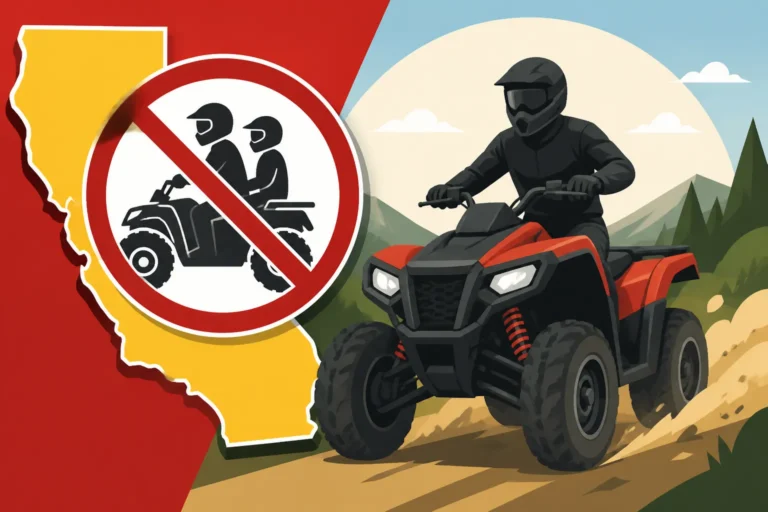
- ATVs: These are typically single-rider machines. California is very clear: [California ATV Passenger Ban Explained]. Passengers are generally prohibited on ATVs when riding on public lands. This is because ATVs are designed for active riding, where the operator shifts their weight to control the vehicle. Adding a passenger disrupts this dynamic, making the ATV unstable and dangerous.
- ROVs (Side-by-Sides/UTVs): These are designed with multiple passengers in mind. They feature steering wheels, foot pedals, and roll cages, operating more like miniature cars than traditional ATVs. Because they are built to carry passengers, the rules focus on ensuring those passengers are carried safely – hence the emphasis on designated seating, seat belts, and specific helmet exceptions.
This distinction is critical. A ranger won't treat an overloaded ATV the same way they'd treat an overloaded UTV, but both could result in a citation. The state acknowledges the multi-passenger design of UTVs but then layers on regulations to mitigate the inherent risks associated with carrying people in an open-air, off-road vehicle.
Evolution of Safety Regulations
The off-road vehicle landscape, particularly with side-by-sides, has changed dramatically over the years. Early UTVs were often utilitarian work vehicles, but modern machines are high-performance recreational vehicles, capable of incredible speeds and aggressive maneuvering. As these vehicles became more popular and more powerful, accident rates unfortunately also increased, particularly related to rollovers and occupants being ejected.
In response, California, along with federal agencies like the CPSC, has continually refined its OHV safety regulations. The goal is to keep pace with vehicle technology and user behavior. Many of the rules you see today regarding seat belts, helmets, and even the design of roll cages (which aftermarket companies like SuperATV help reinforce) are direct results of lessons learned from accidents. These regulations aim to protect riders by enforcing the use of proven safety measures. It’s a proactive approach to ensure that the thrill of off-roading doesn't come at an unacceptable cost to human life and well-being. Understanding this context helps to appreciate why the rules might seem stringent; they are built on years of data and a commitment to making off-road recreation as safe as possible for everyone, from experienced drivers to first-time passengers.
Penalties for Non-Compliance and Enforcement
No one wants to end a fun day of riding with a ticket, especially when you're just trying to enjoy the outdoors with your family and friends. Understanding the consequences of not following California's side-by-side passenger rules is a powerful motivator for compliance. Enforcement is a real thing, and rangers, sheriffs, and other law enforcement personnel are actively patrolling popular OHV areas.
What Happens When Rules Are Broken
If you're caught violating California's passenger rules for side-by-sides, you can expect a citation. The specific penalties will vary depending on the exact infraction, but they can include fines, and in some cases, the requirement to appear in court. These fines are not insignificant and can quickly add up, especially if there are multiple violations (e.g., no seat belt, underage helmet violation, exceeding capacity). For example, riding on a public road where OHVs are not permitted can also incur significant [California Fines for Riding on a Highway].
Some common violations that lead to citations related to passengers include:
- Exceeding Designated Seating Capacity: Having more people in your UTV than it was designed for.
- Failure to Wear a Seat Belt: Any occupant not properly secured.
- Underage Riders Without Helmets: Children under 18 in a side-by-side without an approved helmet, even if the adults are exempt.
- Unsupervised Minor Operators: A child driving a UTV without the required adult supervision and safety certificate.
Beyond the financial penalty, a citation can put a damper on your entire trip and potentially impact future riding privileges. It's simply not worth the risk when the rules are in place for everyone's safety.
How Rangers and Law Enforcement Monitor Compliance
Law enforcement agencies, including the California Highway Patrol (CHP), local sheriff's departments, and park rangers (especially within California State Parks' OHMVR Division), actively patrol OHV areas. Their presence is particularly noticeable during peak riding seasons and holidays at popular spots like [Glamis and the Imperial Sand Dunes] or [Ocotillo Wells: California's Free SVRA]. They perform routine checks at entry points, trailheads, and sometimes even set up temporary checkpoints within riding areas.
What do they look for?
- Visual Inspection: Rangers will often do a quick visual scan of your UTV as you pass, looking for obvious violations like too many people in the vehicle, children without helmets, or visible aftermarket seating that looks unsafe.
- Seat Belt Checks: They might ask you or your passengers to confirm seat belt usage.
- Age Verification: If a rider looks young, they may ask for identification to verify age, especially if a helmet isn't being worn.
- Paperwork: While not directly related to passenger rules, they'll also check your OHV registration and any required permits.
Their primary goal is to ensure safety and educate riders, but they are also authorized to issue citations for non-compliance. It's a good idea to always carry your registration and any relevant safety certificates with you. While you can't technically register an OHV completely online, you can often renew a [Renewing California OHV Registration] that way, ensuring your paperwork is always up to date. Being prepared and compliant not only keeps you safe but also makes for a smoother interaction with law enforcement, allowing you to get back to the fun of riding.
| Requirement / Vehicle Type | ATV (All-Terrain Vehicle) | ROV (Recreational Off-Highway Vehicle/UTV) |
|---|---|---|
| Passenger Allowed? | No (generally prohibited on public lands) | Yes (up to manufacturer's designated capacity) |
| Designated Seating? | N/A | Mandatory for each passenger |
| Seat Belt Required? | N/A | Yes, for all occupants |
| Helmet Required (Adult)? | Yes | Yes, unless adult is in an ROV with a roll cage and proper restraints (ROHV Helmet Waiver) |
| Helmet Required (Under 18)? | Yes | Yes, always for minors |
| Minimum Age to Operate? | 14 (with supervision and safety cert) | 16 (or 14-15 with supervision and safety cert) |
| Operator Safety Cert? | Required (especially for minors/supervisors) | Required (especially for minors/supervisors) |
Disclaimer
This article is for general informational purposes only and does not constitute professional advice. Laws, prices and regulations vary by location and change over time. Consult a qualified professional for guidance on your specific situation.