Why California’s Inyo County Pilot Ended in 2025
Oh, the sting of losing a bit of freedom, especially when it comes to riding our beloved ATVs and UTVs in California! For years, riders in the know championed the Inyo County pilot program, a beacon of hope that promised easier access to some of the state's most stunning backcountry. It allowed us to legally connect trails and access services on certain county roads, offering a taste of what a more integrated OHV network could look like. But if you're feeling a sense of dread or confusion about why those routes are no longer an option, you're not alone. This guide is here to unravel the mystery of why California's Inyo County pilot program for expanded OHV road access officially sunsetted in 2025, diving deep into the rules, the history, and what this means for your future adventures.
The Promise and Pain of Combined-Use Roads
For many of us who love exploring California's vast wilderness on four wheels, the ability to seamlessly connect trails and access amenities is a dream. The Inyo County pilot program felt like a step in the right direction, a glimpse into a future where our machines could be more than just off-highway vehicles, but practical tools for exploration and access. Yet, the reality of California's strict regulations often means navigating a patchwork of rules that can leave even the most seasoned rider scratching their head.
What the Inyo County Pilot Program Was All About
The Inyo County pilot program was a specific legislative effort designed to address a very real problem: how to allow off-highway vehicles to use certain segments of county roads to connect designated trails or reach services like gas stations and campgrounds. Inyo County, with its immense swaths of public land, numerous OHV trails, and small, spread-out communities, was an ideal candidate for such an experiment. The program acknowledged that riders often faced legal dilemmas when a fantastic trail ended abruptly at a county road, forcing them to either turn back, trailer their machines, or risk a citation for illegal road use. This pilot aimed to create a legal bridge over those gaps, recognizing the importance of OHV tourism to the local economy and the recreational desires of thousands of riders. It wasn't about making all OHVs street legal; rather, it was a very targeted effort to permit specific, identified sections of road for OHV use under defined conditions.
The Allure of Connecting Trails
Imagine this: you've spent the morning exploring the dusty trails in the Alabama Hills, the sun warming your face, and the majestic peaks of the Sierra Nevada looming in the distance. Your fuel is getting low, or maybe your stomach is rumbling for a burger in Lone Pine. Under typical California OHV laws, getting from that trail to town might involve loading your UTV onto a trailer, driving a few miles, and then unloading again – a cumbersome process that breaks the flow of your adventure. The beauty of the Inyo County pilot program was the promise of being able to legally drive your machine a short distance on a designated county road to reach that gas station, that diner, or that next trailhead. It opened up possibilities for longer, more integrated rides, reducing the logistical headaches and enhancing the overall experience. Riders could plan multi-day trips that truly linked together, making the most of the incredible natural resources available. It also allowed for greater access to more remote trailheads that might otherwise have been unreachable without complicated staging. [California's Combined-Use Highways] generally offer some limited relief, but the Inyo program was far more expansive in its designated routes.
The Frustration of Limited Access
For many years, the standard approach in California has been highly restrictive when it comes to OHV use on public roads. Unless a very specific "combined-use" segment is officially designated by a local agency and approved by the California Highway Patrol, our machines are strictly off-limits. This often means driving past perfectly good dirt roads that connect two awesome trails simply because they are technically "county roads." It's frustrating to know that an entire network of trails exists, but legal access is a puzzle of disconnected segments. This limitation impacts not only recreational riders but also land managers and emergency services who might want to use OHVs for official duties but face the same restrictions. The traditional rules don't always align with the practical realities of accessing vast, often remote, public lands, leading to a sense of disconnect and a yearning for more sensible solutions.
Navigating California's Strict OHV Road Rules
California has some of the most comprehensive, and often most confusing, regulations concerning off-highway vehicles in the nation. While these rules are in place for safety and environmental protection, they can certainly make planning a ride a complex endeavor. It’s a reality that every ATV and UTV enthusiast in the state has to contend with, and it’s a big reason why programs like the Inyo County pilot were so highly anticipated.
Why OHVs Aren't "Street Legal" in California
At its core, California law differentiates very clearly between vehicles designed for highway use and those designed for off-highway use. Your typical ATV, UTV, or dirt bike lacks many of the features required for a "street legal" vehicle, such as headlights, taillights, turn signals, mirrors, and specific emissions equipment, that meet federal motor vehicle safety standards (FMVSS) and California Vehicle Code (CVC) requirements for on-road travel. Furthermore, the very nature of their construction – often lighter, higher off the ground, with knobby tires and suspensions optimized for rough terrain rather than pavement – makes them unsuitable and potentially unsafe for consistent highway speeds and traffic conditions. Even if you were to bolt on all the necessary lights and signals, the underlying vehicle type simply isn't recognized as street legal by the California Department of Motor Vehicles. [Why California Will Not Convert a UTV] explores this challenge in more detail. This fundamental distinction is critical to understanding why road access for OHVs is such a heavily regulated topic in the state.
The Limited Exceptions: Combined-Use Highways
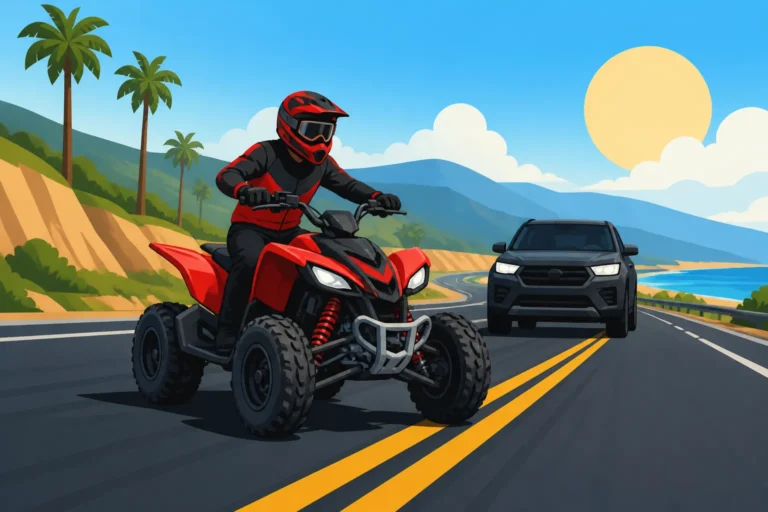
Despite the general prohibition, there are very limited exceptions under California Vehicle Code (CVC) 38026. This section allows local agencies, primarily cities and counties, to designate specific portions of their roadways as "combined-use" highways. These are roads where OHVs are permitted to operate for the express purpose of accessing adjacent OHV trails or facilities. However, these designations aren't handed out lightly. They require a formal request from the local agency, a public hearing, and crucially, the approval of the California Highway Patrol (CHP). The CHP's involvement ensures that safety considerations, such as sight lines, traffic volume, and road design, are thoroughly evaluated. Even when approved, these combined-use segments are often highly specific, with clear signage indicating where OHV use is allowed and where it ends. They are not blanket permissions but surgical allowances designed to solve specific access problems, usually over very short distances.
What the 3-Mile Cap Really Means
A critical element of California's standard combined-use highway rules is the infamous 3-mile cap. This limitation specifies that a designated combined-use segment cannot exceed three miles in length. The intent behind this restriction is to minimize the exposure of OHVs to traditional highway traffic, reflecting the state's cautious approach to mixing off-highway and on-highway vehicles. For riders, this means that even if a county road is designated for combined use, you can only travel a maximum of three miles on it before you must either re-enter an OHV trail or load your machine onto a trailer. This cap often feels arbitrary and restrictive, especially when a gas station or a crucial trail connector lies just a bit further down the road. It adds another layer of planning and constraint to riding in California, often making seamless, long-distance OHV touring on public roads practically impossible. It's a constant source of frustration for riders who see miles of perfectly safe, low-traffic dirt roads that they cannot legally use for connectivity. [California's 3-Mile Combined-Use Cap] delves into this in more depth.
The Inyo County Pilot Program: A Unique Experiment
Given the stringent statewide rules, the Inyo County pilot program emerged as a truly unique and significant experiment. It represented a deviation from the standard, a concerted effort to test a more flexible approach to OHV road access in a region where such flexibility made immense practical sense. For many, it was a glimpse of what could be possible if regulations were tailored more closely to the specific needs and geography of an area.
How Inyo County Stood Apart
What made the Inyo County pilot program so distinct was its ability to circumvent the strict 3-mile cap. Instead of being limited to short, disconnected segments, the program allowed Inyo County, with CHP approval, to designate significantly longer stretches of roads for OHV access. This was a game-changer for riders and local businesses alike. It meant that instead of just a few hundred yards of connectivity, riders could potentially use miles of designated roads to travel between trail networks, access towns, or reach remote campsites. The sheer scale of public land in Inyo County – bordering the eastern Sierra Nevada, Death Valley National Park, and vast stretches of BLM land – made this flexibility particularly valuable. It acknowledged that the sparse population and low traffic volumes on many of Inyo's dirt roads presented a different risk profile than, say, a busy road in Orange County. This distinction was key to the program's unique status.
Specific Routes and Their Impact
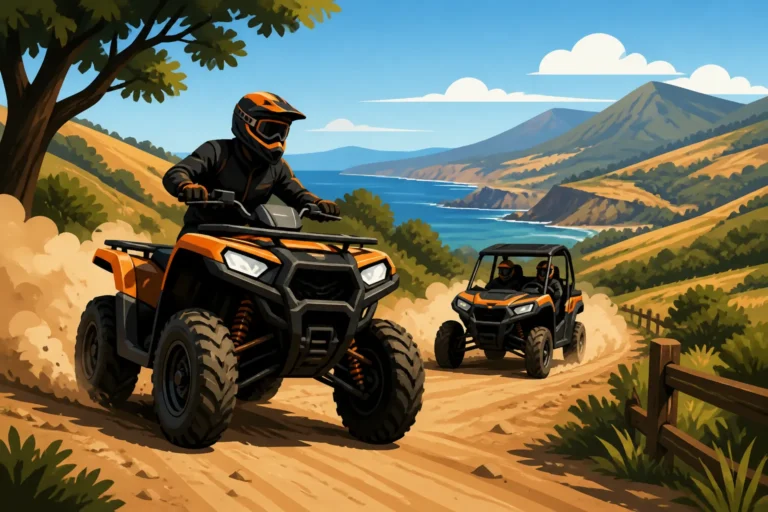
Under the pilot program, several critical routes were designated, significantly enhancing the rider experience. For example, some designated roads allowed riders coming off trails in the Bishop area to access services directly in town, or to connect to other trail systems without having to load up. Similarly, routes around Lone Pine and Big Pine facilitated access to the stunning areas west of Highway 395, including trailheads leading into the Inyo National Forest. These routes weren't just random stretches of pavement; they were carefully selected, mostly unpaved county roads with low traffic, strategically chosen to maximize connectivity. The impact was immediate and positive: riders reported being able to enjoy longer, more diverse trips, and local businesses saw an uptick in OHV tourism. Imagine the convenience of being able to ride from a trail directly to a store for supplies, rather than having to break down camp or trailer your machine. This practical benefit was keenly felt by those who utilized the program.
The Community's Hopes and Dreams
The Inyo County pilot program wasn't just about regulatory relief; it was about fostering a vision for sustainable recreation and economic development. Local businesses, from motels and restaurants to gas stations and hardware stores, saw the potential for increased tourism. Riders, in turn, appreciated the greater freedom and the welcome from communities that recognized the value of OHV enthusiasts. There was a strong hope that this pilot could serve as a successful model for other rural counties in California, proving that thoughtful, localized legislation could expand access while maintaining safety. The program embodied a dream of a more integrated and accessible public land experience, where OHV recreation could thrive without being unduly hampered by overly broad restrictions. It also encouraged responsible riding, as local communities were invested in the success of the program.
Unpacking the Sunset: Why 2025?
The unfortunate truth is that even successful pilot programs often have expiration dates embedded in their legislative DNA. The Inyo County program was no exception. While it was widely appreciated by the OHV community and seemed to benefit the local economy, the nature of California's legislative process meant its time was always limited, ultimately reaching its planned conclusion in 2025. This sunset was not necessarily a reflection of failure but rather a function of how such experimental laws are designed.
The Legislative Framework and Time Limits
The Inyo County pilot program was established through specific legislation that included a sunset clause. A sunset clause is a provision in a law that automatically terminates the law on a specific date, unless it is actively renewed by further legislative action. This is a common practice for pilot programs or experimental laws, as it allows the state to test new approaches, gather data, and assess their effectiveness and impacts over a set period without making them permanent immediately. For Inyo County, the initial legislation granting this expanded OHV access was set to expire, and without new legislation passed to extend it, the program naturally reverted to the standard statewide rules in 2025. This means that while the program operated successfully for its duration, the political will or opportunity to pass an extension didn't materialize, leading to its planned end.
The Hurdles of Extending a Pilot Program
Extending a pilot program, even a successful one, is not a simple task in California's legislative environment. It requires a new bill to be introduced, go through committees, receive votes in both the Assembly and the Senate, and ultimately be signed by the Governor. This process can be incredibly complex, time-consuming, and subject to various political considerations. Different interest groups, not just those directly involved in OHV recreation, might weigh in, and concerns about environmental impact, public safety, or precedent for other areas could arise. Furthermore, legislative priorities are constantly shifting. Even if the pilot was deemed successful, other pressing issues might have overshadowed efforts to push for its extension. The sheer volume of bills considered each session means that even a well-regarded program can get lost in the shuffle if it doesn't have sustained, high-level political advocacy behind it.
Conflicting Interests and Road Safety Concerns
While the OHV community and local businesses in Inyo County largely supported the pilot, there are always various perspectives to consider. Concerns about road safety often underpin California's strict OHV rules. Critics or cautious observers might raise questions about the potential for increased accidents, the wear and tear on roads not designed for OHV traffic, or the mixing of different vehicle types. While the Inyo program focused on low-traffic, unpaved roads, the perception of increased risk can be a powerful argument against extensions. Environmental groups, too, often monitor OHV activity closely, and while the Inyo program was designed to keep vehicles on designated routes, broader concerns about emissions or habitat disturbance can sometimes enter the legislative debate. Navigating these conflicting interests, even in the face of a successful pilot, creates significant hurdles for the long-term continuation of such programs. The state often errs on the side of caution when it comes to road safety, making any deviation from the norm a tough sell.
The Impact on Riders and Local Economies
The sunsetting of the Inyo County pilot program undoubtedly leaves a void for riders and has tangible economic consequences for the communities that benefited from it. It's a stark reminder that access, once gained, isn't always permanent, and that advocacy for responsible riding and sustainable access remains an ongoing effort. For those who planned their trips around these routes, it means a significant recalculation of how to explore this incredible region.
What This Means for Your Riding Plans
For riders who enjoyed the freedom and convenience of the Inyo County pilot routes, the primary impact is a return to the statewide standard rules. This means that [California's 3-Mile Combined-Use Cap] is once again the maximum limit for any designated road segment. You can no longer rely on those longer, previously permitted stretches of county road to connect trails or access towns with your OHV. This requires a much more meticulous planning process for your rides. You'll need to carefully consult maps, identify where legal OHV trails end, and plan for trailering your machine on any road segments that exceed the standard combined-use criteria or are not designated at all. It may mean shorter ride loops, more time spent loading and unloading, or even re-evaluating certain multi-day adventures that relied heavily on those longer connections. For many, this is a step backward in terms of convenience and accessibility to certain areas. Remember that [California Fines for Riding on a Highway] can be substantial, so adherence to the updated rules is critical.
Economic Ripple Effects in Inyo County
The pilot program was designed to boost local economies in Inyo County by drawing in OHV tourism. When riders have easier, legal access to trails and services, they are more likely to spend money on gas, food, lodging, and supplies in the local communities. The sunsetting of the program could lead to a decrease in this economic activity. Riders who are faced with more logistical challenges or perceive reduced access might choose to take their recreation dollars elsewhere, to states or regions with more permissive OHV road rules. This can be particularly tough on small, rural businesses that rely on seasonal tourism to stay afloat. While the program wasn't a silver bullet, it was a valuable component of the local tourism strategy, and its absence will likely be felt by many small businesses that geared their services towards the OHV community.
The Search for New Solutions
The end of the Inyo County pilot program doesn't extinguish the need or the desire for better OHV road access in California. Instead, it shifts the focus back to finding alternative solutions. This could involve renewed efforts to advocate for new statewide legislation, pushing for local agencies in other counties to establish standard combined-use designations where feasible, or exploring creative partnerships with private landowners. The OHV community and supporting businesses will need to re-engage with legislators, land managers, and local authorities to highlight the economic and recreational benefits of responsible access. Brands like SuperATV, which provides a wide range of accessories and components for ATVs and UTVs, understand that enhanced accessibility directly impacts the enjoyment and utility of these machines. If riders can't get to the trails easily, their demand for aftermarket parts might diminish, illustrating the broader economic ecosystem at play. The challenge now is to learn from the Inyo experience and channel that knowledge into new, viable pathways for access.
What's Next for California OHV Road Access?
While the Inyo County pilot program has concluded, the conversation around OHV road access in California is far from over. The fundamental challenges that led to the pilot program—the desire for connectivity, economic benefits, and responsible recreation—still persist. It means a continued effort on multiple fronts to ensure that riders can enjoy California's vast and diverse landscapes responsibly and legally.
Current Combined-Use Options and Their Limits
Even without the Inyo County pilot program, California does have existing provisions for combined-use highways under CVC 38026. However, as we've discussed, these are limited by the 3-mile cap and require local agency designation and CHP approval. Riders should actively seek out maps and information from local county and city offices, as well as the California State Parks OHMVR Division, to identify any existing designated routes in areas they plan to visit. While these segments are typically short, they can still be incredibly useful for connecting shorter trail sections or accessing immediate services. Understanding [California's Combined-Use Highways] is paramount for any rider venturing onto roads. It's crucial to remember that each designation is unique, and just because one county has a combined-use road, it doesn't mean a neighboring county will. Always check the specific regulations for your riding area.
Advocating for Future Legislation
The experience of the Inyo County pilot program, despite its sunset, provides valuable data and a case study for future legislative efforts. Advocates for OHV recreation can point to the pilot's success in Inyo County as evidence that expanded, carefully managed road access can work without compromising safety or environmental integrity. Moving forward, efforts could focus on:
- Renewed Pilot Programs: Advocating for new pilot programs in other suitable rural counties, potentially with updated parameters or a longer review period.
- Statewide Amendments: Pushing for amendments to CVC 38026 that might increase the 3-mile cap in specific, low-traffic areas or create a more streamlined approval process for local agencies.
- Economic Impact Studies: Commissioning or funding comprehensive studies that quantify the economic benefits of OHV recreation and expanded access, providing data to support legislative arguments.
- Coalition Building: Forming broader coalitions with local businesses, tourism boards, and environmental groups who share an interest in sustainable outdoor recreation.
Organizations like the California Off-Road Vehicle Association (CORVA) and local OHV clubs are often at the forefront of these advocacy efforts, working to ensure the voice of the rider is heard in Sacramento. Your participation, whether through membership or by contacting your local representatives, is vital.
Community Initiatives and Private Land Access
Beyond legislative efforts, there are other avenues to explore for enhancing OHV access. Local communities and OHV clubs can work together to:
- Designate Local Routes: Even without state-level changes, local communities can designate their own short combined-use routes within the existing 3-mile limit where it makes sense.
- Private Land Partnerships: Exploring partnerships with private landowners to establish designated access corridors or trail systems that might connect to public lands, potentially with specific permits or fees.
- Educational Programs: Continuing to promote responsible riding practices, land ethics, and safety education. Demonstrating that the OHV community is responsible and respectful strengthens arguments for increased access.
- Trail System Development: Focusing on developing and maintaining robust, interconnected OHV trail systems within designated SVRAs and national forests, providing ample opportunities for riding even if road connections remain limited. The funds generated from [What California OHV Fees Pay For] directly contribute to these efforts.
While the loss of the Inyo County pilot program stings, it highlights the need for continued vigilance and proactive engagement from the OHV community. The spirit of adventure and the desire to explore California's incredible landscapes on our ATVs and UTVs will always drive us to seek out new and better ways to access them. Whether you're upgrading your rig with a new lift kit from SuperATV or planning your next adventure, knowing the rules and advocating for the future is key.
Here’s a quick comparison to help visualize the difference between the Inyo County Pilot Program and California's Standard Combined-Use Rules:
| Feature | Inyo County Pilot Program (Pre-2025) | California Standard Combined-Use Rules (Current) |
|---|---|---|
| Mileage Limit | No 3-mile cap; allowed longer designated routes | Strictly limited to a 3-mile maximum per segment |
| Approval Process | Local agency request + CHP approval (Pilot specific) | Local agency request + Public Hearing + CHP approval |
| Legislative Basis | Specific, time-limited pilot legislation | California Vehicle Code (CVC) 38026 permanent law |
| Purpose | Enhanced connectivity, access to towns/services | Primarily access to adjacent OHV trails/facilities |
| Primary Road Type | Mostly unpaved county roads, low traffic | Any roadway, but typically low-speed roads are chosen |
| Status | Expired (sunsetted) in 2025 | Permanent, ongoing statewide option |
Disclaimer
This article is for general informational purposes only and does not constitute professional advice. Laws, prices and regulations vary by location and change over time. Consult a qualified professional for guidance on your specific situation.