Registration Checks at a Glamis Checkpoint
There's nothing quite like the thrill of loading up the rig, pointing it towards the Imperial Sand Dunes, and feeling the anticipation of a weekend of epic riding at Glamis. But for many, that excitement can quickly turn to anxiety when they see those orange cones and uniformed rangers setting up a checkpoint. It's a moment that can make even the most seasoned rider's stomach do a little flip. No one wants their much-anticipated trip to be cut short or marred by a citation because of a missing sticker or forgotten piece of paper. This guide is here to walk you through exactly what to expect at a Glamis checkpoint and, more importantly, how to sail through it with confidence, so you can get back to what you came for: carving up the sand.
Why Checkpoints Exist at Glamis And What They Look For
When you encounter a checkpoint at Glamis, it's easy to feel like you're being targeted or that someone is trying to spoil your fun. But truthfully, these checkpoints serve a crucial purpose that benefits all of us who love to ride the dunes. They're not just about enforcement; they're about ensuring the long-term sustainability, safety, and responsible management of these incredible riding areas.
The Purpose Behind the Presence
Think of the fees you pay for your OHV registration and the specific permits for areas like Glamis. These aren't just arbitrary taxes. They are the lifeblood of the entire OHV program in California. The money collected from these fees directly funds the maintenance of trails, the operation of ranger patrols, the development of new facilities, and crucial environmental protection efforts. Without these funds, our beloved riding spots could degrade or even close down. So, when rangers are checking for current registration or proper permits, they're essentially ensuring that everyone is contributing their fair share to keep these areas open and awesome for everyone, now and in the future. It’s also about safety; rangers are often looking for obvious safety hazards that could put riders or others at risk. They’re part of the team working to make sure our adventures are as safe as they are thrilling. [What California OHV Fees Pay For] explains more about where these contributions go.
What Rangers Are Primarily Checking For
At a Glamis checkpoint, rangers have a specific checklist of items they're looking for to ensure compliance. It’s not a fishing expedition; they’re focused on the most critical elements of responsible OHV use in the dunes.
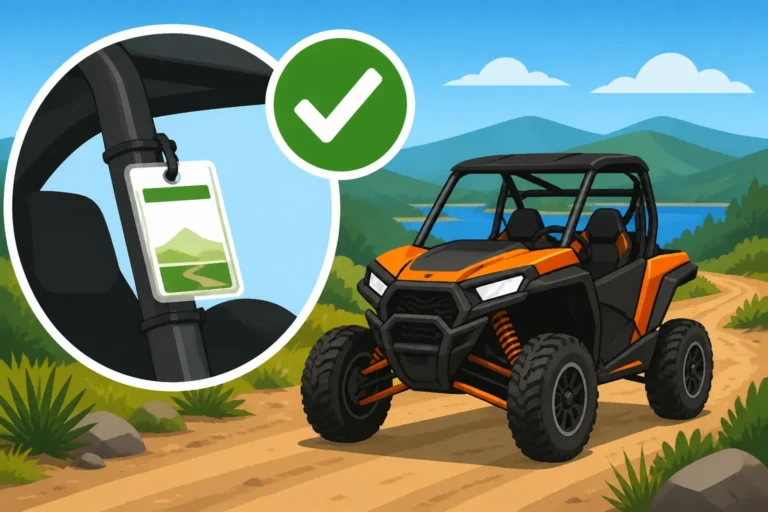
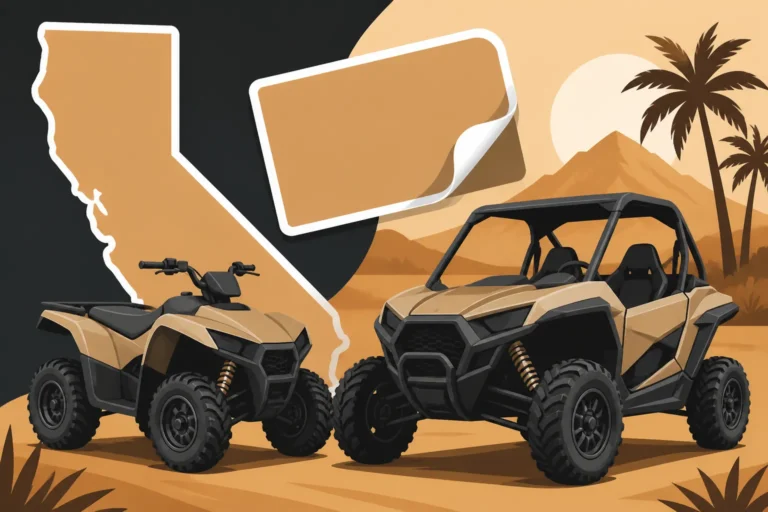
First and foremost, they're scrutinizing your OHV registration. This means looking for a valid, current Green, Red, or Tan sticker affixed to your machine. Each sticker type has its own set of rules regarding when and where you can ride, and the rangers are well-versed in these distinctions. A Green Sticker means your machine meets California's stricter emissions standards and can generally be ridden year-round in most areas. Red Stickers, typically for machines that don't meet those standards, have seasonal restrictions that used to apply widely but have been greatly altered recently. Then there are Tan Stickers, which are reserved for specific competition or sanctioned event machines. Understanding which sticker your machine has and what it allows is fundamental. [California's Green Sticker Explained], [Red Stickers and What Changed in California], and [California's Tan Sticker Eligibility] offer deeper dives into these categories. If your machine is from out of state, they'll be looking for a California Nonresident OHV Use Permit, as most out-of-state registrations aren't honored here.
Beyond your OHV's registration, the specific Imperial Sand Dunes Recreation Area (ISDRA) Permit is a critical item. This is a separate permit required for any vehicle (including your tow rig, if applicable) entering the Glamis riding area during the peak season. It's a common oversight for newcomers, but a mandatory one. [Imperial Sand Dunes, California's Biggest Dune Field] details the expanse of the area, while [ISDRA Permits and California's October Season] clarifies the timing for these specific permits.
Safety gear is another huge focus. For dune riding, an eight-foot whip with a specific-sized flag attached near the top is non-negotiable for visibility. They'll also be checking that all riders, especially children, are wearing appropriate helmets. California takes helmet laws very seriously, especially on public lands. [California Dune Flags and Whips] and [California Helmet Law for ATV Riders] lay out these rules explicitly.
Finally, rangers will often perform quick checks for spark arresters and excessive noise. Spark arresters are a legal requirement on brush-covered public lands and are critical for preventing wildfires. Loud exhausts are not only a nuisance to other riders and nearby communities but also illegal if they exceed California's decibel limits. [California Spark Arrester Rules] and [California Noise Rules at an SVRA Gate] explain what you need to know to stay compliant.
Your Pre-Ride Checklist for a Smooth Glamis Checkpoint Experience
The key to a stress-free checkpoint experience isn't luck; it's preparation. Before you even leave home, or certainly before you hit the main entrance to the dunes, a quick run-through of your paperwork and machine readiness can save you a world of trouble. Think of this as your personal pre-flight checklist for off-road adventure.
Paperwork Perfection
Having your documents in order is half the battle. This goes beyond just having them; it means having them accessible. Digging through a messy glove box or a packed cooler while a line of impatient riders waits behind you is not how you want to start your trip.
For your California OHV Registration, you'll need the current Green, Red, or Tan sticker properly displayed on your machine. But don't stop there. Always carry the physical paper registration card with you. While the sticker is the primary visual, having the card proves ownership and provides all the details a ranger might need if there's any question about your sticker's validity or expiration. Many riders keep a laminated copy in a secure, waterproof bag right on the machine, and another copy in the tow vehicle. [Carrying Registration Paper on the Sand] outlines why this simple step is so important.
Next up, the ISDRA Permit. This isn't optional for Glamis during its designated season. You can often buy these online before your trip, which is highly recommended to avoid lines and potential issues at the gate. If you buy it online, you'll need to print it out and display it properly on your tow vehicle's windshield. On-site permits are also available, but buying ahead saves time. Remember, this permit is separate from your OHV registration. [Buying an ISDRA Permit Online] provides instructions, and you can learn more about the different options in [What the $55 Off-Site Weekly Dune Permit Covers] and [What the $70 On-Site Weekly Dune Permit Covers].
If you're an out-of-state rider, you'll need to confirm if your home state's registration offers reciprocity with California. For most states, it doesn't, meaning you'll need to purchase a California Nonresident OHV Use Permit. This permit is an additional requirement to ensure you're contributing to California's OHV program. Just like the ISDRA permit, it's best to secure this beforehand. [How to Buy a California Nonresident OHV Permit] explains how to get one.
Finally, while not strictly demanded at every checkpoint, having proof of ownership like a title or a bill of sale can prevent headaches, especially if you've recently purchased your machine or if there's any dispute about its legal status. A properly executed bill of sale, which you can easily generate using resources like LawDepot, can be invaluable for showing you are the rightful owner. It’s always better to be over-prepared than under-prepared when it comes to legal documentation for your vehicle. [California OHV Bill of Sale Requirements] outlines what makes a bill of sale proper and legally sound.
Machine Readiness & Safety Essentials
Beyond the paperwork, the physical condition and setup of your machine are also under scrutiny. These aren't just rules; they're safety measures designed to protect you and others.
Ensure your OHV stickers or ID plates are current, clearly visible, and securely affixed to your machine. For quads, the ID plate typically mounts on the rear. A faded or peeling sticker can be just as problematic as a missing one, so take a moment to check. [Where the ID Plate Mounts on a Quad] gives you the specifics on placement.
The whip and flag are absolutely non-negotiable for dune riding. Your whip needs to be at least eight feet tall from the ground when mounted, and the flag itself must be a minimum of 6×12 inches, securely attached within 10 inches of the whip's tip. This is all about visibility in the dynamic dune environment, preventing collisions. Rangers will check these specifications closely. [California Dune Flag Requirements] and [California Whip Height Requirements] detail the exact standards.
Confirm your machine has a functional, USFS-approved spark arrester. This device prevents hot carbon particles from escaping your exhaust and potentially igniting dry vegetation – a critical fire prevention measure in the desert. Similarly, make sure your muffler and exhaust system are in good working order and meet California's sound limits. An aftermarket exhaust that's too loud can definitely draw unwanted attention and lead to a citation. [California Spark Arrester Requirement Explained] and [California Sound Limits for OHVs Explained] are good resources for checking your compliance.
Lastly, and perhaps most importantly, ensure everyone in your group has and is wearing a properly fitted helmet. While some enclosed vehicles like side-by-sides may have exceptions for adults under certain conditions (like having a roll cage and seatbelts), it's generally best practice for all riders, especially on ATVs and dirt bikes, to wear helmets on public land.
Here’s a quick table summarizing your Glamis checkpoint readiness:
| Document/Item | Required at Checkpoint? | Notes |
|---|---|---|
| California OHV Registration (sticker) | Yes | Current Green, Red, or Tan sticker affixed to machine. |
| California OHV Registration (paper) | Yes | Paper copy of registration, for verification of sticker and ownership. |
| ISDRA Permit | Yes | Visible on tow vehicle windshield or specified location on machine. Purchased online or at authorized vendors. |
| Nonresident OHV Use Permit | Yes (if applicable) | For out-of-state machines lacking California reciprocity. |
| Helmet | Yes | For all riders, particularly youth. Certain ROV operators/passengers may have waivers. |
| Whip and Flag | Yes | 8-foot whip with a 6×12 inch flag, 10 inches from the top, for dune riding. |
| Spark Arrester | Yes | USFS approved and fully functional, critical for fire prevention. |
| Proper Muffler/Exhaust | Yes | Must meet California sound limits; excessive noise is a common violation. |
| Valid Driver's License/ID | Yes | For the machine operator; usually checked to confirm identity and age. |
| Bill of Sale/Proof of Ownership | Recommended | Not always explicitly demanded, but useful for new purchases or questions of ownership. LawDepot templates can help you prepare this. |
What to Expect When You Encounter a Checkpoint
Knowing what might happen can significantly reduce any anxiety you feel when approaching a checkpoint. It's usually a straightforward process, but being mentally prepared for each step helps.
The Checkpoint Flow
As you approach a checkpoint, you'll typically see clear signage and often a uniformed ranger directing traffic. The first, and arguably most important, step is to slow down and follow all instructions. Don't try to drive around it or act impatient. Approach calmly and prepare to stop.
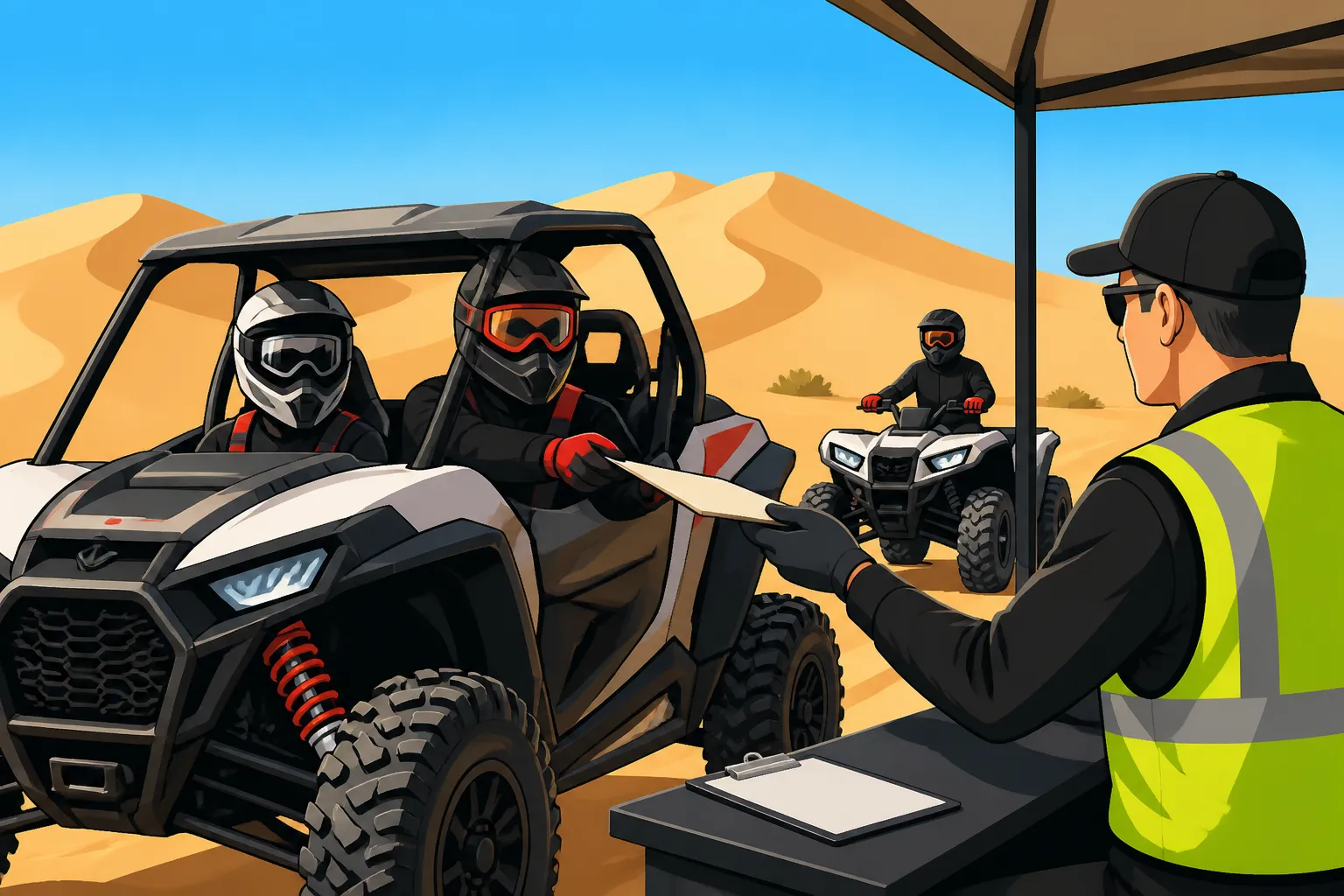
When it's your turn, a ranger will usually greet you. Be polite, friendly, and cooperative. They're doing their job, often in hot, dusty conditions, and a good attitude goes a long way. Have your driver's license or ID ready, and if you're asked, present your paper OHV registration, ISDRA permit, and any nonresident permits you have. Having these documents easily accessible will make the process much faster for everyone. [Carrying Registration Paper on the Sand] notes that photos of documents might not always be accepted, so bring the originals or clear copies.
The ranger will then typically perform a quick visual inspection of your machine(s). They'll look for the current OHV sticker, verify the whip and flag height, check for a spark arrester, and often listen to the exhaust for excessive noise. They might also briefly check for helmets on riders. This inspection is usually very quick, often just a minute or two.
Once they've confirmed everything is in order, they'll wave you through, and you're free to continue your adventure!
Common Pitfalls and How to Avoid Them
Even with the best intentions, it's easy to overlook something important. Here are some of the most common issues that lead to trouble at Glamis checkpoints and how you can sidestep them:
Expired Registration: This is probably the number one reason riders get stopped and ticketed. The California OHV registration runs on a two-year cycle and expires on June 30th. It’s easy to forget, especially if you only ride occasionally. Always double-check your sticker's expiration date before you head out. If it's expired, renew it immediately. Many DMV services offer renewal options, though OHV registration generally requires a visit to a field office. [Renewing California OHV Registration] gives you the full rundown on how to keep your sticker current.
Missing ISDRA Permit: Just because you have a Green Sticker doesn't mean you can skip the ISDRA permit. This is a separate federal requirement for the Imperial Sand Dunes. Many first-timers assume their state OHV registration is all they need. Don't make that mistake. If you haven't bought one online, plan to buy it at a vendor on the way to the dunes or at one of the designated spots before you hit the main riding areas.
Improper Flag or Whip: This is another frequent citation. Whips that are too short, flags that are too small, or flags not positioned correctly at the top of the whip are all common issues. Take the time to measure and ensure your setup meets the specifications exactly. It’s not just a rule; it’s a vital safety tool in the dunes.
Loud Exhaust or No Spark Arrester: These are often detected visually or audibly by rangers. If your machine is unusually loud, or if you've modified your exhaust without ensuring it remains compliant and has a spark arrester, you're inviting a closer look and a potential citation. Always confirm your exhaust is compliant with state sound limits and that you have an approved spark arrester.
Lack of Proper ID/Documentation: While rangers are generally reasonable, if you can't produce an ID or the necessary paperwork when asked, it complicates things. Keep your ID on you and all vehicle registration paperwork organized in a waterproof bag. If you’re riding a machine that someone else technically owns, having a clear letter of permission or a bill of sale can prevent awkward questions. For example, if you’ve recently bought a used quad, having a well-drafted bill of sale from a platform like LawDepot can quickly clear up any confusion about ownership, should it arise.
If something is amiss, what happens next depends on the severity. For minor issues, a warning might be issued. For more serious infractions, you could face a citation (a ticket) or even be turned around and not allowed to ride until the issue is rectified. In the most severe cases, your machine could even be impounded. The goal, of course, is to avoid all of these scenarios through thorough preparation.
Beyond the Checkpoint: Ongoing Vigilance at Glamis
Passing through a checkpoint isn't a "one and done" situation for your entire trip. Compliance with OHV rules and regulations is expected throughout your entire stay at Glamis. Rangers aren't just stationed at the entrances; they're actively patrolling the dunes, campgrounds, and access roads.
Random Patrols and Spot Checks
It’s crucial to understand that the check at the entrance is just the first layer of enforcement. Rangers regularly patrol the riding areas. They'll ride through camp, observe riders on the sand, and might even pull you over while you're out enjoying the dunes for a spot check. This means your current registration sticker, proper flag, and spark arrester must be in place and functional at all times, not just when you drive past the initial gate.
Imagine you've been riding for a few hours, your flag whip has snapped, or your paper registration has blown away from your machine. If a ranger on patrol stops you, you could still face the same consequences as if you were at a checkpoint. They check plates at a Glamis checkpoint, but also everywhere else. This ongoing vigilance is part of maintaining safety and order across the vast expanse of the Imperial Sand Dunes.
Why Compliance Matters Beyond Avoiding a Ticket
Ultimately, adhering to these rules isn't just about avoiding a fine or the hassle of a citation. It's about protecting the sport and the places we love to ride. Every fee collected, every spark arrester checked, and every flag ensured to be at the correct height contributes to:
- Safety: Whips and flags are literal lifesavers in the dunes, preventing catastrophic collisions. Helmets protect riders. Sound limits reduce noise pollution that impacts other users and wildlife.
- Environmental Protection: Spark arresters prevent wildfires. Designated riding areas, supported by OHV fees, help contain our impact and protect sensitive ecosystems, like those for the desert tortoise, ensuring these lands remain open.
- Future Access: When riders consistently comply with rules, it strengthens the case for keeping public lands open for OHV recreation. Conversely, a high rate of non-compliance can lead to stricter regulations, closures, or reduced access.
By taking the time to ensure your paperwork is perfect and your machine is fully compliant, you're not just being a good individual rider; you're being a responsible steward of the entire OHV community. And that, more than anything, ensures countless more weekends of exhilarating dune riding at Glamis for everyone.
Disclaimer
This article is for general informational purposes only and does not constitute professional advice. Laws, prices and regulations vary by location and change over time. Consult a qualified professional for guidance on your specific situation.