Registering a Quad Found in a Barn
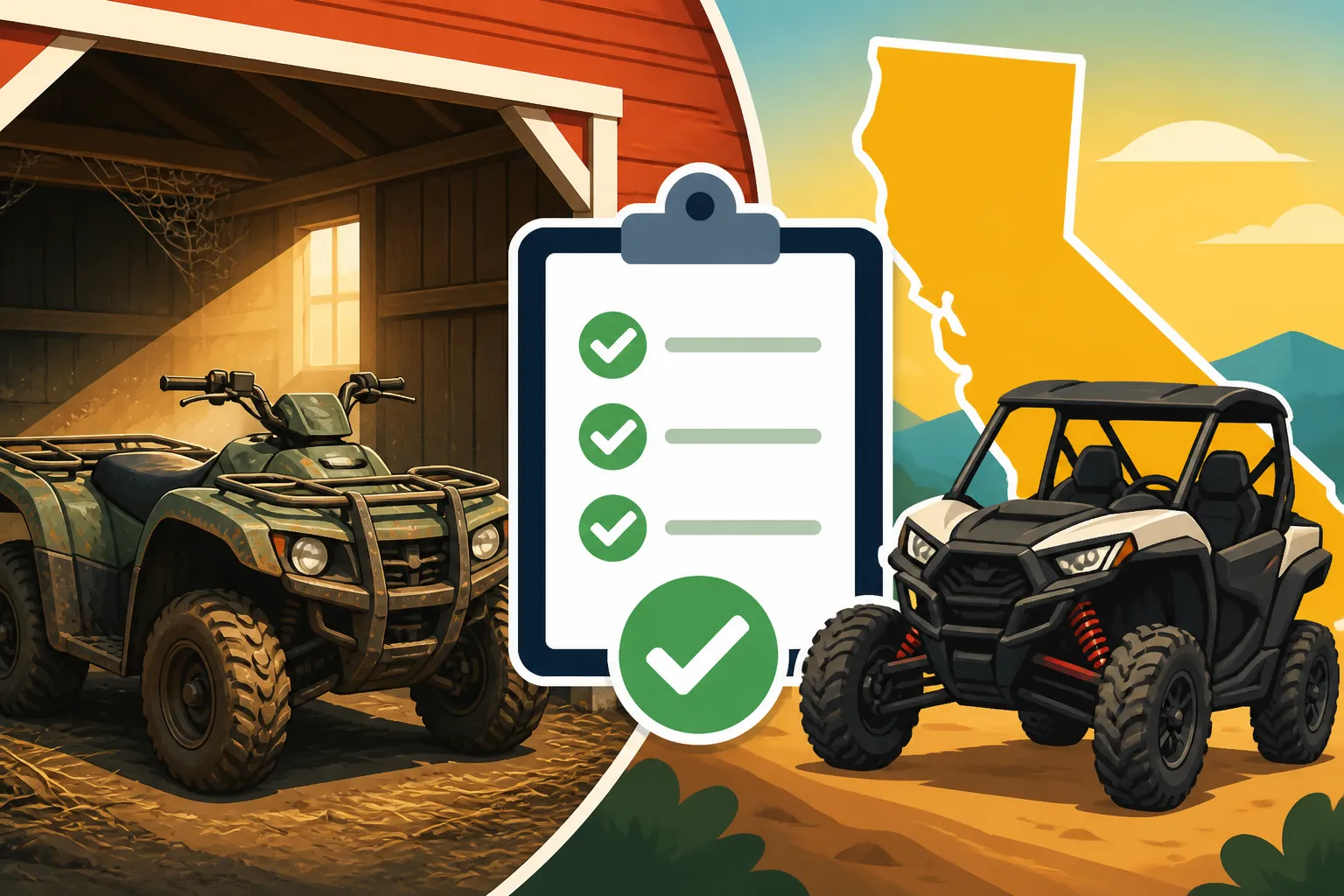
You’ve just stumbled upon a vintage gem – maybe a dusty quad buried under a tarp in the corner of a long-forgotten barn, or perhaps it was tucked away behind some old farm equipment. The thrill of discovery is quickly followed by a common, nagging question: "How in the world do I get this thing legally registered and ready to ride in California when there's absolutely no paperwork?" It’s a frustrating situation, feeling like you’ve found a treasure but can’t unlock its full potential. This guide is here to walk you through the unique, often convoluted process of registering an off-highway vehicle (OHV) in California when a traditional title and registration simply aren't available.
The Initial Discovery: What Do You Have?
Finding an old quad in a barn is like discovering a time capsule. It's exciting, but before you can even think about firing it up, you need to understand exactly what you've got on your hands – and what legal hoops you might need to jump through. The absence of traditional paperwork means you're starting from scratch, and that journey begins with identifying the machine itself.
Uncovering the Quad's History: VIN and Engine Numbers
The very first, non-negotiable step is to locate and meticulously record the Vehicle Identification Number (VIN) and, if possible, the engine number. These aren't just random digits; they are the unique genetic code of your quad, crucial for determining its identity and ensuring it's not a stolen machine. The VIN is typically stamped on the frame itself, often on the front steering neck, a frame rail near the footpegs, or sometimes under the seat. It’s usually a 17-character sequence for machines built after 1981, though older quads might have shorter VINs. The engine number, if separate from the VIN, can sometimes be found near the crankcase or cylinder head.
Why is this so important? Because without a title or registration, these numbers are your only verifiable link to the quad's past. You'll need them for any interaction with the California Department of Motor Vehicles (DMV) or the Off-Highway Motor Vehicle Recreation (OHMVR) Division. Take clear photos of these numbers once you find them. Sometimes, rust or grime can make them hard to read, so a wire brush and a little elbow grease might be necessary. Be on the lookout for any signs of tampering – grinding marks, re-stamping, or welding where numbers should be. These are red flags that could indicate a stolen vehicle, and that's a path you definitely don't want to go down.
Why Paperwork Matters Even if You Don't Have It
It might seem obvious, but it's worth reiterating: paperwork establishes legal ownership. In a perfect world, when you buy a quad, the seller hands you a clean title, and you simply transfer it into your name. When you find a quad in a barn, that ideal scenario is out the window. The DMV's entire system is built around verifiable ownership, primarily through titles and previous registrations. Without these documents, you're essentially claiming ownership of a machine with no official record tying it to you.
The DMV views this situation with a healthy dose of skepticism, and rightly so. They need to ensure that the vehicle isn't stolen, that there are no outstanding liens against it, and that you are indeed the rightful claimant. This is why the process for a "barn find" is more involved and requires a few extra steps compared to a straightforward title transfer. It’s not just about getting a sticker to ride; it’s about establishing a legal chain of ownership from the unknown past to your present possession.
Navigating the California DMV Without a Title
Getting an OHV registered in California when you don't have a title or even a bill of sale can feel like trying to solve a riddle without all the clues. The DMV has specific procedures for these "title absent" scenarios, and understanding them is key to successfully bringing your barn find back to life on the trails.
Proving Ownership: The Bill of Sale Dilemma
Most vehicle registrations, whether on-highway or off-highway, hinge on proving legal ownership, usually through a signed-over title or a clear bill of sale from the previous owner. But what if the "seller" is an unknown entity, perhaps the farmer who owned the barn decades ago, or an anonymous prior owner? You can't get a signature from a ghost.
In these situations, you'll likely need to create your own declaration of ownership. This isn't just writing "I own this now" on a napkin. The DMV typically requires a sworn statement or an "Affidavit of Facts" (Form REG 256) detailing how you came into possession of the quad. You'll need to explain the circumstances of finding it, that you've made reasonable efforts to locate the previous owner (if applicable), and that you believe you are the rightful owner. It's crucial to be honest and provide as much detail as possible. While you won't be using it to transfer a title from a seller, a tool like LawDepot could be useful for drafting a general Bill of Sale template or affidavit to ensure you cover all legal bases, even if you’re just documenting your own discovery. It helps to structure your explanation clearly and professionally, especially when you're presenting it to the DMV.
If you do manage to track down the actual previous owner, even if they never registered it, a formal bill of sale becomes critical. It needs to include the buyer's and seller's full names, addresses, the date of sale, a clear description of the quad (make, model, year, VIN), and the purchase price (even if it was a nominal amount or trade). Both parties should sign and date it. Again, using a reputable template from a service like LawDepot can ensure all necessary legal fields are included, providing a solid foundation for your claim of ownership.
The Vehicle Verification Process
Once you've got your ownership story documented (even if it's an affidavit of discovery), the next crucial step is vehicle verification. The DMV needs a certified pair of eyes to confirm that the VIN on your quad matches the information you've provided and that the vehicle itself appears legitimate. This isn't just a casual glance; it's a detailed inspection.
A vehicle verification typically involves:
- Physical Inspection: A certified verifier will visually inspect your quad. They'll look for the VIN, engine numbers, and other identifying marks. They'll also check for any signs of alteration, tampering, or illegality.
- Model Year and Type Confirmation: They will confirm the make, model, and year of the vehicle, which is vital for determining the appropriate registration fees and sticker type (Green, Red, or Tan). [Green, Red and Tan: California's Three Stickers]
- Emissions Label Check: For quads of certain model years, they will look for the California Air Resources Board (CARB) emissions label, which indicates compliance. [What CARB Compliance Means in California] This label is often critical for determining eligibility for a Green Sticker.
Who can perform this verification? It can be done by a licensed vehicle verifier, a law enforcement officer (such as the California Highway Patrol), or certain DMV employees at a field office. You’ll need to complete the [California Vehicle Verification on Form REG 31]. It's often advisable to call ahead and schedule an appointment at a DMV field office or with a private verifier, as not all locations offer this service for OHVs, or they may have specific hours. Bringing the quad directly to a field office is usually the most straightforward way, but be prepared for a wait.
Filling Out Form REG 343: Application for Title or Registration
This form is your official request to the state of California to recognize your OHV. When you're dealing with a barn find, this document becomes exceptionally important. You'll need to accurately fill out all sections with information about the quad, including the make, model, year, and that all-important VIN.
Here's what makes it unique for a barn find:
- Ownership Details: You will list yourself as the owner.
- "Title Only" or "Registration Only": You’ll select the appropriate box. Since you have no prior title, you’ll typically be applying for both an original title and original registration.
- Prior Ownership Information: This is where your affidavit of facts or bill of sale comes in. You’ll indicate that there is no prior California title or registration available.
- Fees: Be prepared to pay the applicable registration fees, which include the biennial OHV registration fee, the CHP fee, and potentially a "service fee." [California OHV Registration Cost]
Ensure you have all your supporting documents ready: your affidavit of facts or bill of sale, the completed REG 31 verification form, and your identification. Taking your time to accurately fill out [What California's Form REG 343 Asks For] will save you headaches down the line. It's a comprehensive form, and any discrepancies can cause delays.
Potential Hurdles and Solutions
The journey to register a barn find isn't always smooth. There are specific obstacles that can derail your efforts, mainly centered around the quad's legal status and its environmental compliance. Being prepared for these can save you a lot of frustration.
What if the Quad is Stolen?
This is perhaps the biggest and most serious hurdle. When you submit your VIN to the DMV, one of the first things they do is run it through national databases to check for stolen vehicle reports. If your barn find turns out to be stolen, you will not be able to register it. In fact, the vehicle will likely be impounded, and depending on the circumstances, you could even face legal questioning.
It’s a tough reality, but it's a necessary safeguard. This is why thorough VIN verification and searches (if possible, before you even commit to the project) are so important. If you suspect the vehicle might have a questionable past, it's always better to address it proactively. There are private services that can run VIN checks, though the most definitive check will come directly from the DMV when you submit your application. If it comes back stolen, you will lose the machine, and there's generally no recourse for recovery of your investment or efforts.
Uncovering Liens or Outstanding Fees
Even if the quad isn't stolen, it might have other legal baggage. If the vehicle was previously registered in California (even long ago) and had outstanding fees, or if there was a lien placed on the title that was never satisfied, these issues could surface during the DMV's background checks.
- Outstanding Fees: If the quad was once registered and the registration lapsed, there could be accumulated late penalties. [The $27 Late Penalty in California] In some cases, if the fees are substantial and the quad hasn't been registered for many years, the DMV might have specific procedures for clearing these or declaring it a "non-operational" vehicle for a period to reduce the financial burden. However, you are generally responsible for clearing any past due fees if you want to get it registered in your name.
- Liens: A lien is a legal claim against a vehicle, often from a bank or financial institution if the quad was purchased with a loan. If a lien was never properly released, it could prevent you from obtaining a clear title. The DMV will notify you if a lien exists, and you would then need to contact the lienholder (if they still exist) to get a release. This can be particularly challenging with very old machines where the original lender may no longer be in business. In some rare cases, you might need to pursue a "title bond" or a "quiet title" action, which involves legal proceedings to clear the title, but this is usually a last resort for very valuable machines.
Emissions and Green/Red Sticker Considerations
California has some of the strictest emissions laws in the nation, and off-highway vehicles are no exception. The type of sticker your barn find qualifies for – Green, Red, or possibly Tan – depends heavily on its model year and emissions compliance. [California's Green Sticker Explained]
- Green Sticker: Generally issued to OHVs that meet California's emission standards for year-round riding in all approved OHV areas. Machines manufactured in 2002 or earlier often automatically qualify for a Green Sticker because they predate stricter emission requirements. If your barn find is from this era, you're likely in luck. [Machines Built Before 2002 and the Green Sticker]
- Red Sticker: Issued to OHVs that do not meet California's emission standards for year-round riding. These machines have seasonal riding restrictions, meaning they can only be ridden during certain times of the year at specific OHV parks. Most vehicles manufactured after 2002 that don't have a specific CARB-compliant label will receive a Red Sticker. [California Red Sticker Rules Today]
- Tan Sticker: This is for competition-only vehicles and allows them to be operated at sanctioned events. [California Tan Sticker Eligibility] It's unlikely your barn find would qualify for this unless it's a very specific, closed-course competition machine.
The vehicle verifier, when completing Form REG 31, will assess the quad's model year and look for any emissions labels to determine which sticker it should receive. This step is critical because it dictates where and when you can legally ride your newly registered machine.
Getting Your California OHV ID Plate and Sticker
After navigating the twists and turns of proving ownership, verification, and addressing potential issues, the final stretch is about getting your actual physical identification – the ID plate and the all-important sticker – and understanding the associated costs.
Fees and Penalties (If Applicable)
Even for a barn find that's been dormant for years, there are mandatory fees to get it registered. The good news is that if the quad has never been registered in California, you generally won't face prior late penalties, as there's no previous registration to be "late" on. However, if the DMV's search reveals a prior California registration that simply lapsed, you could be on the hook for those penalties.
Here's a breakdown of common fees you can expect:
- Biennial OHV Registration Fee: This is the core fee for the two-year registration cycle. [California's Biennial OHV Registration Fee]
- CHP Fee: A portion of your registration fee goes to the California Highway Patrol for their services related to OHV enforcement. [The $10 CHP Fee on a California OHV]
- OHMVR Trust Fund Fee: This supports the state's OHV program, including maintenance of riding areas and grant programs. [What California OHV Fees Pay For]
- Original Application Fee: There might be a specific fee for processing a new title and registration application when no prior record exists.
- Sales Tax or Use Tax: This is a big one. If you "bought" the quad (even for a nominal sum documented on a bill of sale), or if the DMV determines you acquired it, you will likely be assessed sales or use tax based on the declared value. Even for a barn find, the DMV often has a minimum value they'll use, or they might ask for an appraisal if the declared value seems unusually low. [California OHV Registration and Sales Tax] This is often a surprise cost for many people.
- Late Penalties: As mentioned, if there was a lapsed registration, you might be assessed late penalties. [California OHV Late Registration Penalty]
Always ask the DMV clerk for a detailed breakdown of all fees. The total can vary significantly based on the quad's value, its history, and whether any penalties apply.
The Final Steps: Receiving Your ID Plate and Sticker
Once your application is approved and all fees are paid, the DMV will process your registration. You won't walk out of the DMV with your physical ID plate or sticker the same day. Instead, these items will be mailed to you.
- California OHV ID Plate: This is a small, typically orange or reflective plate with your unique identification number, often starting with "CA." [What the ID Plate Looks Like] You'll need to securely bolt this plate onto your quad in a visible location. For quads (ATVs), it's typically mounted on the rear, similar to where a license plate would go on a car. [Where the ID Plate Mounts on a Quad]
- OHV Sticker: This is the colored decal (Green, Red, or Tan) that signifies your current registration and eligibility. It typically goes on the left rear fender or a similarly visible, flat surface. The sticker will also have an expiration date, which in California is always June 30th, even if you registered it just a few months prior. [California's June 30 Expiration] You'll then renew it for the full two-year cycle. [Renewing California OHV Registration]
Finally, you’ll also receive your Certificate of Title in the mail, officially establishing you as the legal owner. [California Issues a Certificate of Title] It's crucial to keep this document safe, as you'll need it if you ever sell the quad. The satisfaction of receiving that ID plate and sticker, knowing you've resurrected an old machine and made it legal, is a huge payoff for all the effort. Now, you can hit the trails with peace of mind, knowing your barn find is fully compliant with California law.
| Feature | Standard Purchase with Title | Barn Find without Title | Stolen Vehicle (Discovered) |
|---|---|---|---|
| Proof of Ownership | Signed Title, Bill of Sale | Affidavit of Facts, Bill of Sale (if any) | None (vehicle is evidence of theft) |
| VIN Verification | Required for new registrations/transfers | Mandatory | Mandatory (leads to impoundment) |
| DMV Form REG 343 | Used for title transfer/new registration | Used for original title/registration | Not applicable (vehicle is impounded) |
| Lien Check | Standard | Standard | Standard (part of theft investigation) |
| Emissions Check | Standard (determines sticker type) | Standard (determines sticker type) | Standard |
| Sales/Use Tax | Based on purchase price | Based on declared value/DMV appraisal | Not applicable |
| Late Penalties | If prior registration lapsed | Only if previous CA registration lapsed | Not applicable |
| Outcome | Title & Registration in your name | Title & Registration in your name | Vehicle impounded, returned to rightful owner |
Bringing a dusty, forgotten quad back to life and getting it legally registered in California is certainly a journey. It requires diligence, patience, and a willingness to navigate specific DMV procedures designed for situations exactly like this. While the absence of traditional paperwork can feel daunting, by meticulously documenting your discovery, getting the machine verified, and honestly working through the DMV's requirements, you can successfully claim ownership and get that coveted California OHV ID plate and sticker. So, clean up that old machine, track down its VIN, and prepare for the rewarding process of giving it a new life on California's fantastic trails.
Disclaimer
This article is for general informational purposes only and does not constitute professional advice. Laws, prices and regulations vary by location and change over time. Consult a qualified professional for guidance on your specific situation.