What a Seller Must Hand Over
Buying a used ATV or UTV in California can feel like navigating a maze, especially when you're not entirely sure what documents and items the seller is legally required to hand over. It’s a common frustration to get excited about a new-to-you machine, only to find yourself scrambling for paperwork later, or worse, realizing the previous owner didn't provide everything you need to make it yours. This guide is here to cut through that confusion, outlining exactly what a seller must provide to ensure a smooth, legal transfer of ownership for your off-highway vehicle (OHV) in the Golden State.
The Absolute Must-Haves: Core Documents for Transfer
When you're shaking hands and handing over your hard-earned cash for an ATV or UTV, there are a few non-negotiable items that the seller absolutely must give you. Without these, you’ll hit a brick wall at the California Department of Motor Vehicles (DMV) and could find yourself in a really tough spot trying to register your new ride. Think of these as the fundamental keys to unlocking ownership.
The California Certificate of Title (Pink Slip)
This is the big one, folks. The California Certificate of Title, often lovingly referred to as the "pink slip," is the definitive proof of ownership for an OHV. It's just like the title for a car, but specifically for your dirt-dwelling machine. When you buy an OHV, the seller must hand over the physical, original title. This isn't a digital file or a photocopy; it's a tangible document with specific fields that need to be completed.
On this title, the seller needs to sign it over to you. They'll also typically fill in the odometer reading (if applicable, though less common for OHVs), the date of sale, and sometimes their current address. It’s absolutely critical that they sign in the correct designated spot, usually marked "Seller's Signature." Without their signature, the DMV can't process the transfer, and you'll be stuck with a machine that's technically still in their name. You'll need this title in your possession to officially [Transferring a California OHV Registration] into your name. If a seller tells you they don't have the title, or that it's "in the mail," consider that a massive red flag. While it's possible for a seller to get a replacement, you, as the buyer, will bear the burden of ensuring that happens. Be wary if the seller doesn't have the title readily available, as you might run into issues. Take a look at [Replacing a Lost California OHV Title] for more information on the process.
A Properly Completed Bill of Sale
While the DMV doesn't always strictly require a bill of sale for an OHV transfer if the title is perfectly filled out, having one is incredibly smart and highly recommended for both the buyer and the seller. Think of it as your written record of the transaction, protecting both parties should any disputes arise later. It memorializes the details of the sale in plain language.
A good bill of sale should contain several key pieces of information: the vehicle identification number (VIN) of the ATV or UTV, the agreed-upon sale price, the date of the sale, and the full names and addresses of both the buyer and the seller. Both parties should sign and date it. It's also wise to include a statement that the vehicle is being sold "as-is," which protects the seller from future claims about the machine's condition. While you can draft your own, using a template from a reputable source like LawDepot can ensure you don't miss any critical details, giving you peace of mind. Check out [California OHV Bill of Sale Requirements] for specific needs.
Current OHV Registration and ID Plate
When you purchase an OHV, the seller should also provide you with the current California OHV registration card. This card proves that the machine is currently registered and has its fees paid up. Having the current registration means you can potentially ride the machine right away, assuming you have the proper sticker, before you even get around to transferring the title into your name. It's a temporary peace of mind.
Alongside the registration card, the physical ID plate that's bolted to the machine is also part of the deal. This isn't just a decal; it's a metal plate with the OHV identification number. The seller isn't supposed to remove it or keep it. It stays with the machine. [What the ID Plate Looks Like] explains how these plates differ from regular vehicle license plates. Make sure this plate is present and legible. If it's missing or badly damaged, you'll have extra hoops to jump through at the DMV, possibly needing to [Replacing a California ID Plate] as part of your transfer process.
Additional Important Documents and Information
Beyond the absolute essentials, there are other documents and pieces of information a responsible seller should be able to provide. While not always legally mandated for the transfer itself, these can significantly enhance your ownership experience and help you avoid future headaches.
Emissions Information and the CARB Label
California has strict emissions standards, and OHVs are no exception. Every OHV sold in California, or brought into the state, is subject to rules regarding its emissions. The seller should be able to point out the California Air Resources Board (CARB) emissions label on the machine. This label is usually located on the frame, engine, or under the seat, and it provides vital information about the machine's compliance. [California OHV Emissions Label Location] can help you find it.
More importantly, the seller should know which type of California OHV sticker the machine qualifies for: Green, Red, or Tan. These stickers dictate when and where you can ride your OHV in California's extensive network of riding areas. [Green, Red and Tan: California's Three Stickers] delves into the specifics of each. Knowing this upfront will save you from potential disappointment if you plan to ride year-round in certain areas, only to discover your "new" machine has a Red Sticker and is limited by a seasonal schedule. The seller should ideally provide clear information about the machine's sticker status.
Owner's Manual and Service Records
These aren't legal requirements for the sale, but they are incredibly valuable assets for any new owner. The owner's manual provides crucial information on operating the machine safely, understanding its features, and performing basic maintenance. It's your first stop for everything from tire pressure to oil changes.
Service records, on the other hand, offer a historical look at the machine's life. They can tell you if it's been regularly maintained, what issues it's had, and what repairs have been performed. This transparency can build trust and give you confidence in your purchase. If a seller has a stack of receipts for oil changes, tire replacements, or even major engine work, it speaks volumes about how they cared for the machine. While not a deal-breaker if they're missing, having them is a huge bonus that indicates a well-cared-for machine.
Keys and Any Security Devices
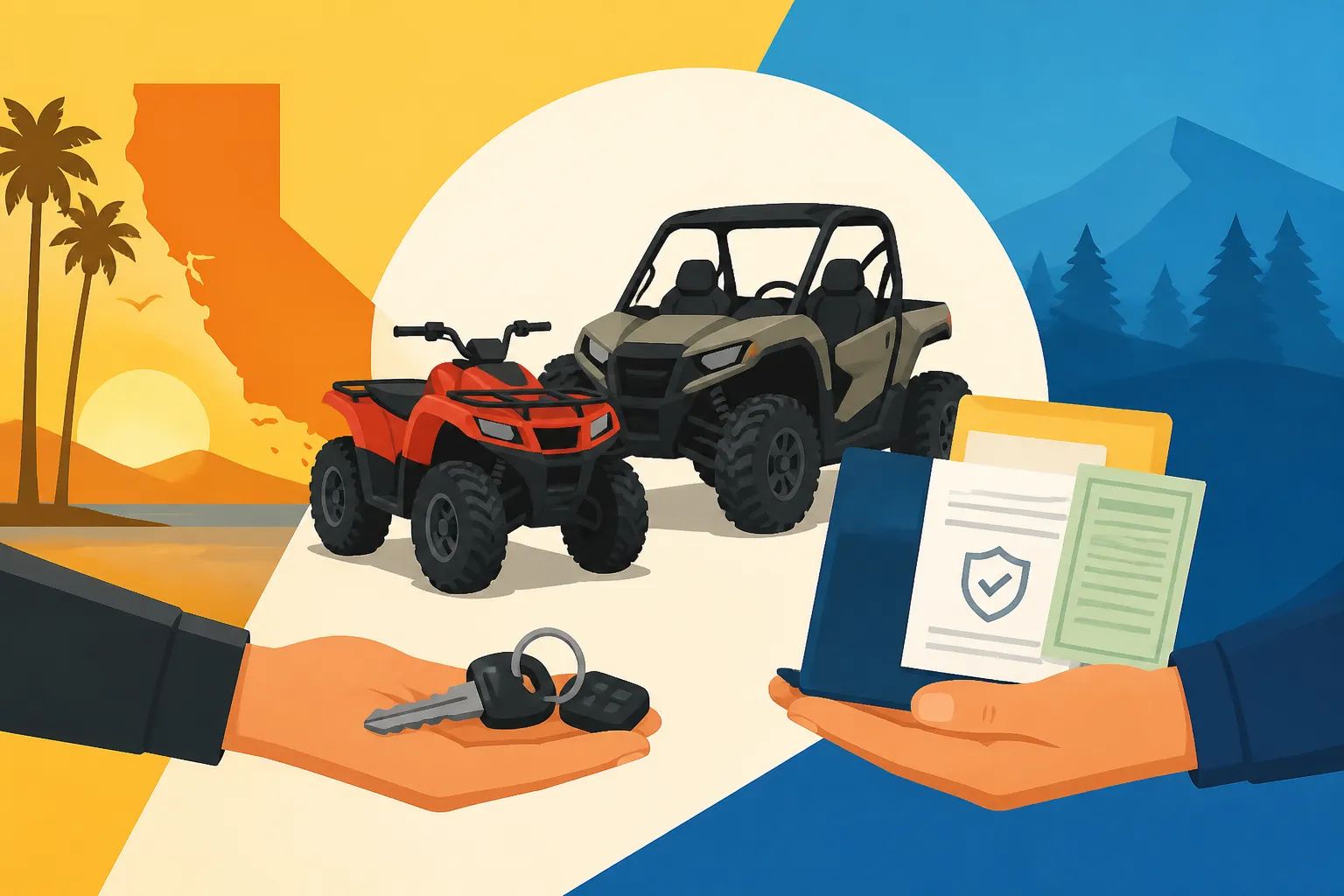
This might seem obvious, but in the excitement of a purchase, it can sometimes be overlooked! The seller must provide you with all keys associated with the ATV or UTV. This includes ignition keys, fuel cap keys (if separate), and any keys for storage compartments. If the machine has a kill switch lanyard, a steering lock, or any other factory or aftermarket security devices, ensure the seller provides those as well, along with instructions on how to use them.
You might think, "Well, I can just get a copy made." But replacing specialty keys or reprogramming security fobs can be surprisingly expensive and inconvenient. Confirming you have all the necessary keys and security accessories before the seller leaves ensures you have full, unhindered access to and control over your new OHV from day one.
What to Watch Out For and Red Flags
Sometimes, what a seller doesn't provide is more important than what they do. Being aware of potential red flags can save you from a costly mistake or a legal quagmire. Always trust your gut when buying a used OHV.
Missing or Unsigned Title
This is perhaps the biggest red flag you can encounter. As mentioned earlier, the California Certificate of Title is paramount. If the seller can't produce the original title, or if it's not signed by all owners listed on the document (and notarized if applicable, though rare for OHVs), you should be extremely cautious. Buying a machine without a clear, properly signed title means you won't be able to legally register it in your name with the California DMV. This could lead to a situation where you own a machine you can't ride legally on public lands. [Buying a Quad With a Lost Title] is a difficult process, and you don't want to start your ownership journey with this kind of hurdle.
In some rare cases, for very old machines, a title might genuinely be missing. However, even then, the process to get a "bonded title" or similar can be complex and expensive, typically falling to the buyer. It's always best to insist on a proper, signed title. If the seller seems hesitant or has an elaborate story about why the title isn't available, walk away. It’s not worth the risk, as it could indicate a stolen vehicle or a seller trying to evade past legal issues. Always check the VIN against the title and look for any signs of tampering. For more information, read [Checking a VIN Before Buying a Used Quad].
Incomplete or Sketchy Bill of Sale
While a simple handwritten bill of sale can be perfectly legitimate, beware of those that are vague, incomplete, or where the seller refuses to include specific details like the VIN, the full sale price, or their contact information. A seller who insists on a bill of sale that says "$1" for a $5,000 machine might be trying to evade sales tax, which could put you in a sticky situation with the state. Remember, you'll still owe sales tax on the fair market value of the OHV, regardless of what's written on the bill of sale.
A bill of sale should protect both parties. If a seller balks at including important details, or if the document just looks unprofessional and lacks substance, that's a sign to be careful. Generic templates, like those found on LawDepot, are designed to cover all the necessary bases and are a good standard to compare against. Ensure all fields are filled out accurately and completely, and that both parties sign and date it.
Pressure to Complete the Sale Quickly or Off-Site
Legitimate sellers are usually patient and willing to meet in a public, safe location, or at their home with the machine accessible for inspection. Be wary of any seller who pressures you to make a quick decision, demands payment in unusual ways (like gift cards or wire transfers to an unknown account), or insists on meeting in an isolated, unfamiliar location where you can't properly inspect the OHV.
If a seller is rushing you, it could be because they don't want you to thoroughly inspect the machine, verify the VIN, or check the title. Always take your time. Inspect the OHV in daylight, ask questions, and don't feel obligated to buy if something feels off. A reasonable seller will understand your need to be thorough.
The Next Steps for the Buyer: Your Responsibilities
Once you've got all the necessary documents and items from the seller, your job isn't quite done. You have a few crucial steps to take to solidify your ownership and comply with California law. These responsibilities fall squarely on your shoulders as the new owner.
Timely Transfer of Ownership
This is absolutely essential! In California, you, as the buyer, are generally required to complete the transfer of ownership paperwork with the DMV within 10 days of the purchase date. This involves submitting the properly signed-over title (and often a bill of sale) to the DMV, along with the required fees. Delaying this process can lead to penalties.
If you drag your feet, you could face a [The $28 Transfer Penalty in California], which nobody wants! Not only does timely transfer avoid fees, but it also ensures that if something happens with the OHV (like it's involved in an accident or cited for a violation), it's clearly your responsibility and not still technically the seller's. This protects both you and the previous owner. For a full guide, see [Transferring a California OHV Registration].
Sales Tax and Use Tax Implications
Ah, taxes – the inevitable companion to any purchase. When you register your OHV in California, you will be responsible for paying sales tax based on the purchase price (or fair market value, if the DMV suspects the stated price is artificially low). This is a one-time tax that is collected at the time of registration. Don't be surprised by it!
If you purchased your OHV from out-of-state and brought it into California, you will likely owe use tax instead of sales tax. This is essentially California's way of ensuring that all vehicles used within the state contribute their fair share, regardless of where they were originally purchased. It prevents people from buying machines in states with lower or no sales tax to avoid California's rates. It’s important to understand your obligations here; the DMV will certainly factor it in when you go to register. More details are available in [California OHV Registration and Sales Tax] and [California Use Tax on an Out-of-State Quad].
Verifying the Machine (If Applicable)
In some situations, particularly if the OHV has never been registered in California, or if there's an issue with the VIN or title, the DMV might require a vehicle verification. This means a qualified DMV employee, a licensed vehicle verifier, or sometimes even the California Highway Patrol (CHP) will physically inspect your OHV to confirm its identity.
They will check the VIN, ensure it matches the paperwork, and look for any signs of alteration. This step is designed to combat fraud and ensure that only legitimate machines are registered. While not always required for every transfer, it's something to be aware of, especially if you're buying an OHV that seems to have a convoluted history. [California Vehicle Verification on Form REG 31] provides more depth on this topic.
Here’s a quick overview of what you should expect and what’s highly recommended:
| Document/Item | Seller Must Provide? | Highly Recommended? | Why it matters |
|---|---|---|---|
| California Certificate of Title | Yes | Always | Legal proof of ownership for transfer. |
| Signed Bill of Sale | No (Legally) | Yes | Protects buyer/seller, record of transaction. Use a template like LawDepot. |
| Current Registration Card | Yes | Always | Proof of current registration, allows immediate riding. |
| OHV ID Plate | Yes (Attached) | Always | Stays with the machine, required for identification. |
| CARB Emissions Label | No (Legally) | Yes | Essential for understanding sticker type (Green/Red/Tan). |
| Owner's Manual | No | Yes | Operation, maintenance, and safety information. |
| Service Records | No | Yes | Shows maintenance history and machine care. |
| All Keys/Security Devices | Yes | Always | Full access and control over the machine. |
Disclaimer
This article is for general informational purposes only and does not constitute professional advice. Laws, prices and regulations vary by location and change over time. Consult a qualified professional for guidance on your specific situation.