California OHV Plate Number Explained
When you register your off-highway vehicle (OHV) in California, it's common to expect a simple decal or sticker like many other states use. Instead, you're issued a unique metal plate with an identification number, and for many riders, this can be a little confusing. This guide will break down everything you need to know about the California OHV plate number, explaining its purpose, what it signifies, where it must be displayed, and its essential role in maintaining your OHV's legal status for all your adventures.
What Exactly Is a California OHV Plate Number?
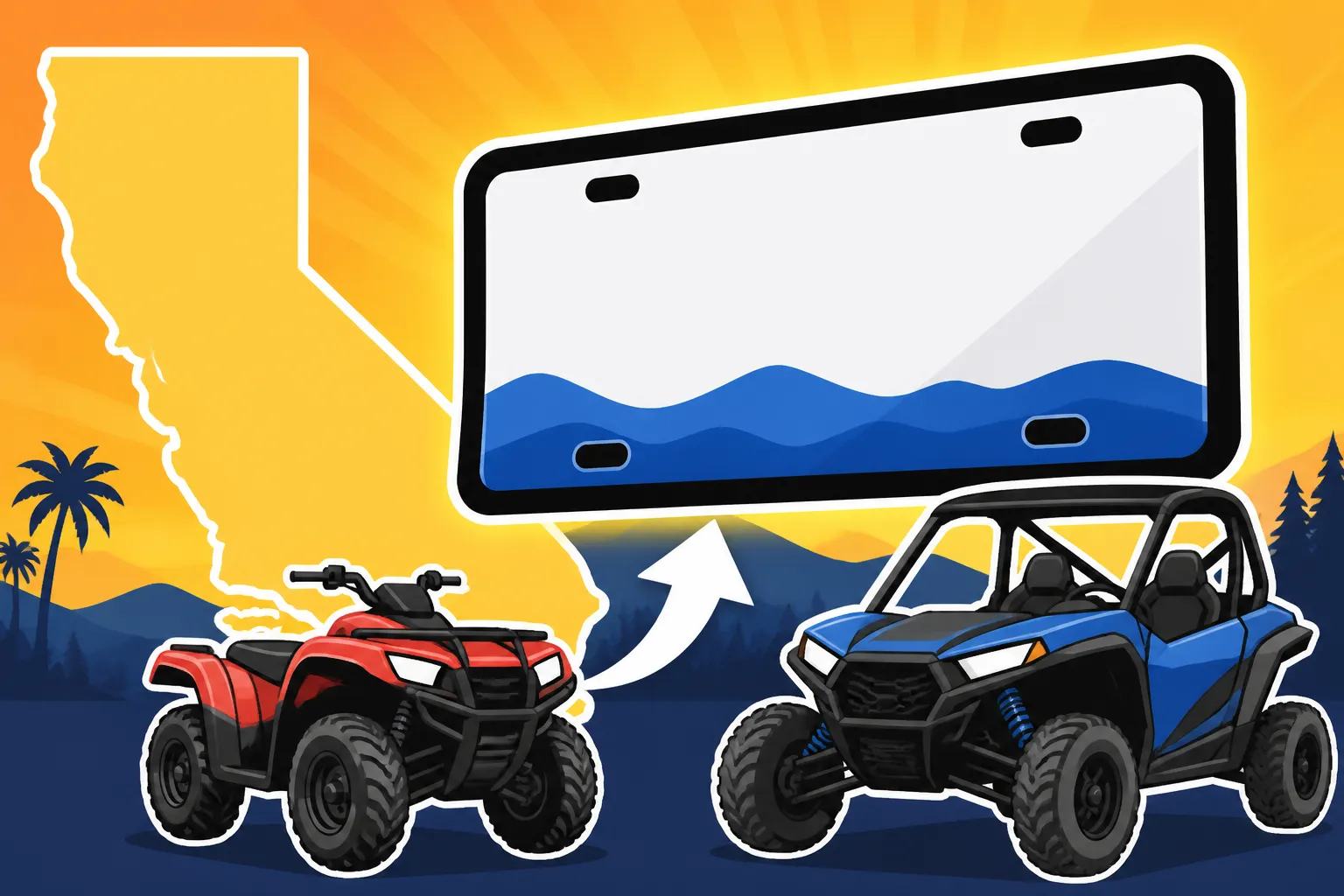
Forget what you might know about other states' OHV registration. In California, rather than a small sticker that adheres to the fender, you receive a durable, often square or rectangular metal plate, similar in material to a standard vehicle license plate, but distinct in its numbering and appearance. This plate bears an alphanumeric sequence that serves as the official identification for your specific off-highway vehicle, be it a dirt bike, ATV, side-by-side, or sand rail. It’s not merely a suggestion; it’s a mandatory piece of equipment that must be prominently displayed whenever your OHV is operated on public lands.
Beyond the Basic Identification
This plate number is far more than just a random series of characters. It is directly linked to your OHV's registration record within the California Department of Motor Vehicles (DMV) and the Off-Highway Motor Vehicle Recreation (OHMVR) Division system. Think of it as your OHV's unique fingerprint. When a ranger or law enforcement official performs a compliance check at an SVRA like Hungry Valley or Oceano Dunes, they're looking for this plate and can quickly cross-reference its number with your registration details. This system helps ensure that all machines on public land are properly registered and that owners are adhering to state regulations. It's an important layer of accountability designed to maintain safety and preserve riding areas.
Beyond enforcement, the plate number is crucial for administrative purposes. It's referenced on your [California Issues a Certificate of Title] and on any documentation related to the sale or transfer of your machine. If you ever need to replace a lost title or update your registration, this number will be a primary identifier. Without it, verifying ownership or proving legitimate registration becomes significantly more difficult, which can lead to headaches and delays when you just want to get back out on the trails.
Why a Plate, Not Just a Sticker?
California's decision to issue a physical plate rather than a simple decal stems from several practical considerations. One major factor is durability. Off-highway riding exposes vehicles to extreme conditions – mud, sand, dust, rocks, and vibration are all part of the fun. A small decal can easily become scratched, torn, or fall off, especially if it's placed in a high-impact area. A metal plate, securely bolted to the vehicle, is much more resilient and less prone to damage or loss, ensuring that the identification remains legible and attached through even the roughest rides.
Another key reason is visibility and standardization. A plate provides a consistent and easily recognizable format for identification across all types of OHVs, regardless of their shape or size. This uniformity makes it simpler for enforcement officers to quickly spot and read identification numbers from a distance, contributing to more efficient regulation of the state's vast network of riding areas. You can learn more about the reasoning behind this choice by reading [Why California Issues a Plate, Not a Decal]. This system helps streamline the process of checking machines at popular checkpoints, like those often found at the entrance to Glamis or other desert riding spots, making sure everyone is playing by the rules.
Deciphering Your OHV Plate Number
When you look at your California OHV plate, you’ll notice a distinct combination of letters and numbers, typically displayed prominently. While it might superficially resemble a standard passenger vehicle license plate, its structure and the information it conveys are specific to off-highway use. Understanding these components can help you confirm your registration details at a glance and verify information if you're ever looking at buying a used machine.
Understanding the Alpha-Numeric Code
The California OHV plate number typically consists of a combination of letters and numbers, uniquely assigned to your vehicle. While the exact sequencing might vary slightly over time as new series are issued, the core purpose remains the same: to provide a distinct identifier. This code is not just for show; it is the official record link to your OHV's specific make, model, year, and crucially, its current registration status. It helps law enforcement quickly pull up information about the machine and its owner, verifying that the vehicle is legally allowed on designated public lands.
Unlike a VIN (Vehicle Identification Number) which is a global manufacturing identifier, your plate number is a state-specific registration identifier. You'll find this number on your registration card and your [California Issues a Certificate of Title]. When dealing with legal documents related to your OHV, such as drafting a bill of sale or conducting a title transfer, ensuring the correct plate number is recorded is paramount. Services like LawDepot offer templates for these kinds of documents, which can be invaluable for ensuring all legal details are correctly captured, including the plate number and VIN. Having accurate paperwork helps prevent future disputes or complications, especially if you ever need to prove ownership or address an issue with the DMV.
The Importance of the Expiration Month and Year
One of the critical pieces of information often found on the California OHV plate (or sometimes on a smaller sticker applied directly to the plate itself, especially for renewals) is the expiration date. This usually includes the month and the year your current registration cycle ends. California OHV registrations operate on a biennial (two-year) cycle, and the plates are designed to reflect this. Seeing "6-26" for example, would indicate an expiration in June of 2026. This visual cue is extremely important for both riders and enforcement officers.
For riders, it's a constant reminder of when your registration needs to be renewed. Forgetting to renew can lead to penalties, including the [California OHV Late Registration Penalty] if you let it lapse. For rangers and park staff, it offers immediate visual confirmation of a machine's current validity. A quick glance at the plate can tell them if an OHV is properly registered for that riding season. This system aids in maintaining compliance and ensures that everyone using public lands is contributing to the upkeep and management of those areas through their registration fees.
How This Differs from a Highway Plate
While your OHV plate might be metal and carry an alphanumeric code, it's fundamentally different from the license plate on your truck or car. The most significant distinction is its purpose: an OHV plate is for off-highway use only. It does not grant permission to ride your OHV on public streets, roads, or highways, except in very specific, designated "combined-use" segments, and even then, strict rules apply. A standard vehicle license plate signifies that the vehicle is street-legal, insured, and has passed emissions requirements for on-road operation.
To further illustrate the differences, consider this table:
| Feature | California OHV Identification Plate | California Highway License Plate |
|---|---|---|
| Purpose | Off-highway identification | On-highway identification |
| Issued By | California DMV (OHMVR Division) | California DMV |
| Appearance | Typically smaller, specific design | Standard size, various designs |
| Allows Road Use | No, with very limited exceptions | Yes, fully street legal |
| Emissions Check | Not required for registration | Required for registration (most) |
| Visibility | Primarily for law enforcement/park rangers | For all public viewing |
| Renewal Cycle | Biennial (two-year) | Annual (or multi-year sticker) |
This table clearly shows that while both are identification markers, they serve entirely different legal and operational functions. Attempting to use your OHV plate as a street-legal equivalent will certainly lead to citations, as [Why a California OHV Plate Is Not a License Plate] further explains.
Where to Display Your California OHV Plate
Once you've registered your OHV and received your identification plate, the next crucial step is ensuring it's displayed correctly. Proper placement isn't just about aesthetics; it's a legal requirement that ensures your machine can be easily identified by enforcement personnel, contributing to safety and compliance in riding areas across the state.
Proper Placement for Visibility
The California Vehicle Code (CVC) specifies that the OHV identification plate must be permanently attached and clearly visible. While the exact mounting location can vary slightly depending on the type of OHV, the general rule is to place it in a prominent position where it won't be obscured by mud, equipment, or even your riding gear. For ATVs and quads, this usually means on the rear of the machine, often near the grab bar or on a dedicated plate bracket. For dirt bikes, it's typically affixed to the rear fender. Side-by-sides (UTVs) often have a designated spot on the rear, similar to how a license plate would be mounted on a street vehicle.
The key is clear visibility. When rangers are performing checks at SVRAs or BLM lands, they need to be able to read that number without difficulty. Failing to display it properly, or having it caked in so much mud it's illegible, can lead to a citation. Make sure the plate is securely fastened using bolts or other strong fasteners; you don't want it rattling off in the middle of a gnarly trail or during a dune run at Glamis. For specific advice on securing your plate, consider reading [Bolting the ID Plate to a Quad]. Always verify that your plate is clean and readable before heading out to ride.
What Happens if Your Plate is Lost or Damaged?
It happens. Riding off-road is tough on equipment, and sometimes, despite your best efforts, your OHV plate can get damaged, lost, or even fall off. Whether it's been ripped off by a rogue branch, bent beyond recognition in a rollover, or simply vibrated loose and gone missing in the sand, you need to address it promptly. Operating your OHV on public land without a properly displayed and legible identification plate is a violation.
If you find yourself in this situation, don't just hope for the best. You'll need to apply for a replacement plate through the California DMV. This process usually involves submitting a specific form (often the REG 156, Application for Replacement Plates, Stickers, Documents, or Tabs) and paying a fee. While it might feel like an inconvenience, getting a replacement quickly is essential to avoid fines and ensure you can continue to enjoy California's amazing riding areas legally. Information on the process, including what paperwork you might need and associated fees, can be found in resources like [Replacing a California ID Plate]. Acting fast will save you hassle and potential penalties down the line.
The Plate Number's Role in OHV Life
The California OHV plate number is more than just a piece of metal; it’s a central identifier that weaves through many aspects of your off-highway vehicle's life cycle. From initial registration to eventual sale, this number connects your machine to its legal status, ensuring accountability and smooth transitions of ownership.
Connection to Your Registration and Title
At its core, the OHV plate number is intrinsically linked to your OHV's registration and title. When you complete the [Registering an OHV in California] process, the DMV issues this unique plate, and its number becomes the primary identifier on your official registration card and on your Certificate of Title. These documents are proof of legal ownership and that your OHV is properly identified for use on public lands. Think of it this way: your title establishes who legally owns the vehicle, and your registration, with its accompanying plate number, confirms it's allowed to operate on designated public OHV areas.
Maintaining this connection is vital. If you ever need to apply for a [Replacing a Lost California OHV Title] or simply renew your registration, the OHV plate number will be a key piece of information you'll provide. It helps the DMV locate your records quickly and accurately. This robust system is designed to prevent fraud and ensure that every OHV on the trails can be traced back to its registered owner, contributing to a safer and more orderly environment for all off-road enthusiasts.
Why the Plate Number Matters When Buying or Selling
The OHV plate number becomes particularly critical during the process of buying or selling an off-highway vehicle. If you're buying a used OHV, always verify that the plate number matches the registration card and, crucially, the title. Discrepancies here can indicate a stolen vehicle or a fraudulent sale, leading to significant legal headaches for you down the road. It's also a good practice to cross-reference this with the Vehicle Identification Number (VIN) stamped on the machine itself. Doing your due diligence, including checking the VIN, is explained further in [Checking a VIN Before Buying a Used Quad].
When you're selling your OHV, you’ll need to accurately record the OHV plate number on the bill of sale and ensure it aligns with the title you're signing over. This precise documentation is crucial for a smooth transfer of ownership and to avoid complications for both the buyer and seller. For instance, services like LawDepot provide legally sound templates for a bill of sale, which can help ensure all necessary details, including the plate number, are correctly captured. This helps protect you from future liability if the new owner does not promptly complete the [Transferring a California OHV Registration]. It's your responsibility as a seller to provide clear and accurate information, and the OHV plate number is a central part of that.
Disclaimer
This article is for general informational purposes only and does not constitute professional advice. Laws, prices and regulations vary by location and change over time. Consult a qualified professional for guidance on your specific situation.