Registering a Quad Bought From a California Dealer
Buying a brand-new quad or side-by-side from a California dealer can be an exciting, yet sometimes overwhelming, experience. You've found your dream machine, signed the papers, and now you're wondering about the actual process of getting it legally registered to hit those California trails. It can feel like a tangled web of paperwork and fees, leaving many riders scratching their heads. This guide is designed to demystify the registration process when you purchase your off-highway vehicle (OHV) directly from a licensed dealer in California, ensuring you know exactly what to expect and what steps you'll need to take to get that all-important sticker and plate.
The Dealer's Role in Your OHV Registration
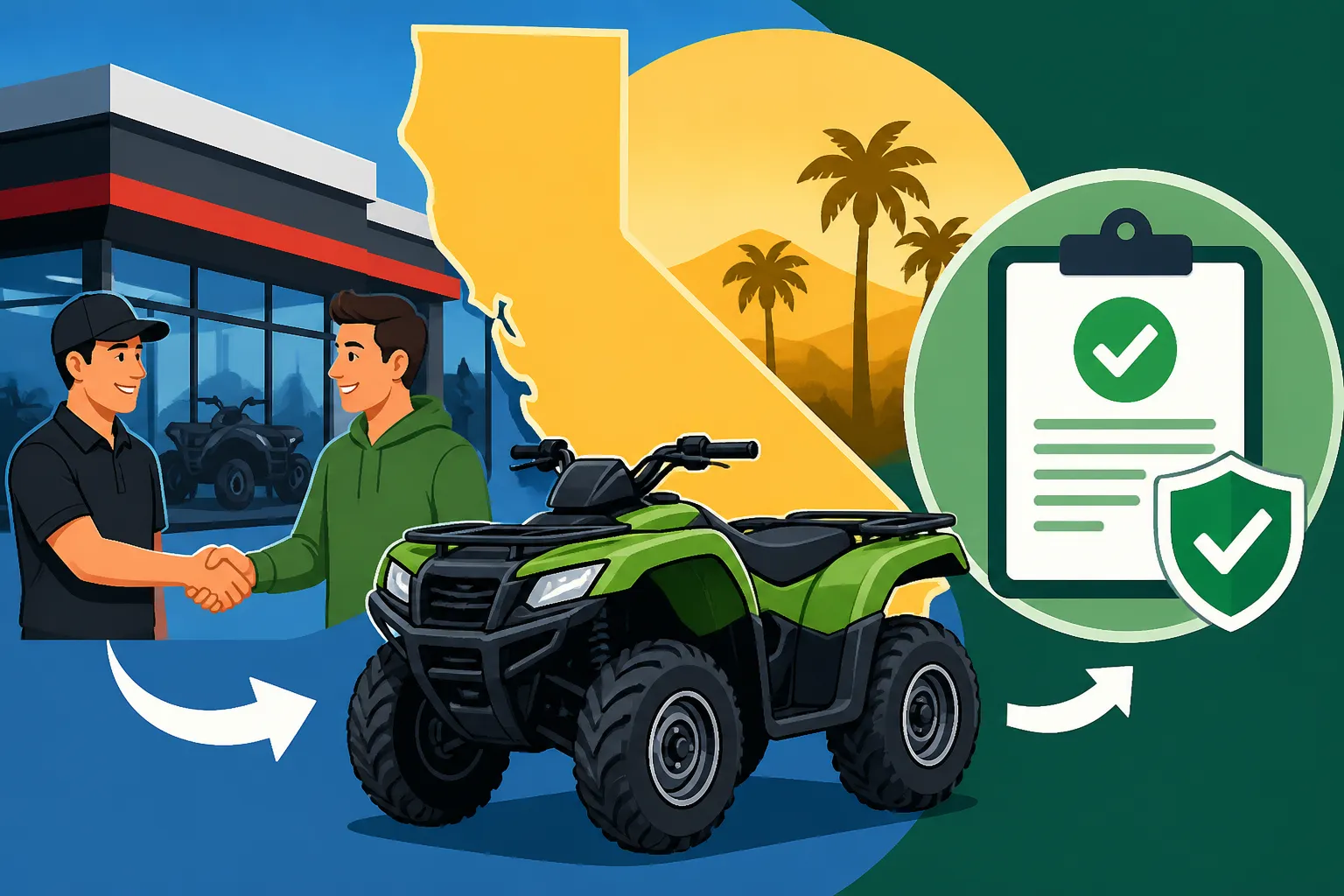
When you purchase an OHV from a licensed dealer in California, a significant portion of the initial registration legwork is actually handled for you. This is one of the big advantages compared to a private party sale, which can often involve a trip to the DMV and more forms to fill out yourself. Dealers are set up to streamline this process, and understanding their responsibilities can ease a lot of your post-purchase worries.
What the Dealer Typically Handles for You
California law requires licensed dealers to collect certain fees and submit specific paperwork on your behalf to the Department of Motor Vehicles (DMV) or the Off-Highway Motor Vehicle Recreation (OHMVR) Division. This typically includes the sales tax, which they will calculate and remit to the state, and the initial OHV registration fees. These fees usually cover the two-year registration cycle, and the dealer will factor them into your overall purchase price. They also handle the critical task of transferring ownership from the manufacturer to you, the first owner.
The dealer acts as an intermediary, compiling all the necessary documents, such as the Manufacturer's Certificate of Origin (MCO/MSO), your proof of purchase, and any lienholder information if you're financing the machine. They then submit this package to the appropriate state agency. This submission initiates the process that will eventually lead to you receiving your California Certificate of Title and the all-important ID plate and sticker. It’s a huge convenience, as it means you typically don’t have to spend a day at a crowded DMV field office just to get your new machine registered.
Paperwork You'll Receive From the Dealer
Even though the dealer handles much of the submission process, you'll still walk away with a stack of important documents. It’s crucial to keep these in a safe place, as they serve as your proof of ownership and registration until the official documents arrive in the mail.
First and foremost, you'll receive a detailed Sales Contract or Bill of Sale. This document is your primary proof of purchase and outlines the full cost of the machine, any trade-in value, taxes, fees, and your payment method. It will also clearly identify the OHV by its Vehicle Identification Number (VIN). Always double-check that the VIN on the paperwork matches the VIN on your actual machine. For similar document needs, you might explore resources like LawDepot, which offers various legal templates, though in this case, the dealer provides the official sales contract. Understanding [California OHV Bill of Sale Requirements] can help you recognize what details should be present.
Secondly, you'll get the Manufacturer's Certificate of Origin (MCO) or Manufacturer's Statement of Origin (MSO). This is essentially the birth certificate of your OHV. For a brand-new machine, this document confirms that the vehicle is new and has not been previously titled or registered. It's what the state uses to issue your first Certificate of Title. Make sure you get the original MCO/MSO, as it's vital for establishing the chain of ownership.
In some cases, the dealer might also issue you a Temporary Operating Permit. This permit allows you to legally operate your newly purchased OHV for a limited time (usually 30-90 days, but always check the expiration date on the permit) while you wait for your official ID plate and registration sticker to arrive. This can be a lifesaver if you're eager to hit the trails right after purchase, but it's not always provided. Don't assume you have one unless it's explicitly given to you.
Finally, while not a separate document handed to you, the dealer will ensure your new OHV meets California's smog and emissions compliance. New machines sold by authorized dealers in California are manufactured to meet the state's stringent CARB (California Air Resources Board) standards. The dealer's sale acts as a de facto verification of this compliance, meaning you won't need to get a separate smog check for a brand-new OHV. Understanding [What CARB Compliance Means in California] can help you appreciate why this is a critical detail in California.
Your Responsibilities After Leaving the Dealership
Even though your dealer handles the heavy lifting, your part of the process isn't entirely over once you drive off the lot. There are still a few things you need to be aware of and look out for to ensure your registration is complete and correct.
Verifying Your Registration and ID Plate
The most important thing you'll be doing after the purchase is waiting for your official registration documents to arrive in the mail. Typically, the California DMV will mail your Certificate of Title and OHV ID plate separately from your sticker. This process can take several weeks, sometimes even a couple of months, depending on the volume of applications the DMV is processing. While waiting, keep your dealer-provided paperwork, especially your copy of the sales contract and any temporary permit, handy with you when you ride.
Once your official documents arrive, carefully review them. Check that your name, address, and the OHV's VIN are all correct on the [California Issues a Certificate of Title]. The ID plate itself is a small, usually diamond-shaped, metal plate with your OHV registration number printed on it. It’s important to know what [What the ID Plate Looks Like] so you can verify it when it arrives. It should be securely mounted in a clearly visible location on the left side of your OHV, as specified by state law. If you don't receive your title or ID plate within a reasonable timeframe (e.g., 6-8 weeks), it's a good idea to first contact your dealer. They often have internal systems to track these submissions. If the dealer can't provide a clear update, you'll need to contact the California DMV directly. The process for Registering a Quad Bought From a California Dealer is usually smooth, but delays can happen.
Understanding Your New Sticker
Along with your ID plate, you will receive a new registration sticker. In California, OHVs are assigned one of three sticker types: Green, Red, or Tan. For a brand-new machine bought from a dealer, the type of sticker you receive is determined by the vehicle's model year and its emissions compliance. Generally, most new quads and side-by-sides are built to California's strict emission standards and will receive a Green Sticker. This means your machine can be ridden year-round in all designated OHV areas in California. You can learn more about the different types by reading [Green, Red and Tan: California's Three Stickers].
If, for some reason, your new machine is not CARB-compliant for California use (which is rare for a new machine purchased from a California dealer but can happen with certain competition-only models), it might receive a Red Sticker. However, this is less common for general recreational OHVs sold through dealers today. The sticker will also have an expiration date printed on it, which will always be June 30th of the expiration year, regardless of when you registered the machine. For instance, if you bought it in October 2023, it would likely expire on June 30, 2025. This biennial cycle is consistent for all OHVs in California, as explained in [California's June 30 Expiration]. Once you receive your sticker, ensure it's displayed properly, typically on the left rear fender or visible area, as required by law.
Common Questions and Troubleshooting
Even with the dealer handling most of the paperwork, questions or minor issues can still arise. Knowing how to navigate these situations can save you time and frustration.
What If There's a Delay or Problem?
One of the most common issues riders face is simply waiting for their documents to arrive. As mentioned, state processing times can vary widely. If several weeks have passed and you haven't received your title, plate, or sticker, your first point of contact should always be the dealership where you purchased the OHV. They have an incentive to ensure your registration is completed correctly, and they often have direct lines to their DMV processing department or third-party registrars they work with. Be ready to provide them with your sales contract number, the OHV's VIN, and the date of purchase.
If the dealer is unable to resolve the issue or provide a satisfactory explanation, your next step is to contact the California DMV directly. You can usually inquire about the status of your registration using your VIN. Having copies of all the paperwork the dealer gave you is paramount here. This includes your sales contract, temporary permit (if applicable), and any other receipts. This paper trail will be invaluable in proving your purchase and the dealer's responsibility to complete the registration. You can use platforms like LawDepot to organize digital copies of important documents, ensuring you always have access to them if an issue arises.
When You Might Need Additional Forms (Even from a Dealer)
For most standard purchases from a California dealer, you won't need to fill out additional DMV forms yourself. The dealer is responsible for completing and submitting the primary application for registration, often using a form similar to the REG 343 or its digital equivalent. If you're curious about what goes into it, you can look up [What California's Form REG 343 Asks For], but typically the dealer handles this.
However, there are a few niche situations where you might encounter specific forms. For example, if you're applying for a specific type of exemption (though unlikely for a new machine), or if there was a clerical error that needs correcting, you might be asked to sign an additional declaration. Another scenario might arise if you are financing your OHV and the lienholder information needs a specific amendment that wasn't captured initially. Always read any forms presented to you carefully and ask the dealer or DMV representative to clarify anything you don't understand. Remember, the dealer is there to facilitate the sale and registration, and they should be able to guide you through any unexpected paperwork. Private party sales are a completely different animal, requiring you to handle nearly all the registration paperwork, verification, and submission yourself.
Here's a quick overview of who handles what when buying from a California dealer:
| Task | Handled by Dealer | Handled by Buyer (You) |
|---|---|---|
| Collecting Sales Tax | Yes | No |
| Collecting Initial Registration Fees | Yes (part of [California OHV Registration Cost], often California's $54 OHV Registration Fee Broken Down) | No |
| Submitting Application for Title | Yes (using MCO/MSO and sales contract) | No |
| Submitting Application for Sticker | Yes | No |
| Providing Manufacturer's Certificate | Yes (Original MCO/MSO) | No |
| Issuing Temporary Permit | Sometimes | No |
| Receiving Title in Mail | No | Yes |
| Receiving ID Plate in Mail | No | Yes |
| Receiving Sticker in Mail | No | Yes |
| Mounting ID Plate and Sticker | No | Yes |
| Initial Emissions Verification | Yes (via new vehicle compliance) | No |
| Following up on Delays | Yes (initial contact) | Yes (if dealer cannot resolve, contact DMV directly) |
Ultimately, purchasing an OHV from a California dealer simplifies the [Registering an OHV in California] process significantly. You pay the dealer, they handle the initial governmental paperwork, and you await your documents. Familiarizing yourself with the process and what to expect, particularly regarding the [California's Green Sticker Explained] and other stickers, ensures you're prepared to enjoy your new machine on the trails as soon as those official items arrive.
Disclaimer
This article is for general informational purposes only and does not constitute professional advice. Laws, prices and regulations vary by location and change over time. Consult a qualified professional for guidance on your specific situation.