Replacing a Lost California OHV Title
Losing important documents can feel like a punch to the gut, and when it’s something as vital as your California Off-Highway Vehicle (OHV) title, that feeling can quickly escalate to full-blown panic. Whether it’s a quad, dirt bike, or side-by-side, that title is the bedrock of your ownership. This guide is here to walk you through the often-stressful process of replacing a lost California OHV title, ensuring you have all the information you need to get back on track.
The Frustration of a Missing California OHV Title
We’ve all been there: digging through piles of papers, frantically searching through old file cabinets, or tearing apart the glove box, all while that knot of anxiety tightens in your stomach. When it’s your OHV title that’s gone missing, the stakes feel even higher. This isn't just a piece of paper; it's the official proof that your beloved machine is truly yours, and without it, many crucial tasks become incredibly complicated.
Why That Piece of Paper Matters So Much
Think of your OHV title as your machine's birth certificate and deed rolled into one. It’s the primary legal document issued by the California Department of Motor Vehicles (DMV) that establishes who the legal owner is. Without it, you lack definitive proof of ownership, which can lead to a host of headaches down the line. For instance, if you ever decide to sell your quad or UTV, the buyer will almost certainly demand the physical title, properly signed over, to ensure a legitimate transfer of ownership. Most buyers, especially savvy ones, won't even consider purchasing a machine without a clear title, and for good reason—they don't want to inadvertently buy a stolen vehicle or one with hidden liens.
Beyond selling, the title is crucial for other administrative tasks. If you ever need to register the vehicle in another state (should you move), or perhaps prove ownership for insurance purposes, the title is your go-to document. It also clearly indicates if there's a lienholder, like a bank or credit union, that still holds a financial interest in your OHV. This information is vital for everyone involved. Without it, you're essentially trying to prove you own something with only circumstantial evidence, which rarely holds up when dealing with official agencies or potential buyers. [Why the OHV Title Should Be in Your Name] is paramount for avoiding these very issues.
How Titles Go Missing
Titles, by their very nature, are often tucked away for safekeeping, sometimes a little too effectively. One of the most common ways an OHV title disappears is during a move. In the chaos of packing and unpacking, boxes get mislabeled, important envelopes get mixed with junk mail, or they simply end up in a "safe place" that's now a mystery. I've heard countless stories of people finding their lost title years later in an old photo album or tucked inside a forgotten book.
Other times, titles can be lost or damaged due to unforeseen circumstances. A house fire, a flood, or even just a spill that renders the document illegible can mean your original title is no longer valid. In some unfortunate cases, titles can be stolen along with other important documents, or simply misplaced by accident during a paperwork shuffle. The immediate panic you feel is completely understandable—it’s like losing a crucial piece of your identity, but for your machine. The key is not to dwell on how it disappeared, but to focus on the systematic steps you can take to replace it.
Your Step-by-Step Guide to a Duplicate Title
Alright, take a deep breath. Losing your title is frustrating, but it's not the end of the world. The California DMV has a process in place specifically for this situation. The key is to approach it methodically, ensuring you have all your ducks in a row.
Double-Checking Before You Act
Before you even think about filling out forms, do one last, thorough search. I know it sounds obvious, but sometimes, in our haste and anxiety, we overlook the most straightforward spots. Check every file folder, every drawer in every desk, every box in the garage or attic, and even inside old vehicle manuals or glove compartments of other vehicles. Think about any "super-secret hiding spots" you might have created for important documents – sometimes, they're so secure you forget about them yourself!
Did you recently have your OHV serviced or financed? Sometimes mechanics or lienholders might have temporary possession of documents. If you’re married or share the OHV with someone, make sure they haven't inadvertently moved or filed it away. Reach out to family members or anyone who might have helped you with your paperwork at some point. The goal here is to exhaust every possible avenue before declaring it truly lost and initiating the replacement process, saving you time and money if it turns up.
Getting Your Application Form REG 227
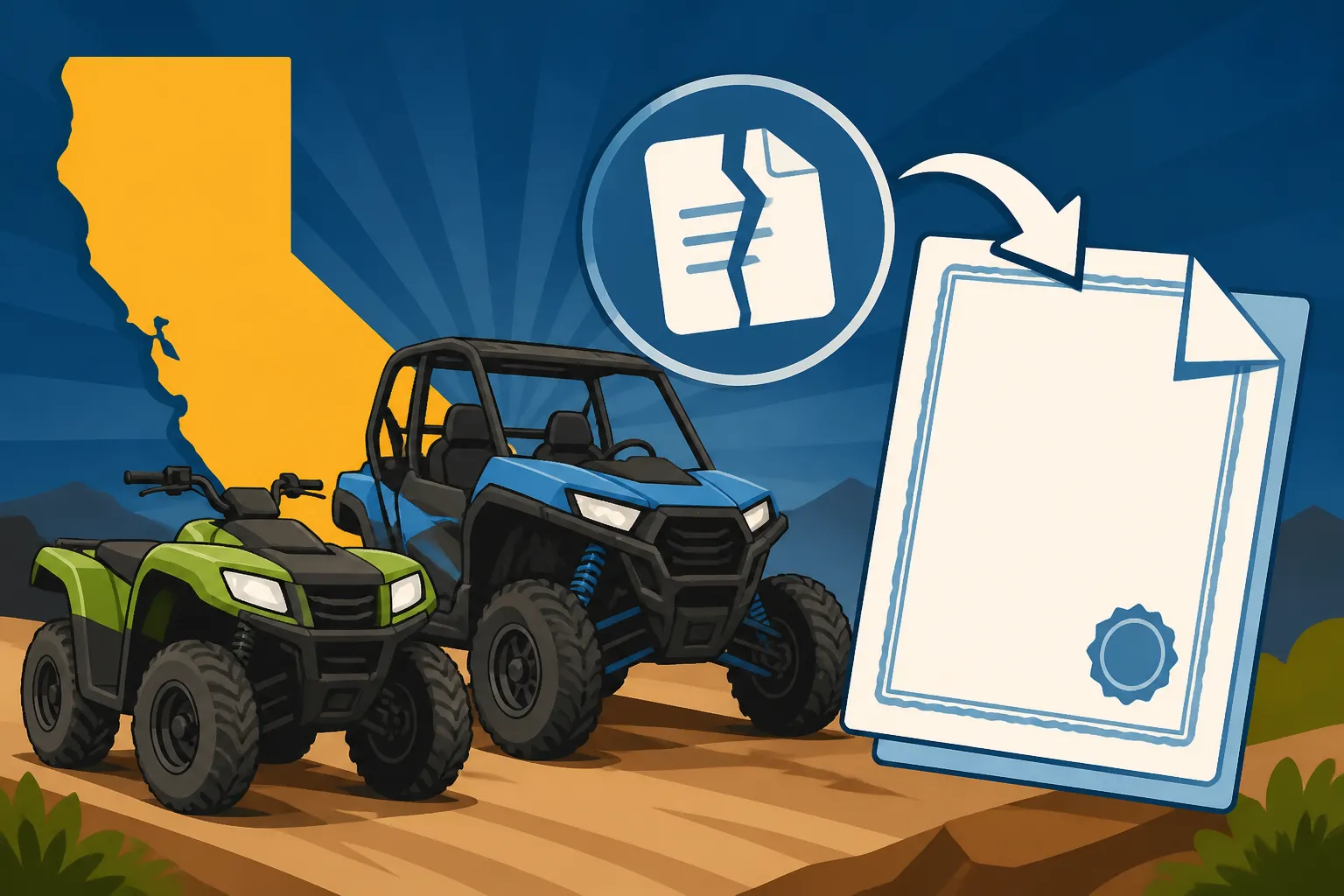
Once you’re absolutely certain the title is gone, your next step is to acquire and complete the official California DMV form called "Application for Duplicate Title" – this is Form REG 227. You can typically find this form in a few places: you can download and print it directly from the official California DMV website, or you can pick up a physical copy at any DMV field office. It's always a good idea to download it if possible, so you can fill it out at home at your leisure, minimizing stress during an in-person visit.
The REG 227 form itself is fairly straightforward but requires accurate information. You'll need to provide details about your off-highway vehicle, including its Vehicle Identification Number (VIN), make, model, and year. You'll also need to input your personal information as the registered owner. Crucially, the form asks you to state the reason for requesting a duplicate title – in your case, "lost." Make sure all information matches what the DMV has on file for your OHV, especially your name and address. Any discrepancies could cause delays. Remember, precise information is your best friend when dealing with official paperwork. While forms like REG 227 are specific to the California DMV, many riders find LawDepot a helpful resource for other official documents, such as comprehensive bills of sale or general legal agreements, which can supplement your ownership records.
Gathering Supporting Documents
Completing Form REG 227 is a big step, but you'll likely need to provide a few more things to the DMV. First and foremost, you'll need valid photo identification to prove you are indeed the person requesting the duplicate title. This could be your California driver’s license or ID card. If you happen to have your current OHV registration card, bring that along too. Even though it's not the title, it serves as excellent supporting documentation, confirming you are the current registered owner of the machine.
In some situations, the DMV might require a vehicle verification. This isn't always necessary for just replacing a lost title, but it can be if there are any unusual circumstances, such as discrepancies in records, or if the vehicle was previously registered out-of-state and is now being brought into California. A [California Vehicle Verification on Form REG 31] typically involves having a DMV employee, a licensed vehicle verifier, or sometimes even a peace officer, visually inspect your OHV to confirm its VIN and other details match the documentation. It's best to check with the DMV or review the instructions for Form REG 227 to see if verification is required for your specific scenario to avoid an extra trip.
Submitting Your Duplicate Title Request
Once you have your completed Form REG 227 and all your supporting documents in hand, it's time to submit your request to the California DMV. You have a couple of primary options, each with its own advantages and disadvantages.
In Person at a California DMV Field Office
For many people, visiting a DMV field office in person is the preferred method. The biggest advantage here is that a DMV representative can review your application right then and there. They can spot any errors or missing information, allowing you to correct them on the spot and potentially avoid delays. This can be especially reassuring if you're unsure about any part of the form or have specific questions about your situation. You’ll also typically pay the required fees directly at the counter.
However, an in-person visit almost always requires an appointment. The days of simply walking into the DMV and getting immediate service are largely behind us for complex transactions. Make sure to schedule a [California OHV Registration Appointment at the DMV] online well in advance to avoid long waits or being turned away. When you go, bring your completed REG 227, your photo ID, any supporting documents (like your registration card), and the means to pay the fee. Be prepared for a bit of a wait, even with an appointment, but the peace of mind of having your paperwork immediately reviewed by a professional is often worth it.
Mailing Your Application
If you prefer to avoid a trip to the DMV or live far from a field office, you can mail your completed Form REG 227 along with the necessary fee and copies of any supporting documents. This method offers convenience, allowing you to handle the process from the comfort of your home. However, it does come with a trade-off: speed and immediate feedback. Mail submissions generally take longer to process than in-person applications, and if there are any errors or missing items, the DMV will mail the form back to you, adding significant delays to your timeline.
When mailing, it's highly recommended to use certified mail with a return receipt requested. This provides you with proof that your application was sent and received by the DMV, which can be invaluable if any issues arise. Make sure your check or money order for the duplicate title fee is made out correctly and is included with your application. Always double-check the mailing address on the DMV website or on the REG 227 form itself, as these can sometimes change. While you can handle certain tasks like [Renewing Without Going to a Field Office], a lost title replacement often feels more critical, so weigh the convenience against the potential for delays carefully.
Understanding the Associated Fees
Like most official transactions, replacing a lost California OHV title comes with a fee. This is a standard administrative charge set by the DMV for issuing a duplicate document. While I can't give you an exact figure here (as fees can change), it's generally a relatively modest fee compared to the value of the title itself. You can find the most current fee schedule on the California DMV website or by calling their customer service line. [California OHV Title Cost] is an expense you'll definitely want to budget for.
Beyond the duplicate title fee, be aware that there could be other fees depending on your specific situation, though this is less common for just a lost title replacement. For example, if you also happened to let your registration lapse and are handling that at the same time, late penalties could apply. However, for a straightforward duplicate title request, expect primarily just the duplicate title fee. Payment methods typically include cash (in person), checks, money orders, or debit/credit cards (availability varies by location and transaction type, so it's always good to be prepared with a couple of options).
Navigating Special Situations
While the basic process for replacing a lost OHV title is fairly standard, life sometimes throws curveballs. Certain situations can add layers of complexity, requiring additional steps or considerations.
When Your OHV Has a Lienholder
If you purchased your OHV with a loan and haven't fully paid it off, a bank, credit union, or other financial institution (the lienholder) still holds an interest in your machine. In many cases, the lienholder will actually be the one holding the original title until the loan is satisfied. If the title is truly lost and there's an active lien, the process for obtaining a duplicate usually involves the lienholder directly. You'll need to contact your lienholder and explain the situation. They will typically be the party responsible for requesting the duplicate title from the DMV, as they are the primary legal owner until the loan is paid off.
Once your loan is completely paid off, the lienholder is legally required to release their interest and mail the title to you. If you paid off your loan but never received the title and now it's lost, you'll still need to work with the lienholder. They can submit a request to the DMV for a duplicate title with the lien removed, which will then be mailed to you. Dealing with [California OHV Registration for a Machine With a Lien] always requires communication with your lender, so don't try to go around them.
Selling an OHV Without the Title in Hand
Attempting to sell your OHV when the title is lost can create a significant hurdle, if not a complete roadblock. Most buyers will be extremely hesitant to purchase a vehicle without a clear, transferable title. It exposes them to the risk of buying a machine that isn't legally yours, one with undisclosed liens, or even a stolen one. While it might be tempting to try and sell with just a bill of sale, this is generally ill-advised and can lead to legal complications for both parties. [Selling an OHV and Signing the California Title] is a process that fundamentally relies on that physical title.
If you have a buyer lined up but your title is lost, the most responsible course of action is to inform them immediately and transparently. Explain that you are in the process of obtaining a duplicate title and that the sale cannot be finalized until it arrives. This requires patience from both sides. You might consider drafting a robust purchase agreement or conditional bill of sale that clearly states the terms, including that the full transfer of ownership and payment will only occur once the duplicate title is in hand. Resources like LawDepot offer robust templates for such agreements, providing an extra layer of protection and clarity for both parties during the interim. This transparency protects you from accusations of fraud and protects the buyer from potential future headaches.
Inheriting an OHV Without a Title
Inheriting an OHV can be a wonderful way to carry on a family legacy, but if the original owner's title is nowhere to be found, it adds a layer of administrative complexity. Proving ownership when the original owner has passed away requires more than just your word. The DMV will need official documentation to establish your legal right to the vehicle. [Inheriting a Quad in California] means you'll need the duplicate title process, but with additional steps.
Typically, you'll need a certified copy of the death certificate of the previous owner. If there's a will, you might need probate documents that name you as the inheritor of the OHV. In simpler cases, especially for lower-value vehicles or if you are the sole heir, the DMV might accept an Affidavit for Transfer Without Probate (Form REG 5). This form allows for the transfer of vehicles without going through the formal probate process, provided certain conditions are met. It's crucial to gather all these documents before submitting your duplicate title application, as the DMV will need to verify your legal right to the machine before issuing a new title in your name.
Proactive Measures for Future Peace of Mind
Once you’ve gone through the hassle of replacing a lost California OHV title, you’ll likely want to ensure you never have to repeat the experience. Implementing some smart strategies for record keeping can save you a world of trouble down the road.
Smart Record Keeping Strategies
The best defense against a lost title is a good offense in record keeping. Create a dedicated folder or binder for all your OHV-related documents. This should include not only your title and current registration but also bills of sale, insurance policies, maintenance records, and any modification receipts. Go a step further and make both physical and digital copies of all these essential documents. Store the physical copies in a secure, fireproof location, such as a home safe or a bank safe deposit box.
For digital copies, scan everything and save them to a cloud storage service (like Google Drive, Dropbox, or iCloud) and/or an external hard drive. This way, even if your physical copies are destroyed or lost, you’ll have accessible backups. It's also a great practice to create an inventory list of all your important documents, noting the document type, serial numbers (like your OHV VIN and sticker numbers), and where they are physically stored. Consider using a platform like LawDepot to generate a personal legal inventory template or other organizational documents to keep track of all your essential OHV paperwork, ensuring nothing important gets overlooked. This comprehensive approach provides multiple layers of protection against loss or damage.
Keeping Up with Your Registration and ID Plate
While your title is about ownership, your registration and ID plate are about legal operation on California's public lands. These documents are intrinsically linked to your OHV's record with the DMV. Ensure you're always on top of your [Renewing California OHV Registration] by marking your calendar for the June 30th expiration date every two years. Keeping your registration current also means that your contact information with the DMV is up-to-date. If you move, promptly inform the DMV of your new address to ensure all future correspondence, including any notices about your title, reaches you. [California OHV Registration Address Change] is a small step that prevents big headaches.
Regularly check that your ID plate is securely affixed to your OHV and that your registration sticker is visible and current. It's easy for these things to get damaged or fall off during an aggressive ride. Periodically, take a moment to review all your OHV documents, making sure everything is where it should be. This proactive habit ensures that your crucial paperwork is always in order, reducing the chances of another frantic search for a missing title or any other vital document.
Disclaimer
This article is for general informational purposes only and does not constitute professional advice. Laws, prices and regulations vary by location and change over time. Consult a qualified professional for guidance on your specific situation.