California Issues a Certificate of Title
Anyone who has ever bought or sold an off-highway vehicle (OHV) in California knows it can feel like navigating a maze, especially when it comes to the official paperwork. Unlike your daily driver, the rules for dirt bikes, ATVs, and side-by-sides often seem a bit different, and that's particularly true when you're talking about the Certificate of Title. This guide is here to untangle the confusion, explaining exactly what a California OHV Certificate of Title is, why it matters, and how to properly obtain, maintain, and transfer it.
Understanding the California Certificate of Title for OHVs
For many OHV enthusiasts, the initial focus is often on getting that crucial Green Sticker or Red Sticker so they can hit the trails legally. However, there's another, equally vital document that often gets less attention but holds immense power: the Certificate of Title. It's the ultimate proof of who truly owns that shiny new quad or well-loved dirt bike, and understanding its significance is key to avoiding headaches down the line.
What Exactly Is an OHV Certificate of Title?
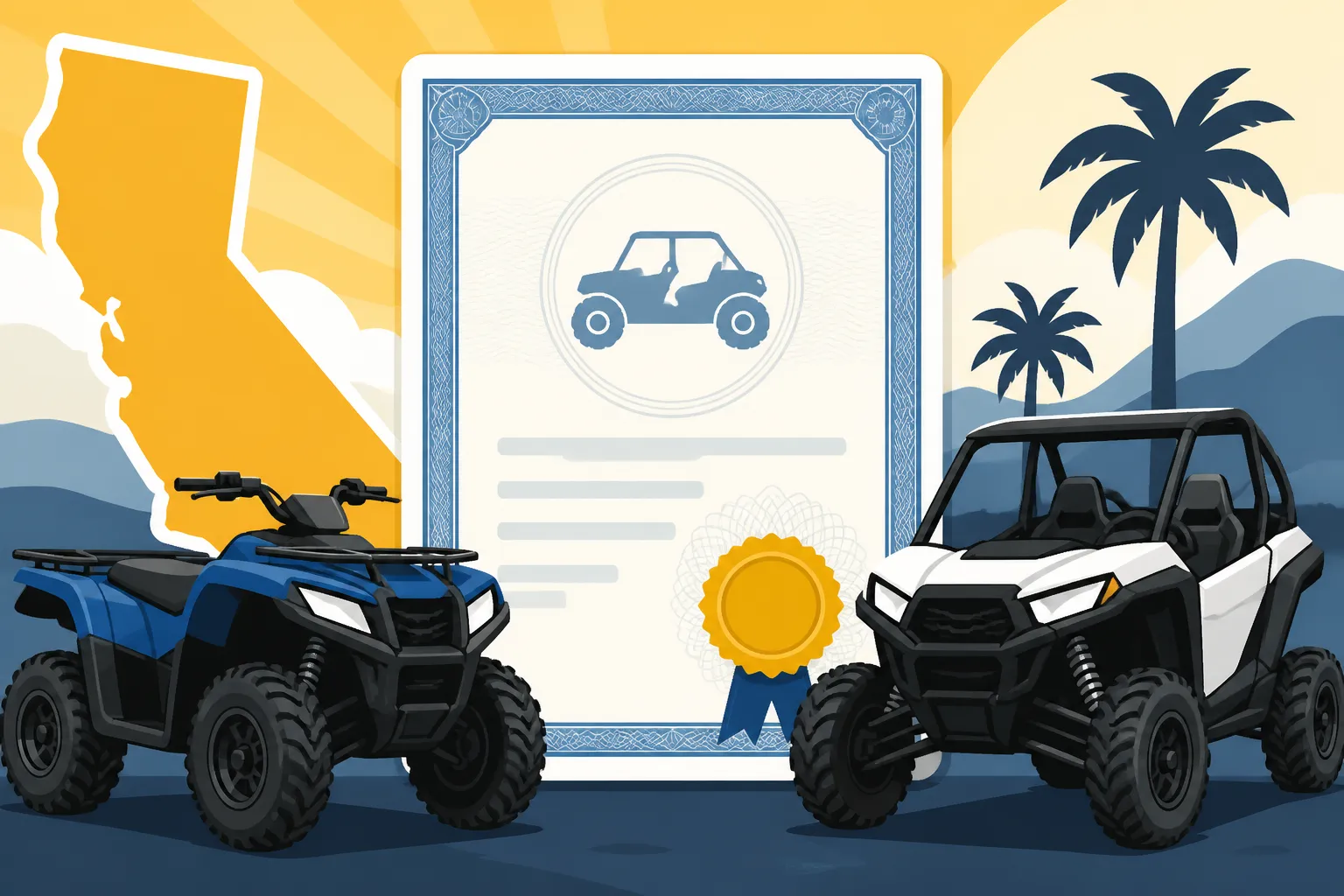
Think of your OHV Certificate of Title as the birth certificate and permanent record for your machine. It's an official document issued by the California Department of Motor Vehicles (DMV) that legally establishes who is the rightful owner of an off-highway vehicle. While your registration sticker grants you permission to operate the vehicle on public lands for a specific period, the title is about ownership. It records the vehicle's unique identification number (VIN), the name and address of the legal owner, and often details like the make, model, and year.
This document is absolutely critical for several reasons. First and foremost, it proves you own the machine, which is essential if it's ever stolen, damaged, or involved in a legal dispute. Without a title in your name, proving ownership can become an incredibly difficult and frustrating process. Secondly, it's indispensable when you decide to sell your OHV; no legitimate buyer will want to purchase a machine without a clear, properly transferred title. Lastly, it tracks any liens against the vehicle, showing if there's a financial institution with an interest in the machine until a loan is paid off.
Why California Issues a Separate Title for OHVs
California’s approach to OHV titling and registration often raises eyebrows because it feels distinctly different from how standard passenger cars are handled. The core reason lies in the fundamental legal distinction: off-highway vehicles, by definition, are generally not street-legal. They aren't designed or permitted for operation on public roads, highways, or city streets, which are the primary domain of the traditional DMV vehicle codes.
Because OHVs operate in a different legal sphere, primarily governed by the California Off-Highway Motor Vehicle Recreation (OHMVR) Division in conjunction with the DMV, they have their own specific titling requirements. While the DMV still handles the administrative issuance of the title, the framework it operates within acknowledges that these machines are intended for dirt, sand, and designated trails, not tarmac. This separation helps maintain clear legal boundaries, ensuring that an ATV or dirt bike, for example, isn't mistakenly viewed as a street-legal vehicle simply because it has a piece of paper from the DMV. This unique system helps California manage the complexities of [Registering an OHV in California] for machines that exist outside the typical highway vehicle parameters.
The Journey to Obtaining Your California OHV Title
Getting your OHV titled can feel like a rite of passage, whether you're rolling a brand-new machine off the showroom floor or taking ownership of a well-loved used one. Each path has its own set of requirements and potential pitfalls, so understanding the process is crucial.
Titling a New Machine from a California Dealer
When you buy a brand-new ATV or UTV from an authorized California dealer, the process for obtaining your title is usually the smoothest. Dealers are well-versed in the paperwork and typically handle all the heavy lifting for you. They’ll submit the necessary documents to the DMV, including the Manufacturer's Statement of Origin (MSO) or Manufacturer's Certificate of Origin (MCO), which is essentially the OHV's "birth certificate" from the factory. They'll also process your initial registration and collect all applicable fees, including sales tax.
After your purchase, the dealer will provide you with a temporary operating permit, if applicable, and often a copy of the report of sale. Within a few weeks, you should receive your official California Certificate of Title and your registration sticker (Green, Red, or Tan, depending on the machine) by mail. Your main job in this scenario is to ensure all your personal information is correct on the dealer's forms before you sign anything. It’s also wise to keep copies of all your purchase agreements and temporary documents until the official title arrives.
Titling a Used Machine Bought from a Private Seller
This is where many riders encounter their first real challenge in the titling process. Buying from a private seller means you are responsible for ensuring the title is properly transferred into your name. The most critical step is that the seller must correctly sign and date the "release of ownership" or "assignment of title" section on the existing California Certificate of Title. Make sure the seller's name on the title matches their ID, and that the VIN on the title matches the VIN on the OHV itself. This attention to detail can save you immense trouble later.
Beyond the signed title, it's highly recommended to use a detailed bill of sale. A good bill of sale, which you can easily find templates for on sites like LawDepot, protects both buyer and seller by clearly stating the purchase price, date of sale, VIN, and condition of the vehicle. You will also need to complete a [California Vehicle Verification on Form REG 31], which confirms the VIN of the machine. This can often be done by a DMV employee, a licensed vehicle verifier, or sometimes even law enforcement. If the seller has lost the original title, you need to be very cautious; buying a quad with a missing title can lead to significant delays and complications. It's often best to insist the seller obtain a [Replacing a Lost California OHV Title] before completing the sale.
Titling a Machine That Never Had a California Title (or Out-of-State)
Sometimes, you might acquire an OHV that, for one reason or another, has never been officially titled in California. This could be a vintage barn find, a custom-built machine, or an OHV purchased from out of state. The process here is more involved. For a machine that's never been titled, you'll generally need proof of ownership (like a bill of sale, even an old one), a completed application for title (Form REG 343), and a thorough vehicle verification. The DMV will need to establish a clear chain of ownership before they can issue a new title.
If you're bringing an OHV in from another state, you'll need to follow the procedures for [Registering an Out-of-State Machine in California]. This usually involves providing the out-of-state title or registration, a bill of sale, and the California vehicle verification. Be prepared for potential complexities, especially if the out-of-state paperwork isn't perfectly in order or if the vehicle's history isn't immediately clear. The goal is to prove to the California DMV that you are the legitimate owner and that the vehicle meets any California-specific requirements before they will issue a new title.
Navigating Common Title-Related Challenges
Even after you've secured your OHV title, life happens, and you might encounter situations that require you to interact with the DMV again regarding this crucial document. These challenges, while sometimes frustrating, are usually manageable with the right information and patience.
Lost, Stolen, or Damaged Titles: What's Next?
Few things cause more immediate panic for an OHV owner than realizing their Certificate of Title is missing. Whether it was lost in a move, damaged beyond recognition, or worse, stolen, a missing title is a significant hurdle, especially if you plan to sell your machine or need to prove ownership for other reasons. The good news is that the California DMV has a process for replacing it.
You'll need to complete an Application for Duplicate Title (Form REG 227). This form requires information about your vehicle, your personal details, and a statement confirming that the original title is lost, stolen, or mutilated. You'll typically need to submit this form by mail or in person at a DMV field office, along with the required fee. While you can't get an immediate replacement, the DMV will process your request and mail a new title to you. Be prepared for a waiting period, and if you need to sell the machine urgently, a potential buyer might be hesitant until the new title arrives. For more detailed steps, check out [Replacing a Lost California OHV Title].
Correcting Errors or Updating Information on Your Title
Sometimes, a typo or an outdated piece of information can end up on your OHV title. This can happen during the initial processing or if your circumstances change. The most common errors include misspelled names, incorrect VINs (a major problem!), or an outdated address. While an address change on your title isn't as critical as on your registration (which needs to be current for correspondence), any inaccuracies on the title itself, especially regarding the vehicle's description or ownership, need to be corrected promptly.
To correct errors, you'll generally need to visit a DMV field office with the original incorrect title and any supporting documentation that proves the correct information (e.g., driver's license for a name correction, original bill of sale for a VIN error). Depending on the nature of the error, you might need to fill out a Statement of Facts (Form REG 256) explaining the correction. If the change involves a lienholder, their involvement might also be necessary. It’s always best to rectify these issues sooner rather than later to avoid complications during a future sale or transfer.
Handling Liens and Secured Interests on Your OHV Title
Just like cars, many OHVs are purchased with financing, meaning a bank or credit union (the lienholder) holds a secured interest in your machine until the loan is fully paid off. When this happens, the lienholder’s name will appear on your California Certificate of Title. In many cases, the physical title itself might be sent directly to the lienholder, and you won't receive it until the loan is satisfied.
Once you’ve made that final payment and your loan is paid in full, the lienholder is legally obligated to release their interest in your OHV. They will typically send you a signed lien release document. Once you have this, you'll need to submit it to the DMV, along with your original title (if you had it, or once the lienholder sends it to you), to have the lien removed and a "clean" title issued solely in your name. If the lienholder sent the original title directly to you with the lien still listed, you'd then send both the title and the lien release to the DMV to get a new title reflecting no outstanding liens. This is a crucial step if you ever plan to sell your machine, as most buyers will not want to purchase an OHV with an active lien. For more on this, look into [California OHV Registration for a Machine With a Lien].
The Title's Role in Transferring Ownership and Sales
The Certificate of Title is the linchpin of any OHV sale or transfer of ownership. Neglecting proper title procedures can lead to legal complications for both the buyer and the seller, making it a critical point of focus during any transaction.
Selling an OHV in California: Your Title Responsibilities
As a seller in California, your primary responsibility is to ensure the rightful transfer of ownership to the buyer. This means having a clear, valid California Certificate of Title in your name. When you sell your OHV, you must sign and date the "release of ownership" section on the back of the title certificate. Do not leave any blanks or partially fill out information; this can create problems for the buyer at the DMV. You should also record the odometer reading if your OHV has one (though not all do) and the selling price.
It's also highly advisable to create a detailed bill of sale. Using a template from a service like LawDepot can provide a professional, legally sound document that clearly outlines the terms of the sale, protecting both parties. The bill of sale should include the date, price, VIN, and contact information for both buyer and seller. Once the title is signed over and the bill of sale completed, you should immediately file a Notice of Transfer and Release of Liability (Form REG 138) with the DMV. This form officially informs the state that you are no longer the owner, shielding you from any future liability related to the vehicle. For a comprehensive guide, see [Selling an OHV and Signing the California Title].
Buying an OHV in California: Ensuring a Clean Title Transfer
When you're the buyer, verifying the title is perhaps the most crucial part of the entire transaction. Before handing over any money, always inspect the physical Certificate of Title. First, ensure the seller’s name on the title matches their government-issued identification. Second, meticulously check that the Vehicle Identification Number (VIN) on the title precisely matches the VIN stamped on the OHV itself. Any discrepancy could indicate a stolen vehicle or a major titling problem.
Once you've verified the title and the seller has properly signed it over to you, your next step is to transfer the title into your name at the DMV. You'll typically need the signed title, a completed Application for Title or Registration (Form REG 343), and often a [California Vehicle Verification on Form REG 31] (if not already completed by the seller or an authorized verifier). Don't delay this step! California law requires title transfers to be completed promptly, usually within 10 days of the sale. Failing to do so can result in significant late transfer penalties. For a detailed walkthrough of the process, refer to [Transferring a California OHV Registration].
Special Scenarios: Gifts, Inheritances, and Dealers
Not all OHV ownership changes happen through a straightforward sale. Sometimes, a machine is gifted, inherited, or traded in at a dealership. Each scenario has its own nuances for title transfer. When an OHV is given as a gift, the process is similar to a sale, but you'll declare a nominal or zero purchase price on the title and bill of sale. You may still be responsible for use tax on the declared market value, depending on the circumstances.
For inherited OHVs, the process can be more complex, often requiring additional legal documents like a death certificate, letters of administration, or a small estate affidavit, depending on the value of the estate and how it's handled. The DMV will need proof of your legal right to the vehicle before transferring the title. You can find more information on this process in [Inheriting a Quad in California]. When trading in an OHV at a dealer, the dealer typically handles all the title work for both the trade-in and your new purchase, significantly simplifying the process for you. However, you should still ensure you sign over your existing title correctly and get appropriate documentation of the trade.
| Document Type | Purpose | Required for New Purchase (Dealer) | Required for Used Purchase (Private Seller) | Required for Replacement Title |
|---|---|---|---|---|
| Certificate of Title | Proof of Ownership | No (dealer handles) | Yes (signed by seller) | No (requesting new) |
| MSO/MCO | Manufacturer's Statement/Certificate of Origin | Yes (dealer provides) | No (title is used) | No |
| Bill of Sale | Record of Transaction (optional but recommended) | Yes (dealer provides) | Yes (LawDepot template recommended) | No |
| Form REG 343 | Application for Title or Registration | Yes (dealer handles) | Yes | No (use REG 227) |
| Form REG 31 | Vehicle Verification | No (dealer handles) | Yes (often required) | No |
| Form REG 227 | Application for Duplicate Title | No | No | Yes |
| Lien Release | Document releasing a lienholder's interest | No | Only if lien exists and paid off | Only if lien is being removed |
Why Your Title and Registration Aren't the Same (and Why It Matters)
This is a point of common confusion for many OHV riders: the difference between your Certificate of Title and your registration. While both are issued by the DMV and relate to your vehicle, they serve fundamentally different purposes, and understanding this distinction is crucial for legal operation and ownership.
The Distinction Between Title and Registration
Your California Certificate of Title is, as we've thoroughly discussed, the official document proving ownership. It’s like the deed to a house or the title to a car—it identifies the legal owner and serves as proof of proprietary rights to the OHV. It's a one-time issuance (unless it's lost or transferred) and remains valid as long as you own the machine, regardless of whether you ever ride it on public land. You can even have an OHV titled in your name that you only ride on private property, meaning it would never need to be registered for public land use. This situation is covered in [Registering a Private-Land Machine in California].
On the other hand, your OHV registration (the Green, Red, or Tan Sticker, and the accompanying registration card) grants you the legal right to operate your off-highway vehicle on California's public lands, such as State Vehicular Recreation Areas (SVRAs), designated trails in national forests, or Bureau of Land Management (BLM) lands. This registration needs to be renewed biennially, meaning every two years. It's essentially your permit to play. You can technically have a registered OHV that is not yet titled in your name (for instance, if you just bought it and haven't completed the title transfer, but the previous owner's registration is still valid). However, for practical and legal purposes, it’s always best to have both the title and current registration in your name.
The Importance of Keeping Both Up-to-Date
Maintaining both a current Certificate of Title in your name and a valid, up-to-date registration sticker is paramount for any responsible OHV owner in California. An outdated or incorrect title can lead to significant headaches when you try to sell your machine, prove ownership after a theft, or even in legal disputes. If the title isn't in your name, you don't truly own the vehicle in the eyes of the law, which can become a very costly lesson.
Similarly, an expired registration sticker can result in fines and legal trouble if you're caught riding on public land. Rangers at places like Glamis or Ocotillo Wells, or any other SVRA, routinely check for current registration stickers. If you're stopped, and your registration is expired, you'll likely face a citation. Keeping your registration current also supports the very OHV parks and trails you enjoy, as a portion of your registration fees directly funds their maintenance and operation. So, while they serve different purposes, both the title and registration are essential pieces of paperwork for any California OHV enthusiast. When rangers conduct [Registration Checks at a Glamis Checkpoint], they are looking for that current sticker, which is entirely separate from the title that resides safely at home.
Ultimately, your California Certificate of Title is more than just a piece of paper; it’s the legal foundation of your OHV ownership. Understanding its purpose, the processes for obtaining and maintaining it, and its clear distinction from registration will save you from potential stress and ensure your off-road adventures remain smooth and compliant.
Disclaimer
This article is for general informational purposes only and does not constitute professional advice. Laws, prices and regulations vary by location and change over time. Consult a qualified professional for guidance on your specific situation.