Why California Issues a Plate, Not a Decal
Many off-highway vehicle (OHV) enthusiasts, especially those new to the Golden State or coming from other areas, often scratch their heads when they receive a metal identification plate instead of a simple decal for their ATV, UTV, dirt bike, or sand rail. It’s a common point of confusion and sometimes even a minor frustration, wondering why California has a seemingly different approach. This guide is here to unravel that mystery, explaining precisely why California issues a plate, not just a decal, and what that means for every rider.
The California OHV Identification Plate: A Foundational System
When you go through the process of [Registering an OHV in California], you’re embarking on a journey that, for many, culminates in receiving a tangible metal plate. This isn't just a quirk of California bureaucracy; it's a deliberate choice rooted in enhancing identification, ensuring accountability, and streamlining enforcement across the state's vast and varied public lands. It’s part of a comprehensive system designed to manage OHV recreation responsibly.
Not Just a Sticker: The Physicality of the Plate
Unlike a small, adhesive sticker that might get affixed to a fender or frame in some other states, California's OHV identification plate is a sturdy, durable piece of aluminum. It’s designed to withstand the brutal conditions of off-road riding – the intense desert sun at Glamis, the relentless spray of sand at Oceano Dunes, or the muddy trails of Hollister Hills. This physical resilience means it's less prone to fading, peeling, or tearing off than a traditional decal, offering a much longer lifespan and consistent visibility.
Imagine trying to read a sun-baked, faded decal on a quad screaming past you at speed. Now picture a clearly embossed, legible metal plate. The difference in readability, especially in challenging environments or low light, is stark. This physical plate also holds a unique identification number, which is paramount for linking your machine directly to its registration record with the California Department of Motor Vehicles (DMV) and the Off-Highway Motor Vehicle Recreation (OHMVR) Division. This number is your machine's fingerprint, providing quick and accurate data for authorities.
Moreover, the plate serves as a more permanent fixture on your machine. While the smaller, colored stickers—your Green, Red, or Tan sticker—are indeed decals that you apply to the plate, the plate itself is meant to be a one-time issue (unless lost or stolen). These smaller decals signify your current registration status and environmental compliance, but the underlying plate is the anchor. It’s a foundational element that doesn’t change with each renewal cycle, providing a constant identifier that is always linked to your machine, regardless of its current operating status.
A Look Back: The Logic Behind California's Plate Choice
The decision to issue a metal plate for OHVs in California wasn't made on a whim; it evolved from a need for a more robust and reliable identification system. In the early days of off-roading, as machines became more powerful and public lands saw increased usage, the state recognized the limitations of simpler identification methods. A small decal could easily be damaged, become illegible, or even be fraudulently removed and transferred, making it incredibly difficult for law enforcement to identify machines and enforce regulations.
California, with its immense network of state vehicular recreation areas (SVRAs) like Prairie City, Carnegie, and Ocotillo Wells, national forests, and Bureau of Land Management (BLM) lands, needed a system that could stand up to high traffic and diverse riding conditions. A plate offers superior durability and visibility compared to a decal, which are critical factors when rangers need to quickly verify registration in busy staging areas or out on remote trails. The sheer volume of riders and the vastness of the riding terrain amplified the necessity for a more dependable form of identification.
Furthermore, the plate system aligns California's OHV identification with its established practices for other motor vehicles. While OHVs are not street legal (with very limited exceptions), the state's familiarity with managing vehicles via a plate system likely influenced this decision. It creates a consistent framework for vehicle identification across different departments and enforcement agencies. This consistency helps to integrate OHV management into the broader state vehicle code, providing clearer legal guidelines for everything from ownership transfers to enforcement actions, even if the primary purpose of an OHV plate is distinct from a street vehicle license plate.
Why a Plate Means Better Management and Security
The California OHV identification plate is much more than just a piece of metal; it's a linchpin in the state's efforts to manage off-road recreation effectively and combat persistent issues like theft. Its design and placement enhance the capabilities of rangers and law enforcement, ensuring safer and more responsible use of our cherished riding areas.
Boosting Law Enforcement's Ability to Identify
Imagine a bustling weekend at the Oceano Dunes SVRA, or a busy holiday at Glamis, with hundreds or even thousands of OHVs zipping across the landscape. In such an environment, law enforcement personnel—whether they are DMV investigators, park rangers, or California Highway Patrol officers—need to quickly and accurately identify vehicles. A prominently displayed, legible metal plate provides this crucial capability. It's much easier for an officer to spot and read a standardized plate from a distance or during a quick pass-through than to try and locate a small, potentially obscured decal.
This ease of identification is vital for a variety of enforcement activities. For instance, if there's an accident, a violation of noise limits, or an infraction of environmental regulations (like riding in a closed area), the plate allows authorities to swiftly identify the responsible party. Without clear identification, it becomes a much more challenging task to track down individuals, issue citations, or follow up on incidents. The plate helps maintain order and accountability, ensuring that riders adhere to the rules that keep our riding areas open and safe for everyone. You can even access registration information if you have the plate number by performing a [California OHV Registration Lookup].
Furthermore, the plate standardizes the location and appearance of OHV identification. This means that regardless of the make or model of your machine—be it an ATV, UTV, dirt bike, or sand rail—enforcement officers know exactly where to look for the ID plate. This universal placement significantly reduces the time and effort required for inspections at entry gates, during patrols, or at checkpoints within popular riding areas like Pismo Beach or the Imperial Sand Dunes. It simplifies the process for rangers who are tasked with verifying that every machine on public land is properly registered, contributing to a more efficient and effective system for all involved.
A Barrier Against Theft and an Aid in Recovery
One of the most significant benefits of California’s OHV plate system is its role in deterring theft and assisting in the recovery of stolen machines. Unlike a temporary decal, a metal plate is riveted or bolted directly onto the vehicle's frame or bodywork, making it considerably more difficult for a thief to quickly remove or replace without leaving obvious signs of tampering. This inherent permanence acts as a strong disincentive for those looking to steal a machine and quickly re-sell or re-register it.
Consider the common scenario of a stolen quad. If it only had a decal, a thief could easily peel it off and replace it with a fake or simply claim it was never registered, making it harder to track. With a physical plate, the unique serial number is tied directly to the vehicle’s VIN in the state database. If a stolen machine is recovered, even far from where it was taken, law enforcement can quickly cross-reference the plate number with theft reports, verifying its rightful owner and expediting its return. This direct link between the plate, the VIN, and the owner’s record is an invaluable tool for recovering property.
This system is particularly critical given the high value of many modern OHVs and the ease with which they can be transported across state lines. A standardized, robust identification plate provides a consistent data point for police across different jurisdictions. When you’re dealing with the heartache of a stolen machine, having a solid identification system in place can make all the difference in its eventual recovery. It's a layer of security that benefits every law-abiding OHV owner, transforming a potential victim into someone with a much higher chance of getting their prized machine back.
Displaying and Maintaining Your OHV Identification Plate
Getting your shiny new (or renewed) California OHV identification plate is just the first step. To ensure you’re always riding legally and safely, understanding how and where to display it, as well as keeping it in good condition, is absolutely critical. After all, a plate that’s obscured or unreadable defeats its entire purpose.
Correct Placement: Where Your Plate Should Be
California law is pretty specific about where your OHV identification plate needs to be mounted, and it’s not just a suggestion – it’s a requirement. For most OHVs, including ATVs, UTVs, and sand rails, the plate must be securely attached to the rear of the vehicle, visible from the rear, and generally on the left side of the vehicle. For dirt bikes, it's typically affixed to the left side of the machine, usually on the rear fender or a designated plate bracket, again, to ensure it’s visible from the left side and rear. This standardized placement means that whether you’re at a trailhead inspection at Gorman or getting checked by a ranger at Kennedy Meadows, the officer knows exactly where to look.
The goal is maximum visibility. This means avoiding locations where the plate might be easily covered by mud, dust, riding gear, or even parts of the vehicle itself. For example, on a quad, bolting it below a luggage rack where it can be completely hidden is a definite no-go. For a side-by-side, ensure it’s not tucked away where a spare tire or a cooler might block the view. While specific mounting hardware isn't dictated, it must be secure enough to withstand the vibrations, bumps, and jostles of off-road riding. You don't want your plate falling off when you're hitting whoops at Carnegie SVRA! Understanding [Where the ID Plate Mounts on a Quad] or your specific machine is crucial before heading out.
Some riders utilize aftermarket plate holders or custom brackets to ensure their plate is not only secure but also optimally visible and protected from impacts. This is particularly common for machines that see heavy use in challenging terrains, such as rock crawling rigs or desert racers, where a direct impact could bend or rip off a poorly mounted plate. When mounting, double-check that the plate is upright and not angled in a way that makes it difficult to read. Taking a few extra minutes to properly secure and position your plate can save you the headache of a citation or the hassle of replacing a lost plate down the line.
Keeping It Clean and Secure on the Trail
The harsh realities of off-road riding mean that your OHV identification plate is going to take a beating. It will get covered in dust in the desert, caked with mud in the forests, and blasted with sand at the dunes. Because the purpose of the plate is clear identification, it's your responsibility as a rider to keep it clean and legible. A plate so encrusted with grime that its numbers are unreadable is, for all intents and purposes, as bad as having no plate at all in the eyes of law enforcement.
It's good practice to give your plate a quick wipe-down whenever you clean your machine, or even during a pit stop on a longer ride if it's become completely obscured. Carry a small rag and some water, especially during dusty conditions at places like Ocotillo Wells. Beyond cleanliness, security is paramount. The vibrations of off-road riding can loosen bolts and fasteners over time. Periodically check that your plate is still firmly attached and that the bolts haven't come loose. Many riders use thread locker on the mounting bolts to prevent them from vibrating free, or install lock nuts for added security.
What happens if, despite your best efforts, your plate does get damaged or falls off somewhere out on the trail? It’s a frustrating situation, but one that needs to be addressed immediately. Riding without a valid and properly displayed identification plate can lead to fines and could even result in your machine being impounded. If your plate is lost, stolen, or damaged beyond recognition, you will need to apply for a replacement. This involves filling out forms and often a visit to the DMV. Having a system in place to quickly replace a damaged or lost plate, like understanding the process for [Replacing a California ID Plate], is important for minimizing downtime and avoiding penalties.
The Financial Side: Plate Costs and the Renewal Process
Understanding the "why" behind California's OHV plate system also involves grasping the financial aspects. There's a cost associated with the initial plate issuance and subsequent renewals, but these fees are integral to funding the entire OHV program that maintains our beloved riding areas. It's more than just a charge; it's an investment in the future of off-road recreation in the state.
What You Pay For: Breaking Down the Initial Fee
When you [Registering an OHV in California], you're not just paying for a piece of metal. The overall [California OHV Registration Cost] is a combination of several fees that cover different aspects of the state's OHV program. The initial registration fee includes the cost of manufacturing and issuing that durable aluminum identification plate. This plate is designed to last for many years, enduring the harsh environments of California's riding lands, which inherently has a production cost.
Beyond the physical plate itself, a significant portion of your registration fee contributes to the administrative costs associated with maintaining the extensive database of registered OHVs. This includes processing applications, updating owner information, and managing the system that tracks hundreds of thousands of off-highway vehicles across the state. These administrative functions are crucial for everything from ensuring accurate ownership records—important for buying and selling, for which a reliable bill of sale from resources like LawDepot can be invaluable—to assisting law enforcement in their duties. The fee ensures the entire infrastructure supporting OHV registration is robust and functional.
It's easy to look at the total registration fee and wonder where it all goes. But remember, this system underpins the ability to identify, track, and manage OHVs, which in turn supports the operation and maintenance of dedicated riding areas. From the moment you submit [What California's Form REG 343 Asks For], your fees are put to work. This comprehensive approach, including the durable plate, is a commitment to a well-regulated and sustainable off-highway recreation program, providing tangible benefits that go far beyond the simple act of putting a number on your machine.
Beyond the Plate: Attaching Your Green, Red, or Tan Sticker
While the metal identification plate is a permanent fixture (barring loss or damage), your OHV's registration status and seasonal riding privileges are indicated by a smaller, colored decal that you affix to the plate. This is where the familiar [California's Green Sticker Explained], Red Sticker, and Tan Sticker come into play. These annual or biennial decals are renewed, typically every two years, and indicate whether your machine meets California's emissions standards and if it has any seasonal riding restrictions.
Every time you [Renewing California OHV Registration], you'll receive a new colored decal. You peel off the old one (or simply place the new one over it, ensuring the numbers remain visible) and affix the new one to your metal plate. This system allows the state to maintain a permanent identification number on the machine while still updating its current legal operating status. For example, if you have a Green Sticker machine, you get a new green decal every two years. If you own a Red Sticker machine, your decal will reflect that, and you'll need to be aware of the seasonal riding restrictions it entails. The system for [California's Biennial OHV Registration Fee] means these colored stickers are typically valid for a two-year period, simplifying the renewal process for riders.
The combination of the permanent identification plate and the renewable colored decals is a clever way to achieve both durability and flexibility in the registration system. The plate offers the long-term, tamper-resistant identification crucial for law enforcement and theft deterrence. The decals, on the other hand, provide a quick visual cue for rangers to ascertain your machine's current registration validity and its compliance with California's strict environmental regulations. This dual system, explained in detail through [Green, Red and Tan: California's Three Stickers], is a cornerstone of how California manages its diverse OHV fleet and ensures responsible recreation across the state.
The Plate's Role in Sustaining California's OHV Program
Beyond simple identification, the robust plate system in California is intrinsically linked to the broader goals of the state's OHV program. It's a critical component in the cycle of funding, land management, and environmental protection that keeps our trails open and our riding experiences exceptional.
Funding Our Trails and Protecting Our Lands
The registration fees collected through California's OHV plate system are not just revenue; they are the lifeblood of the Off-Highway Motor Vehicle Recreation (OHMVR) Division. These funds are specifically earmarked for the development, maintenance, and operation of California's State Vehicular Recreation Areas (SVRAs), as well as for grant programs that support OHV recreation on federal, local, and private lands. Essentially, when you pay your registration fees, a portion of that money directly flows back into the very trails and facilities you enjoy. This is why understanding [What California OHV Fees Pay For] is so important.
The integrity of this funding mechanism relies heavily on accurate and visible identification of OHVs. If machines weren't easily identifiable via their plates, it would be much harder to ensure compliance with registration laws. This, in turn, could lead to a significant drop in collected fees, directly impacting the resources available for trail grooming, signage, restroom facilities, and critical environmental restoration projects. Without these funds, the quality and accessibility of riding areas across California—from the desert washes to the forest trails—would inevitably decline.
Therefore, the durable OHV plate serves as a constant reminder and enforcement tool for this funding cycle. It helps ensure that all users of public OHV lands are contributing their fair share, creating a sustainable model for off-road recreation. It also enables the OHMVR Division to track participation trends and allocate resources strategically, ensuring that the diverse needs of the OHV community are met, from beginner trails at Hungry Valley to advanced rock crawling at Johnson Valley.
Linking Emissions Compliance to Visible Identification
California has some of the strictest environmental regulations in the nation, and its OHV program is no exception. The different colored stickers—Green, Red, and Tan—which are affixed directly to your metal identification plate, are central to enforcing these emissions standards. The plate provides the permanent identifier for your machine, and the sticker visually denotes its compliance level and, consequently, its legal riding privileges. This linking of emissions information to a visible, durable identification system is a highly effective way to manage the environmental impact of OHV recreation.
For instance, a Green Sticker machine indicates it meets California's stringent emission standards, allowing year-round access to most public OHV lands. A Red Sticker machine, on the other hand, means it doesn't meet the latest standards and has seasonal use restrictions, primarily to reduce air quality impacts during peak ozone periods. The newest Tan Sticker machines, for model year 2022 and newer competition-only vehicles, also have specific usage parameters. By having these stickers clearly displayed on the uniform metal plate, rangers can, at a glance, determine if a machine is legally operating in a particular area at a given time.
This system is particularly critical in environmentally sensitive areas or regions prone to air quality issues. Without a clear and enforceable way to identify compliant machines, it would be nearly impossible to manage environmental impacts effectively. The plate, serving as the canvas for these regulatory decals, becomes a symbol of California's commitment to both promoting responsible off-road recreation and protecting its natural resources. It’s a mechanism that allows riders to enjoy the thrill of the trail while ensuring their activities align with the state's broader environmental stewardship goals.
Common Misconceptions and Rider Experiences
California’s unique OHV identification plate system often raises questions and sometimes a little bit of bewilderment, especially for riders accustomed to different regulations elsewhere. It's important to address these common concerns and share practical advice for navigating the Golden State's distinctive approach to off-road identification.
Comparing California to Other States: Why We're Different
It's perfectly natural for riders to wonder, "Why can't I just have a sticker like they do in Arizona or Nevada?" You're not alone in thinking this! Many other states do indeed opt for a simpler decal system for OHV registration. This often leads to an initial feeling of extra bureaucracy or an unnecessary step when dealing with California's plate requirement. However, as we’ve explored, California's system isn't arbitrary; it's a response to a unique set of circumstances and challenges within the state.
California boasts an enormous population, a vast and highly diverse landscape with immense riding opportunities, and a strong emphasis on environmental protection. These factors combine to create a regulatory environment that often differs from less populated states with fewer environmental pressures or less developed OHV programs. The durability and high visibility of a metal plate are considered essential for effective law enforcement and theft deterrence across millions of acres of public land and hundreds of thousands of registered vehicles. The sheer volume of riders and the high value of OHVs contribute to the need for a more robust identification system than a simple decal might provide.
While it might seem like an extra hassle to mount a plate, especially if you're used to a simpler system, it’s beneficial to view it as part of California's comprehensive approach to managing OHV recreation. It's a system designed to sustain riding opportunities, fund trail maintenance, and enforce critical safety and environmental regulations. So, while other states might offer a seemingly easier decal, California's plate system is a deeply ingrained part of how the state works to preserve and enhance the off-road experience for everyone, ensuring that these areas remain accessible and enjoyable for generations to come.
When Your Plate Goes Missing or Gets Damaged
One of the most frustrating things that can happen out on the trail, besides a flat tire, is realizing your OHV identification plate is missing or has been severely damaged. Whether it vibrated loose on a rocky climb in the Sierras, was ripped off by a rogue branch at Mammoth Bar, or simply bent beyond recognition after a rollover at Miller Canyon, a lost or damaged plate needs immediate attention. Riding without a visible, legible identification plate can lead to fines and could even result in your machine being impounded by a ranger or law enforcement officer, abruptly ending your riding day.
The first step if you discover your plate is gone or unreadable is to stop riding immediately and assess the situation. If you suspect it was stolen, file a police report. For a lost or damaged plate, you'll need to apply for a replacement through the California DMV. This typically involves completing a Form REG 156 (Application for Replacement Plates, Stickers, or Documents) and potentially a Vehicle Verification on [California Vehicle Verification on Form REG 31] if the damage is severe or the circumstances require it. While the fee for a replacement plate isn't usually exorbitant, the inconvenience and potential for delayed riding can be significant. It's always a good idea to ensure your paperwork, including any bill of sale obtained perhaps through a platform like LawDepot, is in order to expedite such processes.
To minimize the chances of this happening, remember the maintenance tips we discussed: regularly check the mounting bolts for tightness, consider using thread locker, and ensure your plate is mounted in a secure, impact-resistant location. Many riders keep a spare set of bolts and tools in their kit for quick trailside fixes. If you ride frequently in very rough terrain, it might even be wise to periodically inspect the plate itself for any signs of fatigue or cracking. Proactive maintenance is always better than dealing with the headache of a lost plate and the potential consequences that come with it.
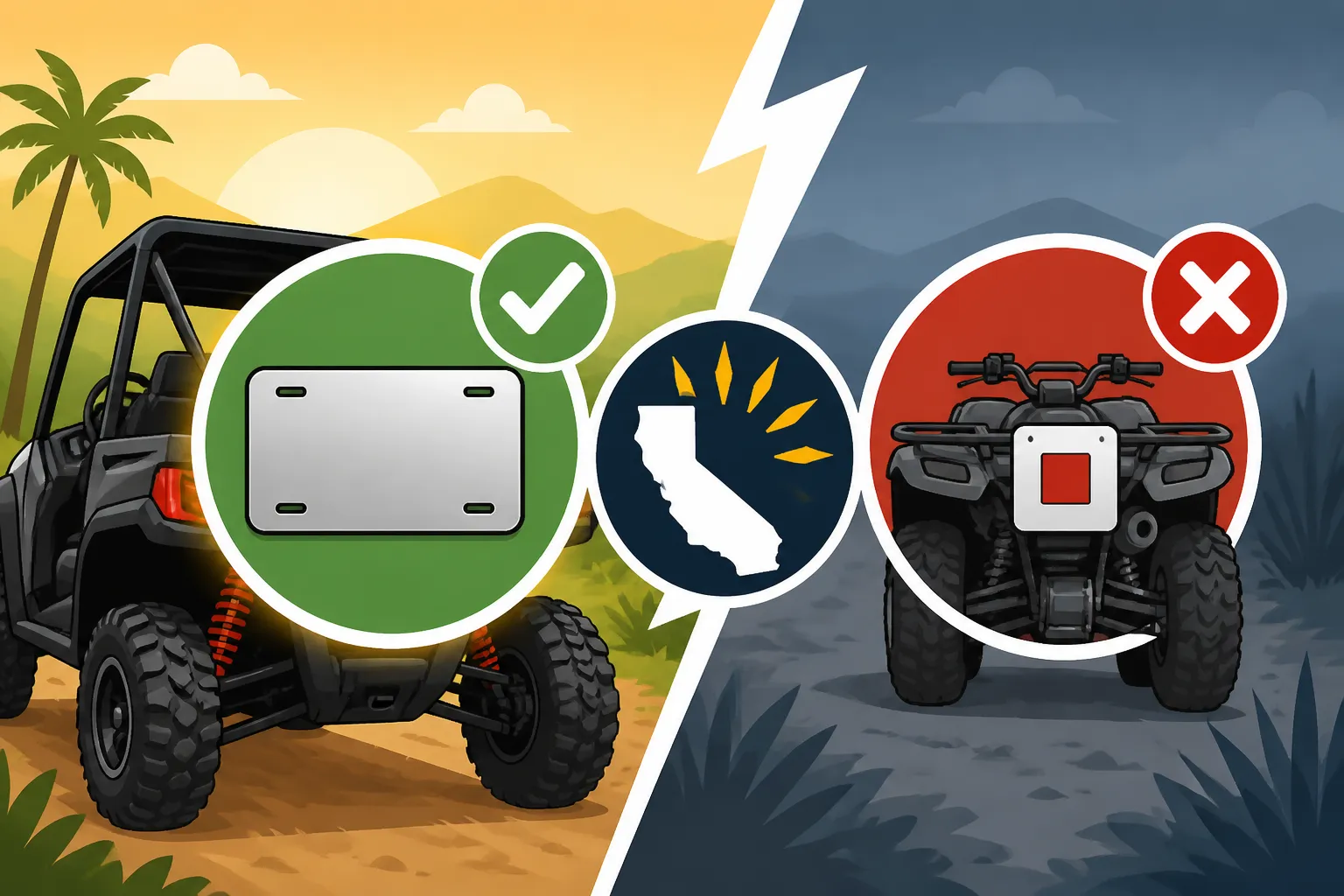
| Feature | California OHV ID Plate (Metal) | Typical OHV Decal (Adhesive) |
|---|---|---|
| Material | Durable aluminum | Flexible vinyl/plastic adhesive |
| Durability | High; resistant to peeling, fading, tearing, bending | Moderate; prone to wear, fading, peeling, damage from elements |
| Visibility | Excellent; embossed, standardized size, fixed mounting | Varies; can be small, may fade, peel, or be obscured |
| Longevity | Permanent (vehicle lifetime, unless lost/damaged) | Typically annual/biennial replacement |
| Theft Deterrence | High; difficult to remove/alter without tampering | Low; easily removed/replaced |
| Law Enforcement Aid | High; quick, unambiguous identification | Moderate; can be harder to read or verify |
| Regulatory Display | Canvas for Green/Red/Tan stickers | Often the primary identifier, with expiration dates |
| Cost Implication | Included in initial registration fee (durable asset) | Included in annual/biennial renewal |
Disclaimer
This article is for general informational purposes only and does not constitute professional advice. Laws, prices and regulations vary by location and change over time. Consult a qualified professional for guidance on your specific situation.