Flag Size on California Dunes
Flag Size on California Dunes
A dune flag is a small piece of gear with a big job: helping riders see each other over sand ridges. But a flag that looks large enough at home may not meet the rules at the riding area. Here’s how to choose the right size, mount it properly, and check local requirements before unloading your ATV or UTV.
The required size and why it matters
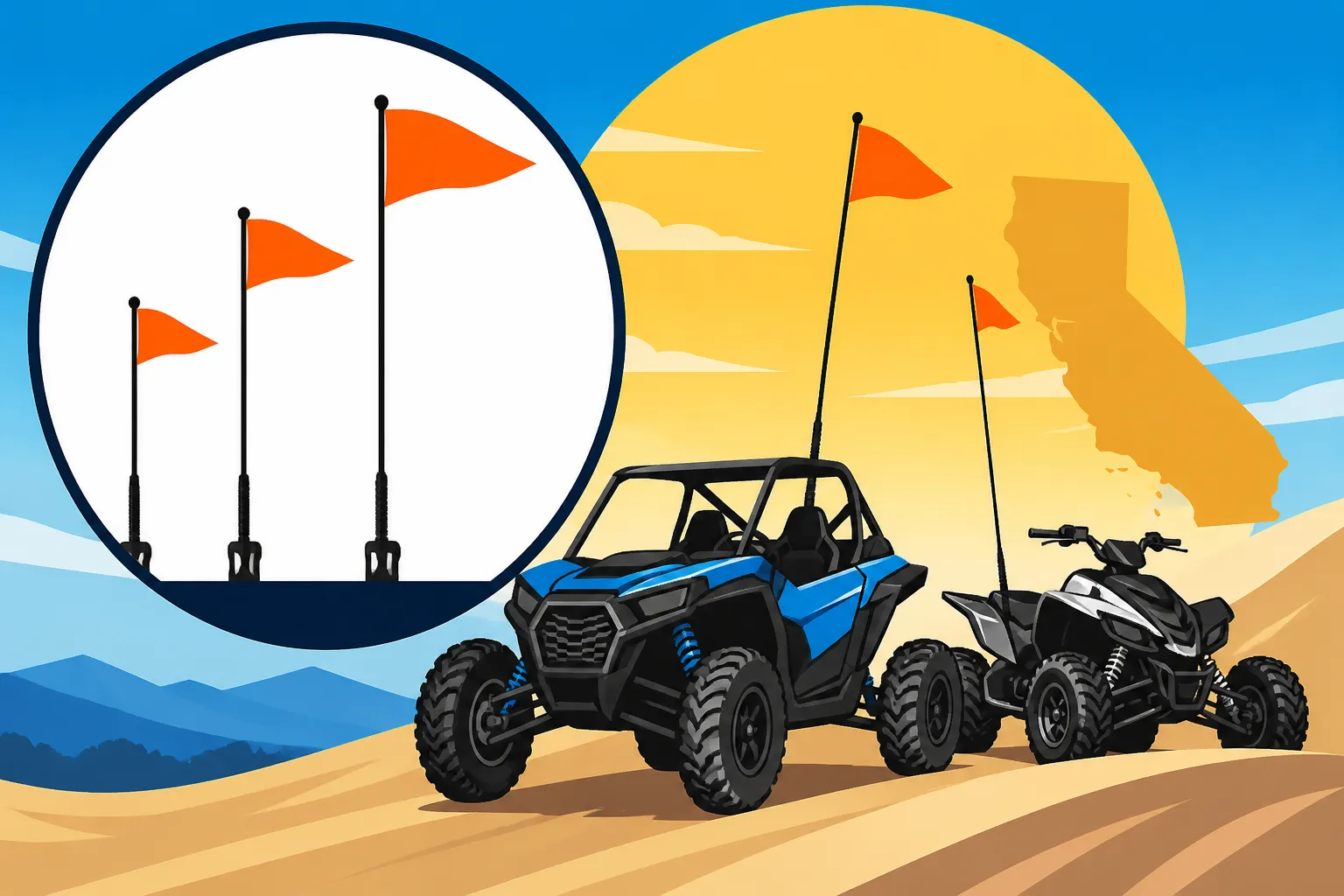
For California dune riding, the commonly specified flag size is 6 by 12 inches. That means the visible flag fabric should measure at least 6 inches by 12 inches; a larger flag may be easier to spot, but it still needs to be securely attached and suitable for the area’s rules. Check the regulations for your specific riding area before you buy or ride, since requirements can vary by land manager.
The dimensions are not a casual suggestion. A flag’s job is to make a vehicle visible when a dune blocks the rider’s view. If the cloth is too small, folded over, torn, or difficult to distinguish from the sand and sky, it may not give approaching riders much warning.
The flag is only one part of the setup. A compliant-size flag mounted low on a short whip can remain hidden behind a ridge. A taller mast with a tiny or damaged flag may also be hard to see. Think of the full setup as a system: the flag needs enough visible surface, the mast needs to hold it high, and the attachment needs to keep it in position while the vehicle moves.
| Part of the setup | What to check | Why it matters |
|---|---|---|
| Flag fabric | At least 6 by 12 inches where that requirement applies | A visible surface helps other riders spot you |
| Mast height | Meet the riding area’s minimum; an 8-foot height is commonly specified at dune areas | The flag can show above ridges and other vehicles |
| Position on mast | Keep the flag near the top; some rules specify within 10 inches | A low-mounted flag can be obscured |
| Condition | No major tears, fading, or loose seams | Damaged fabric may flap, fold, or become less visible |
| Attachment | Secure the flag so it stays open and upright | A loose flag can wrap around the whip or vehicle |
The 6-by-12-inch dimension is often discussed alongside mast height and placement. For details about how those requirements fit together, see California Dune Flag Requirements and California Whip Height Requirements. If your riding plans include the Imperial Sand Dunes, review California Rules for Riding Imperial Sand Dunes as well. The responsible agency’s current instructions for your destination should take priority over a general equipment checklist.
Choosing a flag and whip that work together
Measure the fabric, not the package
Product listings can describe a flag by its nominal size, but the usable cloth can be smaller if the measurement includes a sleeve, hem, or mounting pocket. Check the dimensions of the actual flag panel. If you cannot confirm that it meets the requirement, choose one with clear measurements rather than relying on a vague description such as “dune flag” or “oversized.”
A flag may seem to meet the minimum while it is lying flat, then become difficult to see when wind folds it around the whip. A slightly larger panel can improve visibility, but larger is not automatically better. Oversized fabric puts more strain on the flag, mounting point, and whip in the wind. It may also flap against the mast or vehicle if the attachment is not designed for it.
Before heading out, check that:
- The fabric panel meets the required dimensions.
- The flag’s color is easy to distinguish at your destination.
- The seams and edge are intact.
- The attachment fits the whip securely.
- The flag can open freely rather than staying wrapped around the mast.
Do not assume that a particular color is acceptable everywhere simply because it is common at a nearby riding area. Managers may specify visibility requirements, colors, or other details. Follow the rules for the site you are visiting.
Match the flag to the mast
A flag must be compatible with its whip. Some flags slide onto a whip through a sleeve; others use straps, clips, or another fastening method. The attachment should hold the flag where intended without tearing the fabric or leaving it free to slide down the pole. If the flag is attached near the top, make sure the mounting hardware does not pull the cloth into a narrow bundle.
Mast height matters because dunes interrupt lines of sight. A flag that is technically large enough but mounted low may be hidden by the ridge you are climbing or the vehicle ahead of you. Dune rules commonly specify an 8-foot height, and some instructions also specify how close to the top the flag must be. Measure your setup the way the managing agency defines it, rather than guessing from the product description. More detail on the height question is covered in Whip Mast Height on Sand.
A tall whip also needs a stable mounting point. Use a mount intended for the vehicle and follow its installation instructions. The whip should not interfere with steering, suspension movement, passengers, cargo, or other equipment. After installation, inspect the mount and fasteners; a tall mast can flex and shake as the vehicle moves.
Think about color and contrast
A high-visibility flag is easier to notice when it stands out against the landscape. The best choice depends on the conditions: bright sand, pale sky, dust, shadows, and other flags can all affect contrast. Follow any color rule that applies at the riding area, and avoid choosing a flag that blends into the usual background.
Color alone cannot make up for poor placement or damaged fabric. A vivid flag wrapped around a whip is not very useful. Keep it open, securely attached, and visible from more than one direction when possible.
If you are comparing equipment online, read the dimensions and mounting details rather than relying only on the product title or a photo. For example, if you shop on Amazon, confirm the actual flag measurements and check that the listed attachment fits your whip. Product descriptions and availability can change, so verify the specifications before ordering.
Mounting the flag and checking the setup
A correct flag can still be ineffective if it is mounted poorly. Before riding, make sure the full assembly is installed as intended and can withstand movement, wind, and vibration.
- Check the riding area’s requirements. Confirm the flag size, mast height, color, and placement rules for the destination. Do not assume that the rules at one dune area apply to another.
- Measure the flag panel. Confirm that the visible fabric meets the minimum size if the site requires a 6-by-12-inch flag.
- Install the whip mount securely. Use a mount suited to the vehicle and follow the manufacturer’s instructions. Do not attach a whip where it can obstruct the driver or passenger.
- Set the flag near the top of the mast. If the site specifies a maximum distance from the top, measure it rather than estimating.
- Check the overall height. Measure from the reference point given by the managing agency. If the rule calls for an 8-foot setup, make sure the relevant measurement meets it; a whip’s advertised length alone may not tell you the installed height.
- Test the assembly. Move the flag by hand and inspect the mount, fasteners, and fabric. It should not slide down, detach easily, or remain folded around the pole.
- Recheck after transport. A whip can loosen or bend on a trailer. Inspect it again after unloading and before entering the riding area.
The measurement point is worth attention. A whip sold as a particular length may not provide that much height above the ground once it is installed, because part of it may sit inside the mount or vehicle. Local instructions may define height from the ground, the vehicle, or another point. Follow the site’s wording and ask the managing agency if it is unclear.
Keep the flag in good condition throughout the trip. Sand, wind, and repeated flexing can wear stitching or loosen a fastener. If the fabric tears, the whip bends, or the flag comes loose, stop somewhere safe and repair or replace the equipment before continuing. Carrying a spare flag or attachment can be useful on a longer outing, especially when the vehicle will be far from the staging area.
For a broader explanation of the flag’s purpose and placement, see Why Dune Flags Measure 6 by 12 Inches and Why Flags Exist on a Dune. The key practical point is simple: dimensions matter, but visibility depends on the whole assembly.
Rules, inspections, and common mistakes
Check the land manager’s current instructions
California dune riding areas may be managed by different agencies, and requirements can depend on the location. A general rule of thumb is useful for preparing your vehicle, but it is not a substitute for checking the destination’s official instructions. Confirm requirements before the trip, especially if you are visiting an area for the first time or bringing a different vehicle.
At a minimum, look for information about flag dimensions, mast height, color, and placement. Also confirm whether the rules cover every vehicle type or apply differently to particular machines or activities. If you are not sure how a measurement is defined, ask the land manager rather than relying on a retailer’s product description or another rider’s setup.
Flag rules are part of a wider set of riding requirements. If you are new to California’s permit and reciprocity rules, California OHV Permits Explained provides useful context. For a destination-specific look at dune riding, California Dune Riding Areas can help you plan where to go and what to confirm before leaving.
Common mistakes that make a flag less useful
- Buying by the name alone. A product called a “dune flag” might not meet the dimensions required at your destination. Check the actual cloth measurements.
- Measuring the whip instead of the installed height. The pole’s listed length does not necessarily equal its height above the ground after mounting.
- Mounting the flag too low. A compliant-size panel can disappear behind a ridge if it sits too far down the mast.
- Ignoring the attachment. A flag that slides, twists, or folds around the whip may be difficult to see.
- Using damaged fabric. Tears, loose seams, and heavy fading can reduce visibility or cause the flag to fail.
- Assuming a rule is universal. Requirements can vary by riding area and managing agency. Verify the rules where you plan to ride.
- Forgetting to inspect after trailering. Transport can loosen a mount, bend a whip, or damage the flag.
- Treating the flag as a substitute for safe riding. A flag improves visibility, but it does not make blind dune crests safe to cross at speed or remove the need to watch for other vehicles.
Some riders choose a flag larger than the minimum, or add visibility equipment to make the vehicle easier to spot. Those choices can be helpful, but they do not replace compliance with the required size, placement, or height. Extra equipment should also be mounted securely and should not interfere with the vehicle or its occupants.
Frequently Asked Questions
Is a 6-by-12-inch flag required on California dunes?
A 6-by-12-inch flag is a commonly specified minimum for California dune riding. Confirm the exact requirement with the managing agency for your destination, including any rules about flag color, mast height, and placement.
Does the flag have to be a particular color?
The required color can depend on the riding area’s rules. Choose a high-visibility flag that complies with the destination’s instructions rather than assuming one color is accepted everywhere.
How high should the whip be?
An 8-foot height is commonly specified at dune areas, but the way height is measured can vary. Check the site’s instructions and measure the installed setup using the agency’s stated reference point.
Can a larger flag be used instead of a 6-by-12-inch flag?
A larger flag may improve visibility, but it does not automatically meet every rule or solve problems with a short mast or poor placement. Confirm the minimum dimensions and other equipment requirements for the area.
What should I do if the flag breaks during a ride?
Stop in a safe place and repair or replace the flag before continuing. Check the whip and mount as well; damage to one part of the assembly can affect the rest.
Disclaimer
This article is for general informational purposes only and does not constitute professional advice. Laws, prices and regulations vary by location and change over time. Consult a qualified professional for guidance on your specific situation.