Oceano Dunes Entry From Pier Avenue
Arriving at Pier Avenue with an ATV or UTV can feel confusing: beach access, riding boundaries, parking, permits, and changing conditions all meet in one busy area. This guide explains how to prepare for Oceano Dunes entry from Pier Avenue, what to check before driving onto the sand, and how to avoid common mistakes once you arrive.
Plan your Oceano Dunes entry from Pier Avenue
Know what Pier Avenue access means
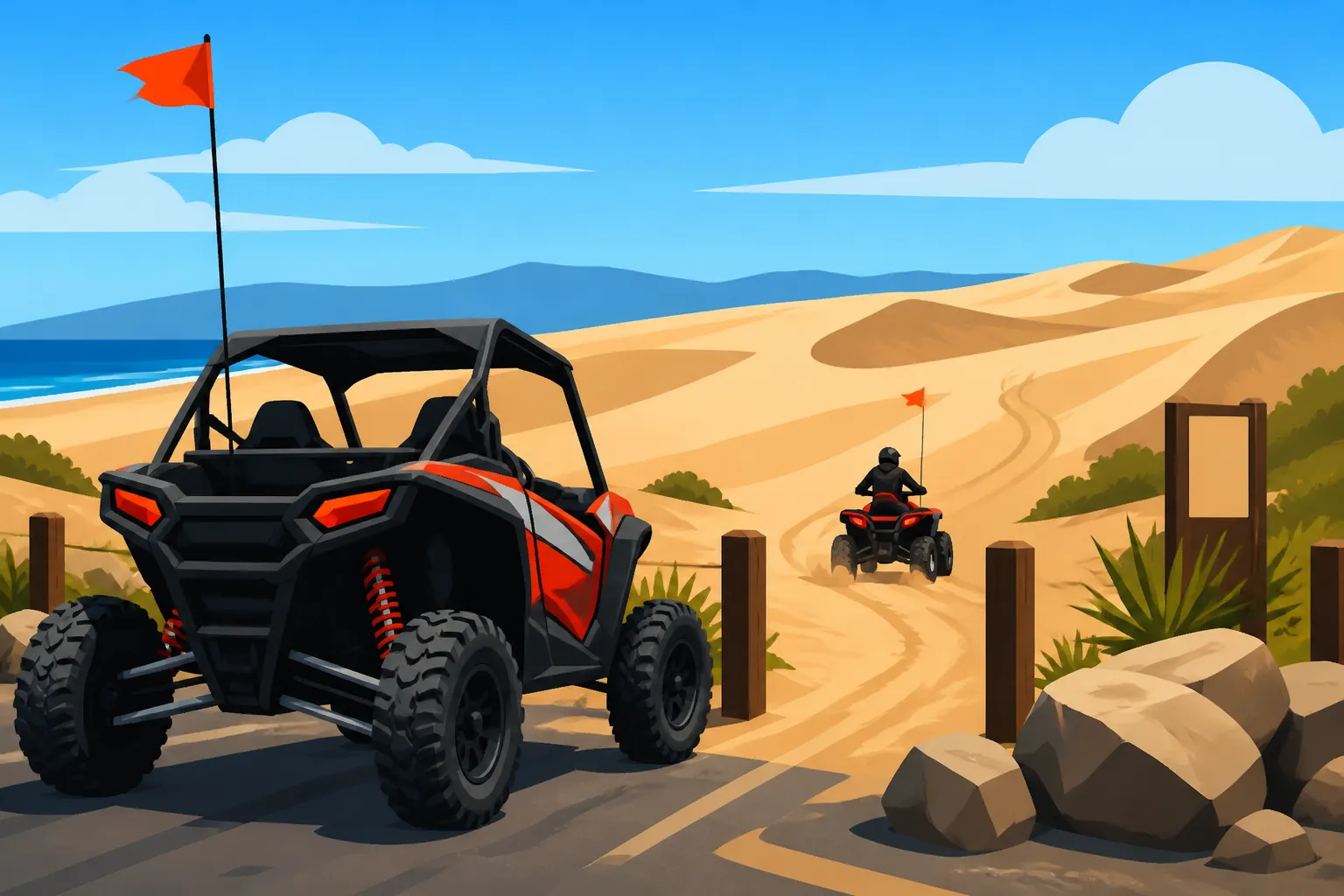
Pier Avenue is a well-known access point for reaching the beach and Oceano Dunes State Vehicular Recreation Area near Oceano. If you are bringing an ATV or UTV, think of it as the start of your access plan—not a promise that every part of the beach or dunes is open to riding. Designated boundaries and access conditions matter, and they can change.
Before leaving home, confirm the current entrance instructions and riding-area information through official park channels. Look for notices about access, closures, vehicle limits, parking, and any special requirements. A map app can help you reach Pier Avenue, but it should not be treated as the final authority on where riding is allowed. A route that looks open on a screen may cross a restricted area or lead to a place where vehicles are not permitted.
It also helps to decide whether you are arriving with your own machine, using a rental, or visiting as a passenger. Those plans can involve different parking, paperwork, and equipment needs. For a broader overview of the location and the riding experience, see [Oceano Dunes: California's Only Sand Beach Ride].
Check conditions before you commit to the drive
Beach and sand conditions are not like a paved trail system. Tides, weather, soft sand, traffic, and temporary restrictions can affect where you can travel and how comfortable the route feels. A low-clearance tow vehicle or a machine with tires and setup poorly suited to soft sand can make the approach more stressful than expected.
Build time into your plan to check conditions shortly before setting out. Confirm whether vehicle access is available, where you are expected to enter, and whether the riding areas you want to visit are open. If the plan depends on camping, a particular beach route, or a rental pickup, check those details separately rather than assuming one open access point means every activity is available.
For navigation, onX Offroad can help you review your approach and orient yourself around nearby roads and terrain. Use it as a planning aid, not as proof that a route is open to OHVs. Compare what you see in the app with official park signs and posted restrictions, and follow staff directions at the entrance.
Prepare your machine, paperwork, and passengers
Sort out registration and permits ahead of time
A common last-minute headache is arriving with a machine but not the documents or identification required for the trip. Before leaving, check that the machine’s registration or applicable permit is in order and that you have the supporting paperwork you may need to show. Requirements can vary according to where the machine is registered and how it is being used.
If you are bringing a California-registered machine, make sure its identification and registration details are current. If you are visiting from another state, do not assume that a street-legal plate or an out-of-state sticker automatically covers California OHV use. Review the relevant rules for your machine and home state before your trip. The [California OHV Registration Paperwork Checklist] can help you identify what to gather, while [California OHV Reciprocity: Only Two States] explains why out-of-state status should be checked rather than guessed.
Keep documents somewhere they can be reached without unpacking half your vehicle. A phone photo may be convenient as a backup, but do not assume a digital copy will satisfy every request. For more on that practical question, see [Carrying Registration Paper on the Sand].
Check safety gear and rider requirements
Sand riding puts riders close together, and visibility can change quickly when machines climb or descend dunes. Before starting, check that everyone has appropriate protective gear, including helmets where required, and that the machine is suitable for each person who will ride it. Confirm age, supervision, and safety-certificate requirements for younger riders before the trip—not at the access point.
For a UTV, review the manufacturer’s guidance for seat belts and passenger capacity, and make sure riders know where to sit and how to secure themselves. For an ATV, do not carry more riders than the machine is designed or allowed to carry. California’s public-land rules can be specific, so review [California Rules for Riders Under 18] and [California ATV Passenger Ban Explained] if a child or passenger will be part of your plan.
Pack water, sun protection, eye protection, and clothing that can handle sand and wind. Bring a basic recovery plan as well: know who to contact if a machine becomes disabled, and do not assume another rider will be able to tow you safely. Even a short outing can become uncomfortable when a rider is hot, dehydrated, or separated from the group.
| Before you leave | What to check | Why it matters |
|---|---|---|
| Access | Entrance instructions, open areas, and posted restrictions | The entrance does not mean all nearby terrain is open to riding |
| Machine | Registration, applicable permit, condition, and fuel | Missing paperwork or a mechanical problem can disrupt the outing |
| Riders | Helmets, passenger capacity, age rules, and supervision | Requirements differ by rider and machine type |
| Navigation | Official park information plus a planning map | Apps help with orientation but do not replace signs or closures |
| Weather and sand | Wind, visibility, tide information, and surface conditions | Conditions can affect both comfort and safe travel |
| Group plan | Meeting point, communication plan, and turnaround time | Groups can become separated in busy or low-visibility areas |
Navigate the beach and dunes carefully
Follow signs and respect changing boundaries
Once you reach the beach, resist the urge to follow tire tracks simply because they are already there. Tracks do not establish that a route is legal or currently open. Stay within areas designated for vehicle use, obey signs and staff instructions, and leave marked closures undisturbed.
Boundaries can matter for habitat protection and public safety. Fencing, signs, and temporary closures may direct riders away from sensitive areas or changing conditions. If you are uncertain whether a route is allowed, stop somewhere safe and check before continuing. A short pause is much easier to manage than having to turn around in a crowded or soft-sand area.
This is especially important near waterways and the edges of designated riding areas. Learn how the [Arroyo Grande Creek and the Southern Boundary] relates to the riding area, and pay attention to notices about [Snowy Plover Fencing and Your Route]. These are not details to improvise around once you are already riding.
Use a simple approach plan
A useful plan is to keep your first ride conservative. Identify where your group will stop, how you will stay together, and what you will do if someone has a mechanical issue. Choose a clear meeting point that everyone can recognize, and agree that no one will ride off alone without telling the group.
If you are unfamiliar with the sand, take time to get comfortable before attempting steep or crowded terrain. Watch how the surface changes, leave room between machines, and avoid stopping where another rider may not see you. Sand can reduce visibility, especially when machines are moving nearby or wind is blowing across the beach.
onX Offroad can be useful for reviewing your general approach and keeping a sense of direction, but keep your phone protected from sand and have a backup plan if the battery or signal becomes a problem. Check the official map and on-site signs as well. For practical guidance on beach access, [Driving Onto the Sand at Oceano] is a helpful companion topic, while [Tides and Riding the Oceano Sand] covers another condition that can affect your route planning.
Avoid common entry-day problems
Do not treat beach access as unrestricted riding access
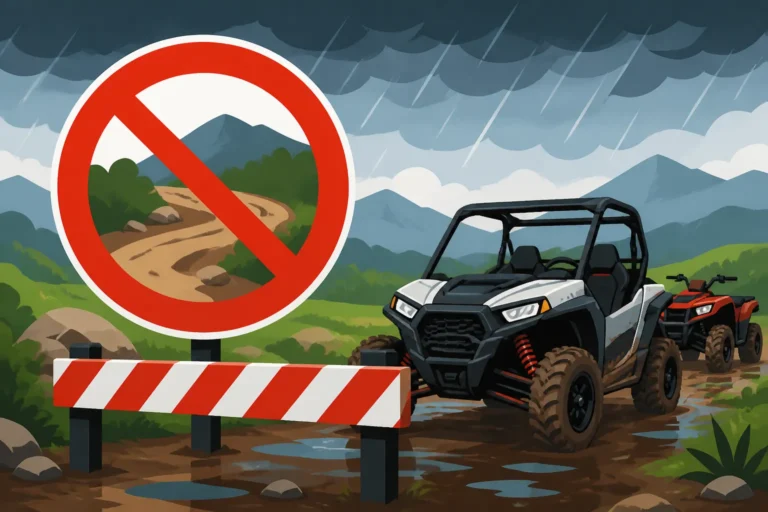
The most frustrating mistake is assuming that reaching the sand means you can ride anywhere you see. The riding area has boundaries, and access can be affected by closures or special restrictions. A route that appears convenient may be outside the designated area, blocked, or unsuitable under current conditions.
Plan to stop and read signs before unloading or riding away from the access point. If you are renting, ask the rental provider to explain where the machine may be ridden and what the return and recovery procedures are. If you are bringing your own machine, review the rules before the trip and confirm anything unclear with the park.
Keep environmental boundaries in mind even when they are not directly in your path. Do not cross fencing, enter closed habitat, or ride around a closure to reach a preferred spot. For additional context on managing boundaries, see [Oceano Dunes and California's Snowy Plover].
Leave room for a safer return
The return trip deserves as much attention as the arrival. Before you head out, agree on a time to turn back, check that everyone has enough fuel and water, and make sure the group knows how to regroup if separated. If visibility drops or the route becomes more crowded than expected, slow down and reassess rather than pressing on.
Keep your equipment and documents together, and leave yourself enough time to load or secure the machine without rushing. If you are towing, follow the posted access and parking instructions, and do not assume that a spot suitable for a short stop is suitable for maneuvering a trailer. Review [Oceano Dunes Reservations and Vehicle Limits] if your plans depend on vehicle access or a specific kind of visit.
A little preparation makes Pier Avenue access much less stressful. Confirm the entry details, check the current boundaries, bring the right paperwork and safety gear, and treat maps as aids rather than permission to ride. Once on the sand, follow posted directions and keep your group’s plan simple enough that everyone can follow it.
Disclaimer
This article is for general informational purposes only and does not constitute professional advice. Laws, prices and regulations vary by location and change over time. Consult a qualified professional for guidance on your specific situation.