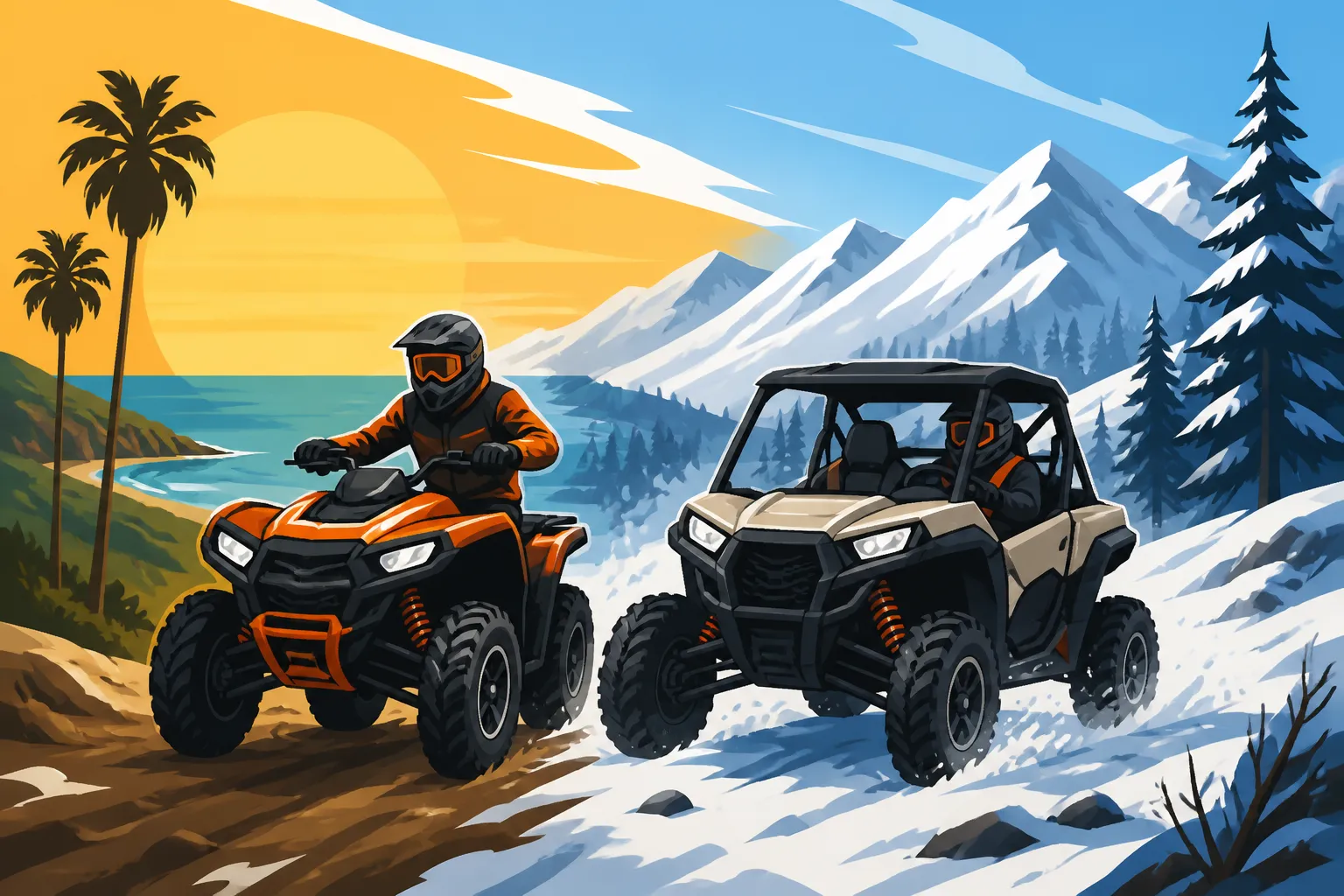
California Riding in Winter
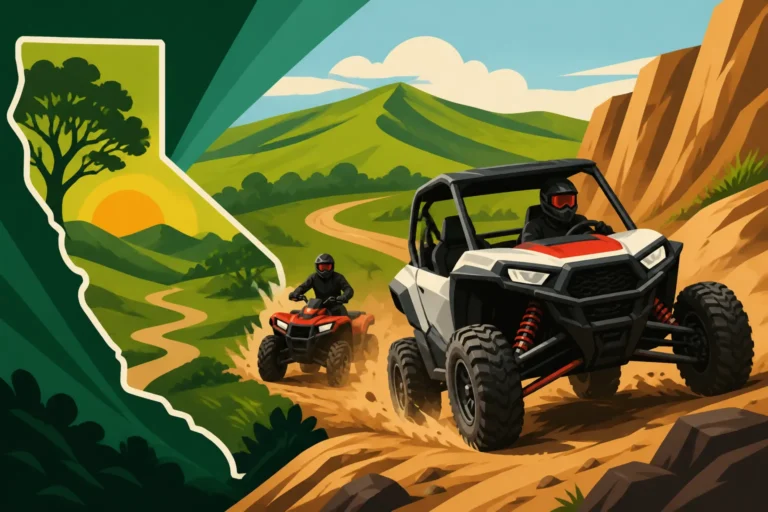
Winter riding in California can mean sunny dunes near Glamis, muddy foothill trails near Hollister, or snow and ice in the mountains—all within the same weekend forecast. That variety is part of the appeal, but it can make trip planning tricky. This guide explains where winter riding may work, how weather changes trail conditions, and what to check before loading your ATV or UTV.
Where winter riding works best in California
Desert areas offer milder days and cooler nights
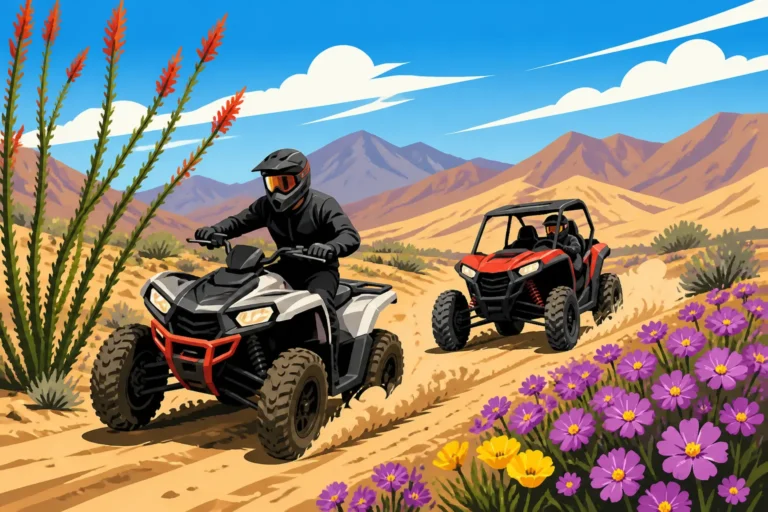
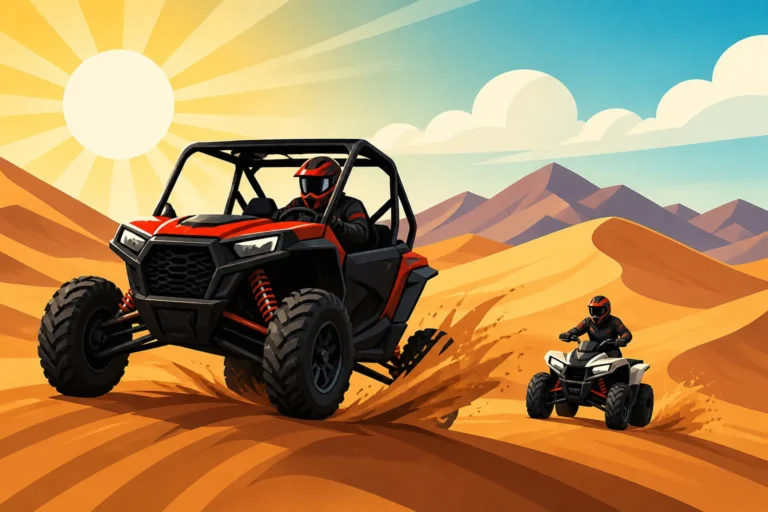
For many riders, winter is prime time to explore California’s desert riding areas. Places such as Ocotillo Wells and the Imperial Sand Dunes near Glamis often offer more comfortable daytime temperatures than the hottest months. Winter does not mean carefree riding, though: overnight temperatures can drop sharply, and wind can make an exposed campsite or dune feel much colder than expected.
Desert conditions also change quickly. A recent storm may leave some routes wet or temporarily difficult to travel, while wind can reshape soft sand and reduce visibility. Before heading out, check the land manager’s current notices and the forecast for the riding area itself. A forecast for a nearby city may not reflect conditions at camp or on the trail. For planning across the state, [California Dune Riding Areas](California Dune Riding Areas) can help you compare the character of different desert destinations.
Pack for a wider temperature range than the afternoon forecast suggests. Bring warm layers for early starts and evenings, plenty of water, and eye protection suitable for blowing sand. Even in cooler weather, it is easy to underestimate how much water a long ride takes, especially when the air is dry and the wind is steady.
Coastal and foothill areas can be rewarding but wetter
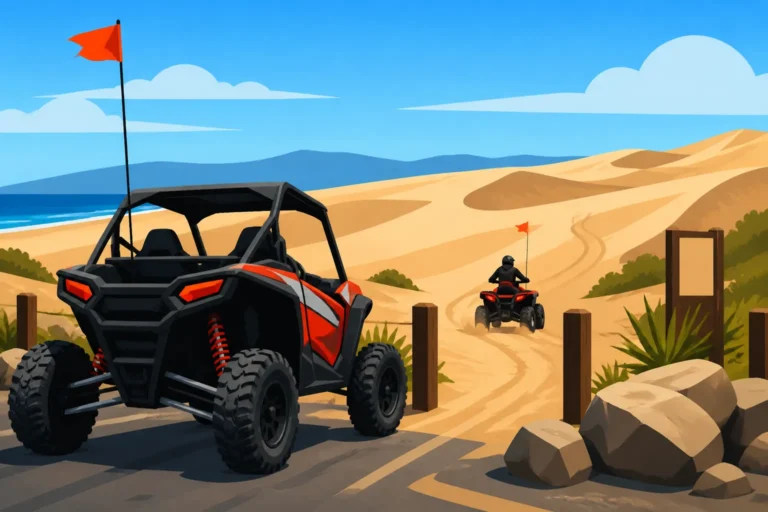
Coastal and foothill destinations may be rideable in winter, but rain has a stronger influence on access and trail conditions. Oceano Dunes, Hollister Hills, Carnegie SVRA, and Hungry Valley each have their own terrain, drainage, and operating conditions. A stretch of dry weather can make for a pleasant outing, while a storm can turn the same route into a muddy, slippery, or closed area.
Do not assume a park is open just because the weather looks clear at home. Rain may have passed, but the ground can remain saturated, and land managers may close routes to prevent damage or protect public safety. Check the park’s notices before driving out, and be ready to change plans if access is restricted. [California Trail Closures After Rain](California Trail Closures After Rain) explains why a closure can remain in place after rainfall ends.
Winter also brings shorter daylight hours. A coastal ride that starts late can leave less time to explore before dusk, particularly if the route is unfamiliar or the group includes newer riders. Set a conservative turnaround time and avoid relying on a last-minute sunset ride to get back to camp.
How weather changes trail conditions
Rain, mud, and saturated ground
Rain can make a familiar trail behave very differently. Clay-heavy surfaces may become slick, while low spots and washes can hold water long after nearby ground looks dry. On hills, a layer of mud can reduce traction and make climbs or descents more difficult than expected. In a UTV, added weight and momentum can make it harder to stop or turn on a slippery slope; on an ATV, a sudden loss of grip can catch a rider off guard.
The responsible choice is to stay off trails that are closed, deeply muddy, or visibly eroding. Spinning tires can rut the surface, widen a trail, or damage vegetation. If you find a section that is too wet, do not ride around the obstacle to create a new track. Turn back using a safe, legal route and report a hazard if the land manager provides a way to do so.
A dry forecast does not guarantee dry trails. Shade, elevation, soil type, and drainage all affect how quickly an area recovers. Use official park or forest updates alongside weather information, and treat unofficial reports as helpful context rather than permission to ride. For broader planning, [California OHV Areas After a Storm](California OHV Areas After a Storm) covers the kinds of post-storm conditions that can affect a trip.
Snow, ice, and changing elevation
At higher elevations, winter riding can bring snow, ice, frozen ground, and rapidly changing weather. A trail that is clear at the trailhead may be snow-covered farther up the route. Shaded slopes can stay icy even when sunny sections have thawed, and a sudden storm can make navigation and vehicle recovery much harder.
Before riding in or near the mountains, check the route’s elevation and access status, not just the nearest town’s forecast. Pay attention to road closures and seasonal restrictions, and do not assume that a track shown on a map is open to motor vehicles. National forest access can vary by road, trail, season, and current conditions. [California OHV Areas in the National Forests](California OHV Areas in the National Forests) is a useful starting point for understanding the variety of riding settings.
Cold weather also affects riders and machines. Gloves that are comfortable in town may not be warm or waterproof enough for a windy ride, and numb fingers can make it harder to operate controls. If snow or ice is part of the plan, choose a route and pace that match your group’s experience, and leave plenty of margin for turning back before conditions worsen.
Choosing a destination and checking access
Match the area to your group and forecast
A good winter destination is not simply the place with the best forecast. Think about your group’s riding experience, the expected ground conditions, travel time, vehicle capability, and the availability of fuel or services. A wide, familiar route may be a better choice after rain than a narrow trail with steep grades. If you are taking children or newer riders, a shorter outing with easy turnaround options can make the day more enjoyable and less stressful.
Use a destination-specific forecast and look for updates from the land manager before leaving. Check for closures, wet-weather restrictions, fire-related notices, and changes to campground or day-use access. At state vehicular recreation areas, check the individual park’s information rather than assuming all SVRAs follow the same schedule. [California’s State Vehicular Recreation Areas](California’s State Vehicular Recreation Areas) provides context on the range of state-managed riding areas.
Mapping tools can help you plan a route and understand nearby roads, but a mapped line is not proof that a route is open or legal. onX Offroad can be useful for reviewing route options and terrain before a trip; still, verify access with the relevant agency, especially where a route crosses private land or meets a seasonal closure. Download maps for offline use if your route may take you beyond reliable cell coverage.
| Winter destination type | What may make it appealing | Conditions to check | Planning note |
|---|---|---|---|
| Desert dunes and open desert | Milder daytime riding than peak summer heat | Wind, recent rain, sand conditions, permit or access notices | Pack for cold nights and blowing sand |
| Coastal riding areas | Ocean scenery and a different riding feel | Rain, surface conditions, park notices, daylight | Check access before making a long drive |
| Foothill SVRAs | Varied terrain and riding areas within reach of populated regions | Mud, closures, trail status, park hours | Choose routes that suit the least-experienced rider |
| National forest roads and trails | A mix of elevations and wooded landscapes | Snow, ice, seasonal restrictions, road status | Confirm that the specific route is open to motor vehicles |
Understand maps, signs, and legal boundaries
Winter conditions can obscure route markers and make it harder to tell whether you are still on a designated trail. Snow may cover signs, mud can hide tracks, and low light can make junctions easy to miss. Plan your route in advance, carry a reliable navigation option, and agree on what the group will do if riders become separated.
Do not use an app, old track, or another rider’s tire marks as the final word on access. Boundaries can be complex, particularly where public land meets private property or where a road crosses land with different management rules. Follow posted signs and current agency maps. For forest travel, [Reading a Motor Vehicle Use Map for a Forest](Reading a Motor Vehicle Use Map for a Forest) offers a helpful reminder that route designations matter.
Give yourself enough time to return before dark, and avoid pushing farther just because the route looks close on a screen. Winter daylight is limited, and a wrong turn or mechanical problem can quickly add time. Tell someone where you plan to ride and when you expect to be back, particularly if the group is heading into a remote area.
Preparing your ATV or UTV for a winter ride
Inspect the machine before loading
Cold, wet, and muddy conditions can expose problems that a short summer ride might not. Check tire condition and pressure according to the machine and terrain, inspect brakes and steering, and look for worn belts, loose fasteners, damaged lights, or signs of fluid leaks. Make sure the battery is in good condition and that the machine starts reliably before you reach a remote trailhead.
Pack basic recovery and repair gear that matches the trip. Depending on the vehicle and terrain, that may include a tire repair kit, a properly rated recovery strap, basic tools, and a way to contact the rest of the group. In winter, wet gear and muddy equipment can become a nuisance at camp, so bring bags or containers to separate dirty items from dry clothing and food.
Do not make mechanical or safety changes that you have not tested before the ride. If you are unfamiliar with using recovery equipment, learn how it works in a safe setting rather than improvising in mud or sand. Keep passengers informed about the route and any planned stops, and confirm that everyone knows where emergency supplies are stored.
Dress for the ride, not just the parking lot
Winter clothing needs to handle wind, moisture, and temperature swings without restricting movement. Layering makes it easier to adjust as the day warms up or the ride gets more exposed. A wind-resistant outer layer, warm gloves, sturdy footwear, and extra dry clothing can make the difference between a comfortable outing and an early retreat.
Bring eye protection for the conditions. Dust may still be an issue in dry desert areas, while rain, mud, or cold air can make a clear visor or goggles more useful in wetter settings. Secure loose items so they cannot snag on the vehicle or fall onto a trail. In an open UTV, remember that passengers may feel colder than the driver because they are less active and more exposed to wind.
Keep food, water, and essential items accessible rather than buried under camping gear. A small group can lose a surprising amount of time when someone is cold, wet, or dealing with a minor repair. Planning for comfort is not overpacking; it is a practical way to keep small problems from spoiling the day.
Riding responsibly when conditions are difficult
Adjust speed and route to the surface
Winter riding rewards patience. Mud, wet leaves, loose sand, snow, and shaded ice each affect traction in different ways. Slow down before turns and descents, leave more room between vehicles, and avoid sudden inputs that can unsettle a machine. If you cannot see far enough ahead to stop safely, reduce speed or choose a different route.
Stay on designated routes, especially when ground conditions are soft. Riding around puddles or muddy sections can widen a trail and cause lasting damage. If conditions are deteriorating, turn back while the route is still manageable. Continuing simply because the group has already traveled part of the way can turn a modest inconvenience into a difficult recovery.
Be considerate of other users and give people room at blind corners or narrow sections. Mud and spray can reduce visibility, while engine noise may make it harder for hikers or other riders to hear an approaching vehicle. Keep a pace that lets you react to unexpected hazards, and pause somewhere safe if the group needs to regroup.
Know when to postpone the trip
There are days when postponing is the safest and most considerate decision. Examples include an active closure, severe wind that reduces visibility, a storm forecast during the planned riding window, or snow and ice beyond the group’s ability. A destination that is technically accessible may still be a poor choice if roads are unsafe or the route would require riding beyond the group’s experience.
A backup plan helps take the pressure off. Pick another legal area with more suitable conditions, shorten the ride, or switch to a non-riding activity rather than trying to force the original itinerary. If your destination is closed after rain, do not look for an informal side route. [California OHV Areas Open Year Round](California OHV Areas Open Year Round) can help with early planning, but always confirm current conditions and access before departure.
Finally, make your go-or-no-go decision before the group is committed to a long drive or has unloaded the machines. Agree on who will check official updates and who can call the trip if weather changes. A postponed ride is frustrating, especially after everyone has coordinated time off and loaded a trailer, but it is better than damaging a trail or getting caught in conditions the group cannot safely manage.
Disclaimer
This article is for general informational purposes only and does not constitute professional advice. Laws, prices and regulations vary by location and change over time. Consult a qualified professional for guidance on your specific situation.