Gordon’s Well and Dunebuggy Flats
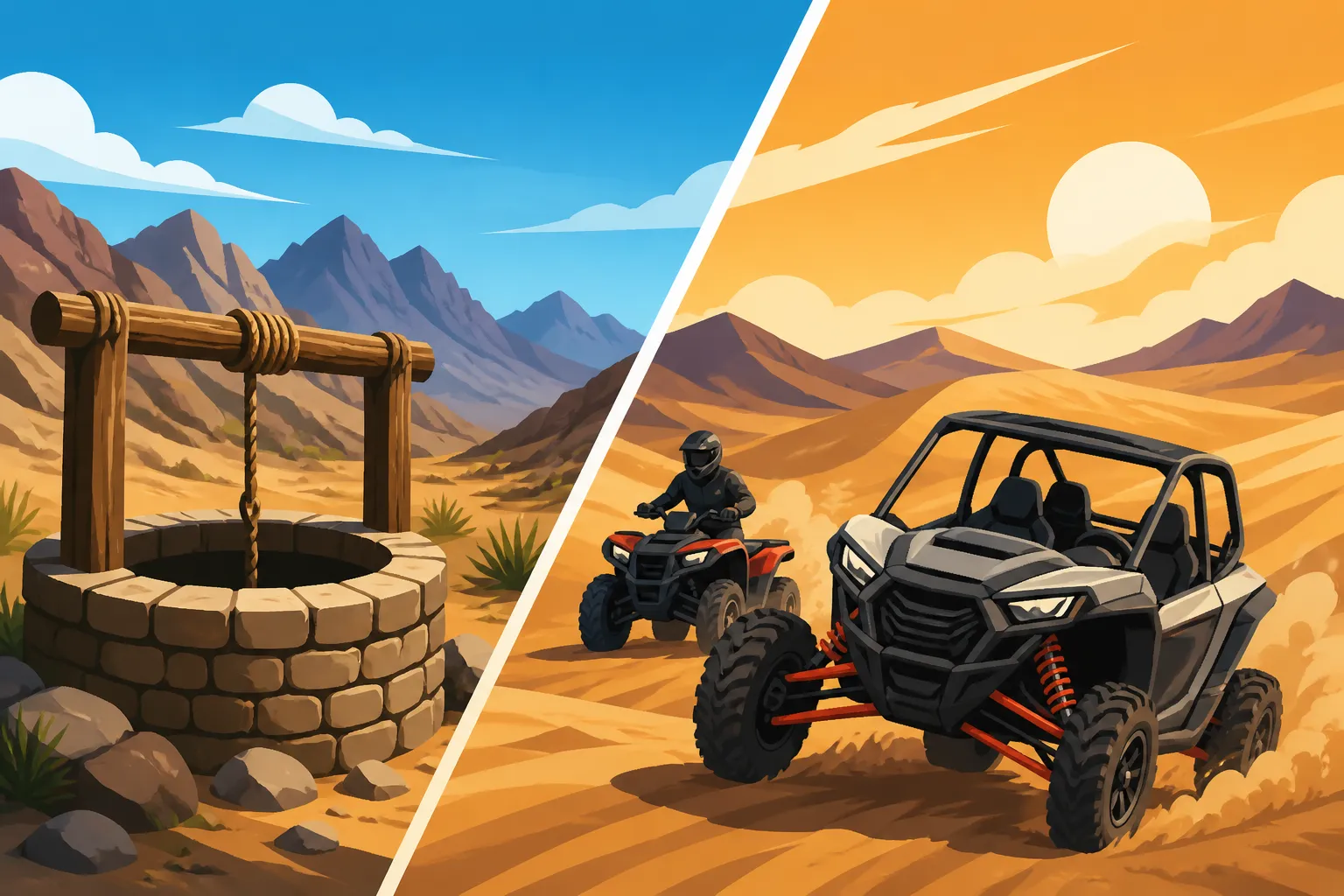
Gordon’s Well and Dunebuggy Flats offer a different feel from the busiest parts of California’s Imperial Sand Dunes: open sand, broad views and room to plan a ride around your group’s pace. But the area can still catch newcomers off guard. This guide explains how to prepare, what to expect on the ground and how to ride more safely.
Understanding Gordon’s Well and Dunebuggy Flats
Where the riding area fits into the Imperial Sand Dunes
Gordon’s Well and Dunebuggy Flats are names associated with the eastern part of the Imperial Sand Dunes Recreation Area, often shortened to ISDRA. The dunes sit in California’s Imperial County near the Arizona border, with access from the Interstate 8 corridor and local roads in the Ogilby area. The landscape is part of a much larger dune system, so it is worth treating your destination as a designated recreation area—not as an invitation to ride wherever the sand looks open.
Riders sometimes use the names Gordon’s Well and Dunebuggy Flats loosely when talking about nearby camping and riding. For practical planning, that can make directions confusing: a campsite, a staging spot and the part of the dunes you want to ride may not be the same place. Confirm your intended entrance and camping location against current land-manager information before setting out. A general overview of the wider area is available in [Imperial Sand Dunes, California's Biggest Dune Field], while [Gordon's Well and Ogilby] focuses on the local zone.
The dunes can look deceptively simple on a map. Open sand does not mean every route is suitable for every machine, and natural features can hide other riders from view. Before you head out, identify where your group will regroup, how you’ll get back to camp and what you’ll do if someone gets separated or breaks down.
What makes this area different from a familiar riding spot
A ride at Gordon’s Well may feel less like following a single trail and more like navigating a changing landscape. Sand ridges, bowls, slopes and open flats can shape your route, while visibility may change with terrain, wind and dust. A line that looks clear from camp may lead to a steep face, a crowded feature or a route that is not appropriate for your vehicle or experience level.
Dunebuggy Flats is often considered by riders who want a base for accessing the surrounding riding area. The appeal is straightforward: set up camp, prepare machines and ride from a nearby staging area. The trade-off is that you still need to plan for busy periods, weather exposure and the basic realities of desert camping. Do not assume that a familiar area will have the same access, services or conditions every time you visit.
| Planning question | Gordon’s Well and Dunebuggy Flats | What to verify before leaving |
|---|---|---|
| What is the setting? | A dune recreation zone within the larger Imperial Sand Dunes | The precise entrance, staging point and camping location |
| What is the terrain like? | Open, shifting sand with dunes and changing sightlines | Current conditions, closures and the ability of your machine and riders |
| Is camping part of the plan? | Many visitors use nearby designated camping areas | Camping rules, restrictions and available facilities |
| What paperwork may be needed? | California OHV identification and applicable area permits may matter | Requirements for your machine, registration and visit dates |
| What should guide your route? | Official area information, maps and conditions on the ground | Current land-manager maps and posted signs |
Planning Your Trip and Camp
Choose the right base before you pack
Start by deciding whether you are visiting for a short ride or making camp for a longer stay. A day trip has different needs from a weekend with several machines, passengers and a support vehicle. For a short outing, the priorities may be straightforward access, enough water and a clear turnaround plan. For a camp-based trip, you also need to think about shade, food storage, fuel, charging, sleeping arrangements and where people will walk around moving vehicles.
Check the rules for the exact area where you intend to camp. A nearby riding zone does not necessarily mean every patch of open ground is a suitable or permitted campsite. Confirm boundaries and restrictions with current official information, and follow signs on arrival. [Camping at Gordon's Well] is a useful companion topic when you are sorting out the camping side of the visit.
Build extra time into arrival and setup, especially if several vehicles are traveling together. A group can lose time while unloading, checking tie-downs, airing equipment, locating a campsite or troubleshooting a machine that ran fine at home but struggles in deep sand. Agree on a meeting point before everyone spreads out. If one truck arrives later, the group should know where to find the others without relying on a phone signal.
Pack for sand, heat and limited support
In the desert, a ride can become uncomfortable or risky when small planning details are missed. Carry more drinking water than you expect to need, and keep some accessible while riding—not only in a cooler back at camp. Pack a basic first-aid kit, sun protection and layers for changing conditions. A hot afternoon and a cool evening can feel like two different trips, particularly if you are camping.
Bring the tools and recovery equipment suited to your machines, and make sure someone in the group knows how to use them. A basic plan might include a tire repair kit, the right tools for common adjustments, a tow or recovery strap and a way to contact help. Avoid improvising a recovery in a blind area or on a steep dune face where another rider could arrive unexpectedly. If the situation feels unsafe, stop, make yourself visible and move the group to a safer place before working.
Maps can help you understand the broad layout, but conditions and access rules can change. A tool such as onX Offroad can support route planning and help you keep an offline reference available when cell coverage is unreliable. Treat any app as a planning aid, not as permission to ride a route. Check official maps, closures and signs too; [California Trail Maps and Where to Get Them] explains why comparing map sources matters.
Riding Safely on Open Sand
Match the route to the rider and machine
The right route is not necessarily the most dramatic one. A new rider may be more comfortable on open, less steep terrain where sightlines are better and there is room to slow down. An experienced rider can still benefit from choosing a conservative first loop: it gives the group time to check conditions, confirm that machines are running well and see how crowded the area is before tackling more demanding terrain.
Machine capability matters, but so does rider judgment. A powerful UTV does not make a steep or blind dune safe, and an ATV that is easy to manage on firm ground may respond differently in soft sand. Ride within the experience level of the least confident person in your group. Set a pace that leaves room to react, and do not pressure someone into following a line they have already said they are uncomfortable with.
Sand conditions vary. Soft sand can demand more control and attention than a firm surface, and repeatedly stopping in a difficult spot may make it harder to get moving again. Avoid sharp, sudden inputs that can destabilize a vehicle or surprise a passenger. For more on preparing for soft terrain, see [Soft Sand and Tire Pressure]. The best setup depends on the machine, its tires, the terrain and the rider; avoid copying a number from another person without checking whether it applies to your vehicle.
Protect sightlines and keep the group together
Dunes create blind crests. A rider coming over the far side may not see someone stopped just beyond the ridge, and a person approaching from the other direction may not hear a vehicle over engines and wind. Do not crest blindly at speed. Approach with enough control to stop, look ahead and respond to what is on the other side. Avoid stopping where another rider is likely to cross your path.
Before riding, choose simple group rules. Agree on a lead rider and a sweep rider, decide how often to regroup and make sure everyone knows what to do if the group splits. A beginner should not be left to follow a distant dust plume without knowing the route. If someone needs to stop, use a location where the group can pull clear of traffic and remain visible.
Busy weekends make courteous riding especially important. Leave space, avoid cutting across another rider’s line and give people time to move through a feature. If a machine is stuck or disabled, do not crowd the recovery or block a blind approach. [Riding Etiquette on a Busy Dune] covers the small habits that help reduce conflicts in a high-traffic riding area. For wind and reduced visibility, also review [Dust Storms in the Imperial Valley].
Permits, Registration and Area Rules
Check paperwork before the trip
Paperwork can depend on where your machine is registered, where you live and how you plan to ride. California OHV identification, an out-of-state permit or other documentation may apply. A street-legal plate on a tow vehicle does not automatically satisfy requirements for an off-highway machine, and one state’s registration or decal may not be accepted as a substitute for California’s requirements.
There may also be a separate permit requirement for using the Imperial Sand Dunes during the applicable season. Do not assume that vehicle registration covers every access or recreation fee, or that buying an area permit replaces the machine’s required identification. Check current official information for the area and your particular machine before travel. The overview [California Rules for Riding Imperial Sand Dunes] can help you identify the types of rules to review, while [California OHV Permits Explained] addresses the broader permit picture.
Keep required documents accessible rather than buried under camping gear. A paper copy can be useful if a phone battery dies, a device is damaged or there is no service. Confirm what proof is accepted for your situation and follow instructions from the relevant land manager. If you ride with visitors from another state, check their requirements individually rather than assuming the rules are identical for every machine in the group.
Follow posted restrictions and equipment requirements
Before riding, read signs at entrances and along the way. Restrictions may apply to particular locations, activities, vehicles or times. Conditions can also prompt temporary closures or changes in access. A track visible on a map—or marks left by other tires—does not establish that a route is open. Where there is uncertainty, stay out until you have confirmed the route is allowed.
Make sure every machine meets the applicable equipment rules. Spark arresters, sound requirements, flags and other safety requirements can vary by setting and are not just details to check after unloading. A dune flag helps other riders see you over the terrain, but it only works when it is mounted and displayed properly. Review [California Dune Flag Requirements] and [Why Dune Riders Need an 8-Foot Whip and Flag] before you travel.
Riding responsibly also means leaving sensitive or restricted areas alone. Do not cross barriers, bypass closures or assume that a route is public simply because it looks like an existing track. If a route’s status is unclear, ask the appropriate land manager or consult official information. An additional map app, including onX Offroad, may be useful for orientation, but posted restrictions and current official guidance take precedence.
Making the Ride Work for Your Group
Plan a first outing that leaves room to learn
For a first visit, keep the plan deliberately modest. Pick a clear meeting point, make a short loop and leave enough time to return before the group is tired or daylight is fading. A rider who is learning to handle sand will get more from a manageable ride with frequent check-ins than from being rushed into a long route. Build confidence gradually and make it easy for anyone to opt out of a difficult section.
A family or mixed-experience group should discuss responsibilities before unloading. Decide who is responsible for children, who carries the first-aid supplies and who has the recovery equipment. Passengers should understand the machine’s restraints and the driver’s instructions. Everyone should know where to go if separated, and the group should avoid relying on a single person’s phone for navigation or emergency contact.
The plan should include a clear stop time and a backup if conditions worsen. Wind, heat, mechanical trouble or fatigue can turn a fun route into a poor decision. If visibility drops, stop riding in exposed traffic areas and move to a safer place if you can do so without crossing another rider’s path. [California Desert Riding Safety] offers more preparation ideas for desert conditions.
Use maps as support, not as a substitute for judgment
A map helps with orientation, but it cannot tell you whether a dune is safe to climb at that moment, whether another group is just over the crest or whether the wind has made the route hard to see. Before leaving camp, review your planned area and make sure everyone understands the general direction of travel. Save any needed information offline, and carry a backup way to navigate if a device fails.
onX Offroad can be one part of that preparation, especially when you want a digital reference available away from cell service. Marking a planned route and a meeting point can reduce confusion, but use those marks as prompts rather than a promise that the route remains open or passable. Compare your plan with official maps and signs, and be prepared to change course when conditions do not match what you expected.
Finally, keep a little margin in the schedule. The most useful route plan is one your group can adjust without turning a delay into a crisis. Refill water, check machines, regroup and reassess before setting out again. Gordon’s Well and Dunebuggy Flats reward riders who arrive prepared—but the dunes are still a dynamic environment, so attention and good judgment matter more than any map line.
Disclaimer
This article is for general informational purposes only and does not constitute professional advice. Laws, prices and regulations vary by location and change over time. Consult a qualified professional for guidance on your specific situation.