Campground Riding Rules in California
We all dream of that perfect camping trip: waking up, rolling out of the tent, hopping on the quad or UTV, and immediately hitting the trails. It's the ultimate convenience for any off-road enthusiast. But if you're heading to a campground in California, you've probably already felt that pang of worry or confusion about what's actually allowed. Can you ride your machine from your campsite to the trailhead? Can you even drive it around the loop to get to the showers? This guide is here to untangle the often frustrating and contradictory rules surrounding ATV and UTV use within California's diverse campgrounds.
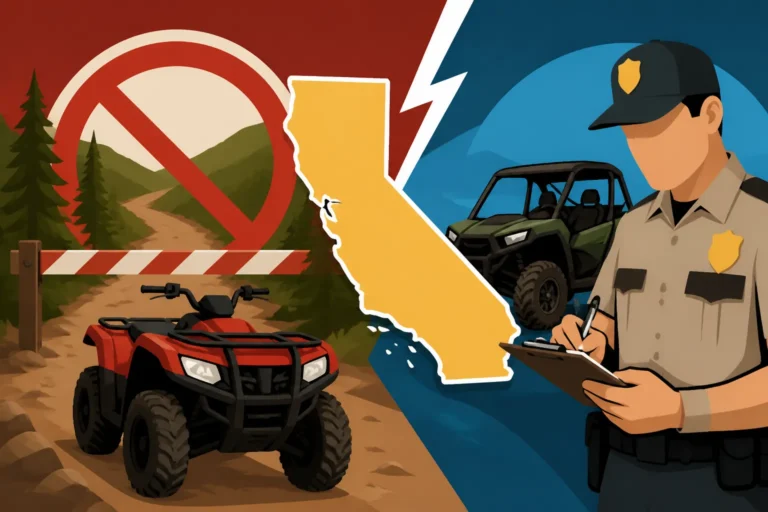
The General Rule: No Riding Within Most Campgrounds
Let's get this out of the way upfront: for the vast majority of campgrounds in California, whether they're state parks, national forests, or private RV resorts, riding your ATV or UTV within the campground itself is generally not allowed. This can be a real bummer, especially when you're just itching to get out on the dirt. You’ve hauled your machine all this way, set up camp, and now you’re told to keep it quiet.
Why the Strict Rules Exist
It's easy to feel targeted or frustrated by these rules, but park management and fellow campers usually have very good reasons for them. Think about it: a campground is a shared space where people come to relax, enjoy nature, and escape the hustle and bustle. The sounds of an ATV or UTV firing up early in the morning, the dust it kicks up on unpaved roads, and the general safety concerns of vehicles (even slow-moving ones) operating near children and pedestrians, all create potential conflicts.
Noise is a huge factor. While your machine might sound like music to your ears, it can be a jarring disturbance to someone trying to enjoy a peaceful breakfast or listen to birdsong. Even a short ride to the dump station can shatter the tranquility for an entire loop of campsites. Then there's the dust, especially in dry California conditions. A single pass by an OHV can coat neighboring campsites, picnic tables, and tents in a fine layer of grit. Most importantly, campgrounds are full of families, children playing, and people walking pets. Introducing off-highway vehicles, even at low speeds, significantly increases the risk of accidents. Park rangers and campground hosts are primarily concerned with ensuring a safe, pleasant, and respectful environment for all visitors, which often means limiting activities that could compromise that experience.
Designated Routes and Rare Exceptions
While the general rule is "no riding," there are some very specific and often rare exceptions. These typically apply to campgrounds that are directly integrated into or adjacent to a State Vehicular Recreation Area (SVRA). For instance, if you're camping within Oceano Dunes SVRA or Hungry Valley SVRA, the park's internal "roads" might actually be designated OHV routes that allow you to travel from your campsite to the main riding areas.
However, it's critical to understand that even in these cases, these are usually marked access routes, not recreational riding areas. You're expected to proceed directly to and from the trails, observing strict speed limits and often specific hours of operation. You're not meant to "cruise" around the campground for fun. Always check the specific rules for the campground you're visiting. A quick call to the park office or a look at their official website before you go can save you a lot of headache and potential fines. Don't assume that because a campground is near an OHV area, you can ride within it. That’s often where people get into trouble.
Transporting Your Machine Within the Campground
So, if you can't ride your ATV or UTV freely around the campground, how exactly are you supposed to get it from your trailer to your campsite, or from your campsite to the actual staging area for the trails? This is where a little manual labor and careful planning come into play.
Moving to and From Your Site
When it comes to getting your machine to and from your specific campsite, the general expectation in most non-SVRA campgrounds is that you will push it, walk alongside it, or trailer it. Yes, this means starting up your UTV for a 30-second blast to get it off your trailer and into your spot is likely still a no-go in many places.
Imagine arriving at a busy campground. The park rangers would much prefer you unhook your trailer, position your truck or tow vehicle, and then carefully unload your machine while it's still on the trailer, or push it a short distance. Some folks even use small dollies or wheeled stands to move smaller ATVs if they need to reposition them without starting the engine. If you absolutely must start your machine to get it onto or off a trailer, do so quickly, quietly, and with extreme caution, being mindful of other campers. The goal is always to minimize noise, dust, and any potential hazard to others. Remember, you're a guest in a shared space, and respect for fellow campers goes a long way.
The "Closed Course" or "Designated Area" Conundrum
A common misconception among off-roaders is that if a campground is on what feels like "private land" or is unpaved, the rules might be more relaxed, or that you can treat it as a "closed course" for brief rides. This is almost never the case. Public campgrounds (state parks, national forests, BLM sites) are absolutely subject to strict regulations regarding vehicle use, and these regulations explicitly prohibit recreational OHV riding within the camping areas.
Even private campgrounds, while having more leeway in setting their own rules, rarely permit casual OHV riding. The liability, noise complaints, and safety concerns are simply too great for them to allow it. Don't let the dirt roads fool you into thinking it's a free-for-all. These are maintained roads for passenger vehicles, not playgrounds for off-highway machines. If you're looking for information on what constitutes a "closed course" for specific machine types, or how to handle [Registering a Private-Land Machine in California], that's a whole different ballgame and doesn't apply to a typical campground. Similarly, agricultural exemptions for [Farm Quads and California Registration] are entirely unrelated to recreational camping.
When you invest in quality parts like those from SuperATV for your rig, you're usually thinking about conquering trails, not navigating campground loops. Focus that energy and those upgrades on the incredible riding California has to offer outside the campground gates.
When and Where You Can Ride Near a Campground
Now for the good news! While riding within most campgrounds is out, California offers amazing opportunities to camp at or adjacent to prime riding areas where you can indeed get on the dirt very quickly. The key is understanding the distinction.
Camping Within an SVRA
This is the golden ticket for many off-road enthusiasts. California's State Vehicular Recreation Areas (SVRAs) are designed specifically for off-highway vehicle recreation, and many of them have designated campgrounds or dispersed camping areas directly within the riding park. Places like Oceano Dunes SVRA, Hungry Valley SVRA, Ocotillo Wells SVRA, and Hollister Hills SVRA are perfect examples.
When you camp in an SVRA, the internal "roads" or designated routes are often intended for OHV travel, allowing you to ride your machine directly from your campsite to the trails, dunes, or riding tracks. This is why these SVRAs are so popular. Imagine waking up at Oceano Dunes, rolling out of your tent, and within minutes, you're on the sand, ready to ride. [Camping on the Sand at Oceano] is a prime example of this unique experience. However, even in SVRAs, there are still rules: quiet hours, speed limits, and designated routes must be strictly observed. These areas are designed for riding, but they are still shared spaces, and respecting boundaries and other users is paramount. You'll often see specific signage clarifying what's allowed.
Combined-Use Roads and Connecting to Trails
In very limited circumstances, a campground might be situated along a "combined-use highway" or a county dirt road that has been specifically designated for OHV use. California has a complex system for these routes, as detailed in discussions around [California's Combined-Use Highways]. These are routes where local authorities, with California Highway Patrol (CHP) approval, have determined that OHVs can legally share the road with plated vehicles to connect to designated trail systems.
These situations are rare, highly regulated, and require your machine to meet specific requirements (like spark arresters and proper registration). If a campground does offer such a connection, it will be clearly marked, and you'll need to follow all applicable rules, including speed limits, helmet laws ([California Helmet Law for ATV Riders]), and potentially age restrictions ([California Minimum Age to Ride on Public Land]). You can't just assume a dirt road near a campground is open to OHVs. For general guidance on legally accessing trails from a road, you might look into [Riding a County Dirt Road in California] or [Riding a Forest Service Road Legally in California], but always verify local regulations for specific routes. Getting caught on an undesignated road can lead to significant fines.
Designated Loading/Unloading Areas
Some larger campgrounds, particularly those catering to outdoor recreation, might have specific, marked loading and unloading areas for OHVs. These are typically located away from the main camping loops to minimize disturbance. You would still need to trailer your machine to this area, unload it, and then ride it to the staging point or trailhead. This isn't the same as riding within the campground, but it provides a more convenient option than trying to unload right at your site, especially if space is tight. Always look for signage or ask a ranger if such an area exists.
Important Considerations and Penalties
Even when you're in an area that permits OHV use, or if you're just moving your machine to a legal staging point, there are crucial rules and considerations you absolutely must follow in California. Ignoring these can lead to unpleasant encounters with law enforcement and expensive consequences.
Noise, Dust, and Speed Limits
These three factors are the quickest ways to get yourself into trouble or earn the ire of fellow campers. Even in SVRAs where riding from camp is allowed, quiet hours are strictly enforced. Firing up your loud machine at 6 AM or after 10 PM will not be tolerated. [California Noise Rules at an SVRA Gate] are in place for a reason, and they apply even within the camping areas of those parks. Many campgrounds have very low speed limits, often 5 or 10 mph. This isn't just a suggestion; it's a rule enforced for safety. Kicking up a cloud of dust as you motor around a dirt loop is disrespectful to other campers and can quickly earn you a warning or a fine. Be mindful, slow down, and keep dust to a minimum.
Safety Gear and Supervision
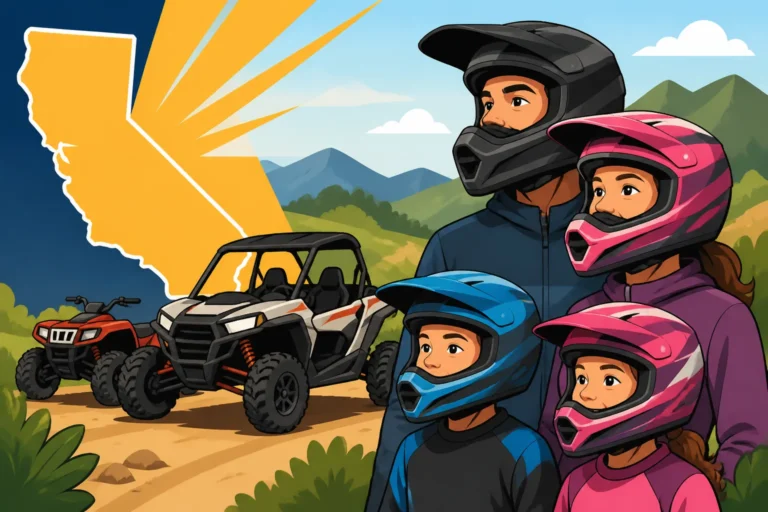
California has stringent safety requirements for OHV operation, and these do not disappear just because you're in a campground or a designated access area. Everyone, regardless of age, must wear an approved safety helmet while operating an ATV or UTV on public lands, which includes SVRAs and designated access roads. While there are some waivers for adult ROV (side-by-side) operators in certain situations, it’s always safest to wear one. Riders under the age of 18 must also have an approved safety certificate and be directly supervised by a certified adult if they are under 14 years old. These rules are detailed in [California Minimum Age to Ride on Public Land] and apply the moment you begin operating your machine, even for short distances within an SVRA campground. You're never "just moving it a little bit" when it comes to safety regulations. Make sure your machine is equipped with a functioning spark arrester, especially on brush-covered lands. If your machine needs an upgrade for safety or performance, like a new harness system or roll cage reinforcement, a brand like SuperATV can provide those components, but always ensure they comply with California regulations.
Penalties for Violations
Ignoring campground rules or OHV regulations can lead to a range of penalties. It might start with a friendly warning from a camp host or ranger, but it can quickly escalate to fines. Violations can range from minor infractions to more serious offenses, especially if you're riding in a prohibited area, creating a hazard, or operating a loud machine during quiet hours. Fines can add up quickly, and in some cases, park authorities have the right to evict you from the campground, cutting your trip short and leaving you scrambling for a place to stay. You might even face impoundment of your vehicle. Think about the potential cost of [California Fines for Riding on a Highway] if you mistakenly take your OHV onto an unapproved paved road within or near a campground. It's simply not worth the risk.
Ultimately, the best advice is always to research the specific campground rules before you go, and when in doubt, ask a park ranger or camp host. They are there to help you understand what's allowed and ensure everyone has a safe and enjoyable experience.
| Campground Type | OHV Riding Within Campground | Access to Trails from Camp | Common Examples |
|---|---|---|---|
| State Vehicular Recreation Areas (SVRAs) | Limited to designated access routes | Yes, often direct | Oceano Dunes, Hungry Valley, Ocotillo Wells |
| State Parks & National Forests (General) | No | No, generally not allowed | Most State Parks, National Forest Campgrounds |
| Private RV Parks/Resorts | No | No, generally not allowed | KOA, independent RV parks |
| BLM Dispersed Camping (Designated areas) | No, only to and from camp to designated roads/trails | Yes, if area is open to OHVs | Specific BLM land management areas |
| Combined-Use Road Adjacent Campgrounds | No | Very rare, highly regulated | Specific county roads (check local signage) |
Disclaimer
This article is for general informational purposes only and does not constitute professional advice. Laws, prices and regulations vary by location and change over time. Consult a qualified professional for guidance on your specific situation.