Crossing a Road on an OHV in California
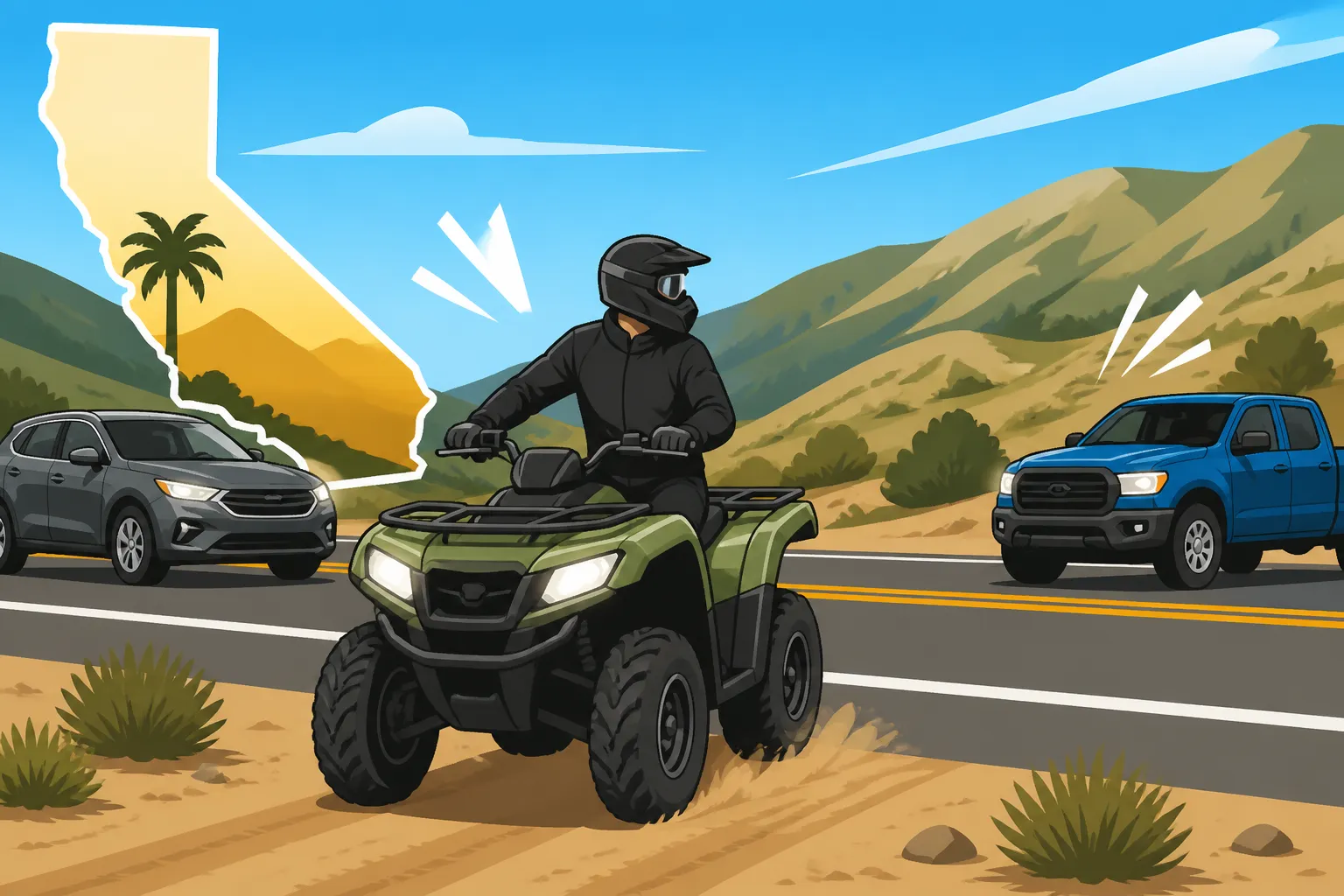
It’s a scenario every off-highway vehicle (OHV) enthusiast in California has faced: you're out on a fantastic trail ride, the engine humming, the dirt flying, and the scenery is breathtaking. Then, abruptly, your chosen route hits a paved road. It might be a small county road, a busy highway, or even a main thoroughfare through a tiny town. Your immediate thought is, "Can I just cross this to get to the next section of the trail?" This guide is designed to cut through the confusion and frustration surrounding what exactly California law says about taking your ATV or UTV onto a public road, even for a short hop across.
The Reality of Road Crossings for OHV Riders in California
Let's be honest, it feels counterintuitive, doesn't it? You’re on an off-road machine, designed for the wilderness, and suddenly the rules of the paved jungle apply. Many riders experience a real pang of frustration when a perfectly good trail system is broken up by a stretch of asphalt. It's not like you're trying to commute to work on your quad; you just want to get to the other side to continue your adventure.
The Inevitable Pavement Interruption
California's vast and diverse landscape offers incredible opportunities for off-highway riding, from the sweeping dunes of Glamis to the rugged mountains of the Sierra Nevada. However, this varied terrain also means that designated OHV trails and riding areas are often interspersed with public roads. These roads serve critical functions for local communities, emergency services, and general transportation. While trail designers strive to create continuous routes, it’s simply not always possible to avoid all intersections with paved infrastructure.
Imagine you're deep in the desert, enjoying a leisurely ride on an unpaved county road, only for your GPS to show a quick jaunt across a state highway to pick up the next segment of dirt. Or perhaps you're near a small town, looking to grab some lunch, and the only way to get from the trail system to the diner is across a short paved stretch. These are common dilemmas that highlight the critical need for riders to understand the very specific and often stringent rules that govern such brief excursions onto public roadways. It's not just a matter of convenience; it’s a matter of legality and safety that can have serious repercussions if misunderstood.
Why You Can't Just "Dash Across"
The temptation to simply "go for it" when faced with a short paved gap can be incredibly strong, especially if you see no traffic or feel you’re not really "driving" on the road. However, this mindset can lead to significant trouble. California law makes a very clear distinction between off-highway vehicles and street-legal vehicles. Your ATV or UTV, even if it has a [California OHV Plate Number Explained] or a Green Sticker, is generally not permitted on public paved roads. The moment your tires hit that asphalt, you are subject to the California Vehicle Code (CVC) governing street-legal vehicles.
The reason for this strict regulation isn't to make your life difficult; it's rooted in safety and the design differences between OHVs and street-legal vehicles. OHVs typically lack essential safety features required for street use, such as proper headlights, taillights, turn signals, mirrors, and often tires that are not designed for pavement. Furthermore, their suspension and handling characteristics are optimized for dirt, not hard surfaces, making them less stable and predictable at road speeds, especially when interacting with cars and trucks. Even a quick "dash across" can put you, other motorists, and pedestrians at risk. This is why enforcement is often strict, and ignoring these rules can result in hefty fines and potential legal issues, far outweighing the momentary convenience.
California Vehicle Code and OHV Road Use
Understanding the specific sections of the California Vehicle Code (CVC) that apply to off-highway vehicles is crucial for every rider. California's laws are detailed, and ignorance is rarely an excuse when dealing with law enforcement. It's not just about what you can't do, but the very narrow circumstances where exceptions are made.
Understanding CVC 38025 and 38026
The backbone of California's OHV road use regulations can be found in sections CVC 38025 and CVC 38026. These sections explicitly state that it is generally illegal to operate an off-highway motor vehicle on a public highway. This isn't just about sustained travel; it includes crossing as well, unless specifically designated. CVC 38026 provides the crucial exception: it allows local authorities and the Director of Parks and Recreation (who oversees the OHMVR Division) to designate certain highway segments for combined use by both highway-legal vehicles and OHVs. These are known as "combined-use highways" or designated crossings.
What this means for you, the rider, is that you cannot assume any road is fair game for a quick crossing. You must actively seek out areas where such a designation has been officially made. Without that specific designation, operating your OHV on any public highway, even for a few yards, is a violation of the law. This legal framework is a significant point of frustration for many riders who just want to connect the dots between trails, but it exists to ensure public safety on roadways not designed for the unique characteristics of OHVs. You can find more detail on [California Rules for Crossing a Public Road] in other resources.
The Strict Definition of an "Off-Highway Vehicle"
California law is very precise about what constitutes an "off-highway vehicle" (OHV) and, by extension, what prevents it from being considered a "street-legal vehicle." An OHV, as defined in CVC 38006, is essentially any motor vehicle that is designed for or used exclusively off the highways. This definition includes ATVs, UTVs, dirt bikes, sand rails, and even certain types of jeeps or buggies that don't meet street-legal requirements. The key here is "exclusively off the highways."
The physical characteristics of your machine play a huge role. Does it have DOT-approved tires? Functional turn signals, headlights, taillights, and brake lights that meet CVC standards? A horn? Mirrors? A license plate that’s tied to standard vehicle registration, not just an OHV ID plate? For most ATVs and UTVs, the answer to these questions is no. Many riders, hoping to circumvent these rules, explore options for [Can You Make a UTV Street Legal in California?]. The short answer is usually no, as California has very specific and stringent requirements that most OHVs cannot meet without extensive, often cost-prohibitive, modifications, or without losing their primary function as an off-road machine. These stringent rules mean that even the most tricked-out UTV from a company like SuperATV, while incredible on the trail, is still an OHV in the eyes of California law unless it goes through a complete, rarely successful, conversion process.
Penalties for Illegally Riding on Public Roads
The consequences of ignoring California's OHV road use laws can be severe, far beyond a simple slap on the wrist. A common misconception is that if you're only on the road for a moment, the penalty will be minor. This is rarely the case. Illegally operating an OHV on a public highway is typically considered an infraction, but it can quickly escalate depending on the circumstances, potentially involving significant financial penalties and other legal ramifications.
Fines for this offense can range from a few hundred dollars to much more, especially if other violations are tacked on, such as riding without proper registration, operating an unregistered vehicle, or even reckless driving if your actions are deemed unsafe. Beyond the direct financial hit, you could face vehicle impoundment, which means additional towing and storage fees. This can easily turn a quick, ill-advised hop across the road into a multi-thousand-dollar headache, not to mention the massive inconvenience of having your machine tied up. It's worth reviewing [California Fines for Riding on a Highway] to understand the potential financial impact. Furthermore, if an accident occurs while you are illegally on a public road, your insurance coverage may be voided, leaving you personally liable for damages and injuries. This risk alone should be a powerful deterrent against any unauthorized road use.
Legal Crossing: The Designated Route Exception
While the general rule is "no OHVs on paved roads," California law does provide a critical exception: designated routes. This is the only legitimate pathway for an OHV to legally cross or briefly operate on a public highway to connect trail segments. Understanding this exception is key to riding responsibly and legally.
What Constitutes a "Designated" Crossing
A "designated" crossing isn't just any paved section that happens to be between two dirt trails. It's a very specific, officially sanctioned segment of a public highway that has been explicitly opened for OHV use. These designations are rare, carefully chosen, and usually marked with clear signage. The intent behind these designations is to allow riders to bridge unavoidable gaps in OHV trail systems safely, rather than enabling general road use.
These designated routes often come with their own set of specific rules, such as speed limits, right-of-way considerations, and sometimes even specific times of day when OHV crossings are permitted. The length of these segments is usually very short, often just enough to cross a road, not to travel along it for any significant distance. It’s important to remember that such designations are an exception to the rule, not the norm. If you don't see clear, official signage indicating an OHV crossing, you should assume it is illegal to cross on your machine. Always be on the lookout for specific signs, as assuming a crossing is designated when it isn't could lead to a citation.
Who Designates These Routes and How
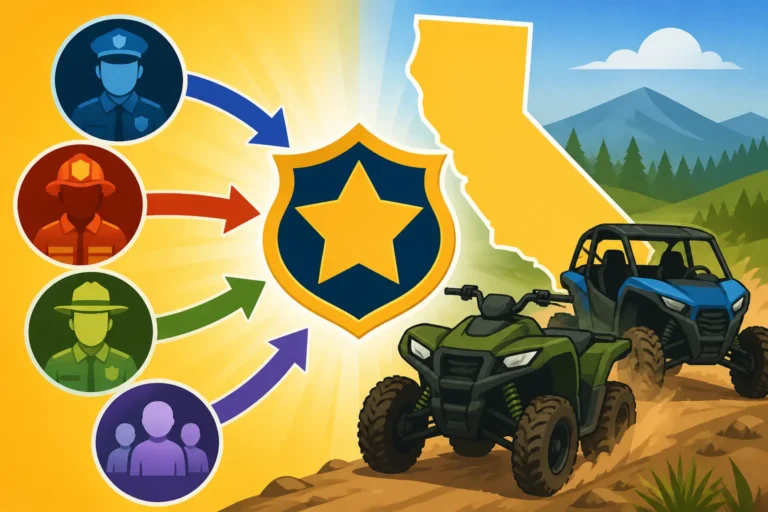
The power to designate these critical OHV crossing and combined-use routes lies with specific governmental bodies. Under CVC 38026, either the Director of Parks and Recreation (who heads the California Off-Highway Motor Vehicle Recreation Division, or OHMVR Division) or local authorities (such as a county board of supervisors or a city council) can designate segments of public highways for OHV use. However, their authority isn't absolute; any such designation typically requires the concurrence of the Commissioner of the California Highway Patrol (CHP). This CHP approval is a critical safeguard, ensuring that the proposed route is safe for both OHVs and highway-legal traffic.
The process for designation is often thorough, involving traffic studies, safety assessments, and public input. It's not a decision made lightly, as it impacts public safety. These designations are often the result of efforts by local OHV advocacy groups, land management agencies, and community leaders working together to improve trail connectivity while maintaining safety. For instance, a county might work with the Forest Service to create a short combined-use route allowing access to a national forest trail system. Such routes are carefully planned, often addressing concerns about vehicle types, time of day, and specific safety measures. This complex process is why these designated routes are relatively few and far between.
Agency Designations and CHP Approval
As mentioned, agency designation and CHP approval are the bedrock of any legal OHV road crossing in California. When a land management agency, such as the Bureau of Land Management (BLM) or the U.S. Forest Service, wants to connect two sections of an OHV trail that are separated by a public road, they must go through a formal process to get that road segment designated for OHV crossing. This often involves proposing the segment to the local county or city, which then works with the CHP.
The CHP's role is paramount. They evaluate the safety aspects of the proposed designation, considering factors like sight lines, traffic volume, speed limits, and the presence of intersections. If the CHP determines that the proposed segment cannot be safely shared by OHVs and conventional vehicles, or safely crossed by OHVs, they will not concur with the designation. This collaborative approach ensures that safety is prioritized. When you see signage indicating a legal OHV crossing, you can be confident that it has undergone this rigorous review and approval process. Without that official signage and the underlying agency and CHP approval, any attempt to cross a public road on your OHV is outside the bounds of the law. This stringent process contributes to why [California's 3-Mile Combined-Use Cap] exists in some areas, highlighting the state's cautious approach to mixing OHVs with street traffic.
How to Execute a Legal OHV Road Crossing
Once you've identified a legally designated crossing, executing it safely and correctly is paramount. This isn't just about avoiding a ticket; it's about ensuring your safety and the safety of others on the road.
Identifying a Legal Crossing Point
The first and most important step is always to verify that you are at an officially designated OHV crossing point. How do you do this? Look for clear, official signage. These signs are specifically designed to inform riders that OHV operation is permitted on that particular segment of roadway for the purpose of crossing or connecting trails. These aren't subtle signs; they are usually prominent and unmistakable. They might explicitly state "OHV Crossing" or indicate a "Combined Use Highway" with specific restrictions or conditions.
Do not rely on informal information, old maps, or what other riders seem to be doing. Conditions and designations can change, and what was once allowed might no longer be. Always check official maps from the land management agency (BLM, Forest Service, State Parks) or local county. These maps will often explicitly mark designated OHV routes and crossing points. If in doubt, ask a ranger or local law enforcement. Proceeding without clear identification of a legal crossing is essentially riding blind into a potential citation. Your goal should always be to confirm the legality of your route before you even approach the pavement.
Safety Protocols for Crossing
Even at a designated crossing, safety must be your absolute top priority. These are still public roads with cars, trucks, and potentially pedestrians. Treat every road crossing with the same level of caution and respect you would if you were driving a car.
- Stop, Look, and Listen: Before entering the roadway, come to a complete stop. Look both ways multiple times, and listen for approaching traffic. Your OHV might be noisy, but it's crucial to hear other vehicles.
- Yield to All Traffic: You must yield the right-of-way to all vehicles on the highway. Do not pull out or cross until you have a clear, safe gap in traffic. Do not assume other drivers see you, especially if you're on a smaller ATV or dirt bike.
- Cross at a Right Angle: If crossing, do so as directly as possible, at a 90-degree angle to the road. This minimizes your time on the pavement and reduces the chances of losing control due to the different handling characteristics of your OHV on asphalt.
- Maintain Awareness: Even once you start crossing, keep scanning for traffic. Be prepared for unexpected movements from other vehicles.
- No Horseplay or Speeding: Designated crossings are not for showing off. Maintain a slow, controlled speed, and do not engage in any stunts or aggressive riding. This is about safety and responsibility.
Remember, a designated crossing is a privilege, not a right, and it can be revoked if safety is compromised. Following these protocols not only keeps you safe but also helps preserve access for all OHV enthusiasts.
Necessary Equipment and Visibility
To maximize safety during any road crossing, even a legal one, certain equipment and practices are non-negotiable. Many of these are common sense for any rider, but they become critical when briefly interacting with highway traffic.
First and foremost, wear appropriate safety gear. This includes a DOT-compliant helmet (which is mandatory in California for most OHV riding), eye protection, gloves, long pants, and a long-sleeved shirt. Your [California Helmet Law for ATV Riders] is a great resource for specifics on head protection. While your OHV might not require turn signals for off-road use, if you're crossing a road, hand signals can be invaluable for communicating your intentions to other drivers.
Visibility is key. Brightly colored clothing can make you more noticeable. For UTVs, consider adding aftermarket accessories from brands like SuperATV that enhance visibility, such as additional LED lighting (though ensure they don't violate CVC for on-road use if permanently installed), or whips with flags, especially if you're transitioning from dune areas. While many OHVs have rudimentary headlights and taillights, they are often not as bright or effective as those on street-legal vehicles. If crossing near dusk or dawn, ensure your lights are on and fully functional. The more visible you are to oncoming traffic, the safer your crossing will be. Always assume other drivers might not be looking for an OHV on the pavement, and do everything in your power to make yourself seen.
Navigating Different Road Types During a Crossing
Not all roads are created equal, and the type of public road you encounter can influence the specific safety considerations and legality of your crossing. Understanding these nuances is crucial for safe and lawful operation.
Two-Lane Highways vs. Multi-Lane Divided Highways
Crossing a two-lane highway (one lane in each direction) already presents a challenge, requiring careful timing and yielding to traffic from both directions. It demands quick, decisive action once a clear path is identified. The total distance across is relatively short, but the risk comes from the speed of traffic and limited visibility in some areas.
However, crossing a multi-lane, divided highway is an entirely different beast and is almost never legally designated for OHV crossing. Divided highways often have higher speed limits, multiple lanes of traffic moving in the same direction, and a median separating opposing flows. The sheer distance to cross, combined with the volume and speed of traffic, makes it incredibly dangerous for an OHV. Such crossings would place OHV riders in complex traffic situations they are not equipped to handle, moving at speeds their machines are not designed for. The chances of a safe, legal designation for an OHV to cross a major freeway or multi-lane divided highway are extremely slim to none. In such cases, your only legal and safe option is to trailer your machine to the next section of trail. [Trailering Instead of Riding in California] is often the best solution when confronted with impassable road barriers.
Crossing Unincorporated County Roads
Unincorporated county roads are often the most common type of paved surface OHV riders encounter that might have designated crossings. These roads, which fall under county jurisdiction rather than a city, frequently connect rural and undeveloped areas, making them logical points for OHV trail systems to intersect. Because these roads often have lower traffic volumes and slower speed limits compared to state highways, they are more likely candidates for official OHV crossing designations.
However, "unincorporated" does not mean "unregulated." Just like any other public road, OHVs are still generally prohibited unless a specific segment has been officially designated by the county, with CHP approval, for OHV crossing or combined use. You might find more flexibility on these roads for designated combined-use segments, where you might ride for a short distance (e.g., [California's 3-Mile Combined-Use Cap]) to connect two dirt trails. Even then, all highway rules, including speed limits and right-of-way, apply. Always look for clear signage, and never assume an unmarked county road is fair game for OHV operation or crossing.
Crossing Within City or Town Limits
When you're riding near or through a city or town, the rules for OHV road use become even stricter. While it might be tempting to ride your OHV into a small town for supplies or a meal, this is almost universally prohibited on city streets. City and town ordinances often supplement state vehicle codes, imposing additional restrictions on vehicle types permitted on their roadways. The chances of a city street being designated for OHV crossing or combined use are exceedingly rare, largely due to high pedestrian traffic, denser vehicle traffic, and concerns about noise and safety within urbanized areas.
If your trail system hits a paved road within city or town limits, your safest and most likely legal option is to load your OHV onto a trailer and transport it through the urban area to the next off-road access point. Attempting to ride an OHV on city streets, even for a short cross, will almost certainly result in a citation, impoundment, and potentially severe fines, not to mention the risk of accidents with vehicles or pedestrians. These are the environments where the distinction between an OHV and a street-legal vehicle is most sharply enforced.
The Difference Between Crossing and Operating on a Road
This distinction is crucial in California. Many riders incorrectly assume that a "short distance" on a paved road is acceptable. This is a dangerous oversimplification that can lead to legal trouble.
The "Minimal Distance" Principle
The concept of "minimal distance" is often misinterpreted by OHV riders. In the context of a legal OHV road crossing in California, "minimal distance" refers to the absolute shortest distance necessary to get from one side of a designated trail segment to the other, or to access an adjacent trail. It does not imply a grace period for joyriding or even traveling a short distance down the road to find a better entry point.
Even on a designated combined-use highway, the spirit of the law is to provide a necessary link, not an alternative riding experience. The length of these combined-use segments is typically very short, often less than a mile, and in some cases, even shorter than [California's 3-Mile Combined-Use Cap]. For a simple crossing, it should literally be just enough to clear the width of the pavement. Lingering on the road, traveling beyond the immediate crossing point, or deviating from the most direct path would be considered illegal operation, even if the crossing itself was designated. The principle is about necessity, not convenience or leisure.
Why Street-Legal Conversions are Not the Answer in California
Many riders, frustrated by these restrictions, look into converting their ATVs or UTVs to be "street legal." They might install turn signals, horns, and mirrors, thinking this will solve the problem. Unfortunately, in California, achieving true street-legal status for most off-highway vehicles, especially UTVs, is exceptionally difficult, often practically impossible, and largely not the "answer" riders hope for.
California has very specific and stringent requirements for a vehicle to be registered for on-highway use. These include meeting Federal Motor Vehicle Safety Standards (FMVSS) regarding crashworthiness, emissions (CARB compliance), and a host of other design specifications that typical OHVs simply do not meet. While some states have more lenient "street-legal" kits or allow custom-built vehicles on roads, California's Vehicle Code does not easily permit the conversion of an OHV into a road-legal vehicle. For example, [Why California Will Not Convert a UTV] highlights the fundamental structural and safety differences that prevent most side-by-sides from passing state inspection for highway registration. Adding aftermarket turn signals from SuperATV, while improving visibility, does not magically transform your UTV into a street-legal vehicle in California. Trying to ride a "converted" OHV on California roads without official highway registration will still result in tickets for an unregistered vehicle, fines, and impoundment.
Common Misconceptions and Risky Behaviors
Misinformation and common assumptions can lead riders into trouble. It's vital to debunk these myths and understand the truly risky behaviors that can occur during road encounters.
"Just a Short Distance" Mentality
This is perhaps the most prevalent and dangerous misconception among OHV riders in California. The thought process often goes: "It's just a hundred yards, what's the harm?" or "I'll just quickly ride down the shoulder to that next dirt road." The harm, unfortunately, is very real and can manifest in several ways. Legally, any distance, no matter how short, on a public highway that is not officially designated for OHV use, is a violation of CVC 38025. It's not about the distance; it's about the unauthorized operation.
From a safety perspective, even a "short distance" on a paved road exposes you to dangers. Cars travel at much higher speeds, and drivers are not expecting OHVs to be on the pavement. The dynamics of an OHV on asphalt are different from dirt, impacting steering, braking, and stability. A quick turn or sudden stop can be far more hazardous. Furthermore, this "short distance" mentality often leads to a false sense of security, encouraging riders to take risks they wouldn't otherwise. It's this seemingly innocuous decision that often leads to roadside stops by law enforcement, resulting in costly citations and impoundment. Don't fall prey to this tempting but risky shortcut.
The Myth of Out-of-State Plates for California Road Use
Another persistent myth is that if your OHV is registered or licensed in another state, especially one that allows "street-legal" UTVs, you are exempt from California's strict rules. Many riders travel to California with UTVs sporting Arizona, Utah, or Montana street-legal plates, believing these automatically grant them permission to ride on California roads. This is a dangerous and expensive fallacy.
California does not honor out-of-state "street-legal" OHV registrations for general road use within its borders. Your machine must meet California's own specific vehicle code requirements for highway operation, regardless of where it's registered. The fact that your UTV is street legal in Arizona means it is street legal in Arizona. The moment you cross into California, your machine must comply with California law. Law enforcement, including the CHP and local sheriffs, are well aware of this common tactic and will stop and ticket vehicles operating on California roads under these assumptions. While California does offer [California's Nonresident OHV Use Permit] for off-highway riding, this permit does not grant you street-legal status. You'll still be subject to fines and impoundment if caught operating illegally on paved roads. [Do Nonresidents Need California OHV Registration?] for off-road use? Yes, but it doesn't extend to street legality.
Ignoring Signage and Authority
One of the most irresponsible and risky behaviors is to simply ignore official signage or directions from law enforcement. Signs for designated OHV crossings are there for a reason: to clearly communicate where and how you can legally interact with public roads. Ignoring them is a direct violation of the law and puts everyone at risk. Riding around "Road Closed" signs, bypassing gates, or intentionally taking an OHV onto a clearly marked "No OHV" road are not just rule-breaking actions; they are often acts of trespass and can lead to severe penalties, including reckless endangerment charges.
Similarly, if you are stopped by a sheriff, CHP officer, or a ranger, always comply immediately and respectfully. They are there to enforce public safety and often deal with situations where riders have made poor decisions regarding road use. Attempting to evade them or arguing about the legality of your actions on the spot will only escalate the situation. [What a California Sheriff Checks Roadside] often includes registration, safety equipment, and whether you are in a legal riding area. Responsible riders understand that respecting signage and authority is not just about avoiding a ticket, but about ensuring continued access for the OHV community.
Planning Your Ride: Avoiding Unnecessary Road Crossings
The best way to handle road crossings is often to avoid them altogether. Proactive planning can make a world of difference in the legality and enjoyment of your OHV adventures in California.
Using Maps and Resources to Plan Ahead
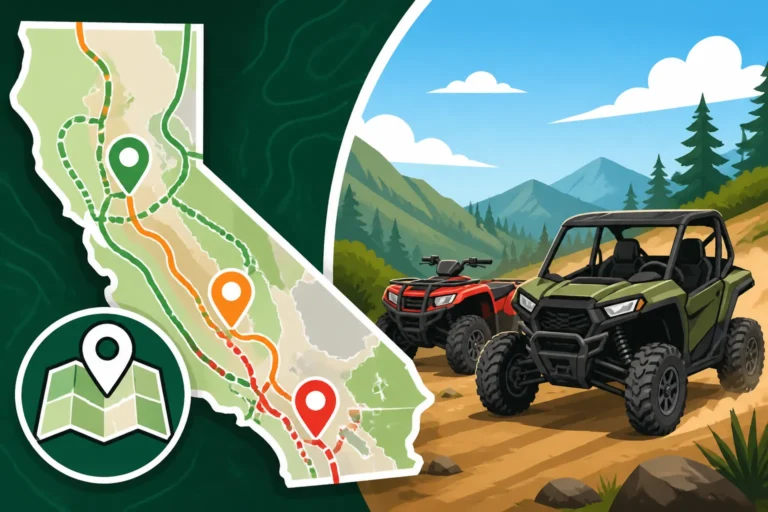
Never head out on an OHV adventure in California without a solid plan and reliable maps. Relying solely on memory or following another rider blindly can easily lead you onto prohibited roads. Instead, invest time in studying official OHV maps from land management agencies. These include:
- Bureau of Land Management (BLM) Maps: Critical for desert riding areas like Glamis, Ocotillo Wells, and Johnson Valley. They clearly mark designated OHV routes, open riding areas, and often restricted zones.
- National Forest Motor Vehicle Use Maps (MVUMs): Essential for riding in national forests (e.g., San Bernardino, Sierra, Shasta-Trinity). These maps indicate which roads and trails are open to motorized vehicles, specifying vehicle types and seasonal restrictions. They also show any designated combined-use roads or crossing points.
- California State Parks OHMVR Division Maps: For State Vehicular Recreation Areas (SVRAs) like Hungry Valley, Hollister Hills, or Prairie City, their specific maps will detail all accessible trails and any designated road crossings within or bordering the park.
Utilize digital mapping apps that allow you to download maps for offline use, as cell service can be spotty in remote riding areas. Cross-reference these maps with your GPS device. Pay close attention to any symbols indicating "no OHV" or "highway only" roads. A few minutes of planning at home can save you hours of trouble on the trail.
Trailering to Connect Sections
When faced with a long stretch of prohibited paved road separating two trail systems, the most prudent and legal solution is often to trailer your machine. Many experienced riders in California will intentionally plan their day to include trailering their OHV from one riding area to another. This might mean:
- Staging a tow vehicle: If you have multiple vehicles, you can leave your tow rig at the end of a section and have another vehicle available at the start of the next.
- Returning to your base camp: If your camp is centrally located, you can ride a section, return, load up, and drive to the next section.
- Designated trailer parking areas: Many larger OHV areas provide dedicated parking for tow vehicles and trailers, making it convenient to drop off and pick up your OHV.
While it might seem like an inconvenience to load and unload your machine, it is a far better alternative than risking fines, impoundment, or an accident by illegally riding on a public road. This strategy ensures you remain within the bounds of the law and prioritize safety, allowing you to fully enjoy the designated riding areas. For more on safe transport, consult [Trailering Instead of Riding in California].
Asking Locals and Rangers for Guidance
One of the best resources for navigating complex trail systems and understanding local road rules is to simply ask. Locals who live and ride in an area often have invaluable, up-to-date knowledge about trail conditions, designated routes, and specific crossing points. They can share insights that maps might not fully convey.
Similarly, rangers, land managers, and law enforcement personnel (like BLM rangers, Forest Service staff, or county sheriff deputies) are excellent sources of official information. They know the regulations inside and out, can point you to legal routes, and clarify any ambiguities. Before you embark on a ride, especially in a new area, consider stopping at a local ranger station, visitor center, or even a local OHV shop. Asking a few questions can prevent costly mistakes and ensure your ride is both enjoyable and legal. Don't be shy about seeking clarification; it shows you're a responsible rider committed to following the rules.
| Road Type | Typical OHV Status for Crossing | Likelihood of Designated Crossing | Primary Safety Considerations |
|---|---|---|---|
| Two-Lane Highway (Rural) | Generally illegal unless specifically designated under CVC 38026. | Moderate | High speed limits, limited visibility, yielding to all traffic. |
| Multi-Lane Divided Highway | Almost universally illegal. | Extremely Low (practically none) | Very high speeds, multiple lanes, medians, extreme distance to cross, complex traffic interactions. |
| Unincorporated County Road | Generally illegal unless designated by county and CHP. | Moderate to High | Lower speeds/traffic than highways, but still require full vigilance and adherence to rules. |
| City/Town Street | Almost universally illegal. | Extremely Low (practically none) | Dense traffic, pedestrians, local ordinances, strict enforcement, major safety risks. |
Disclaimer
This article is for general informational purposes only and does not constitute professional advice. Laws, prices and regulations vary by location and change over time. Consult a qualified professional for guidance on your specific situation.