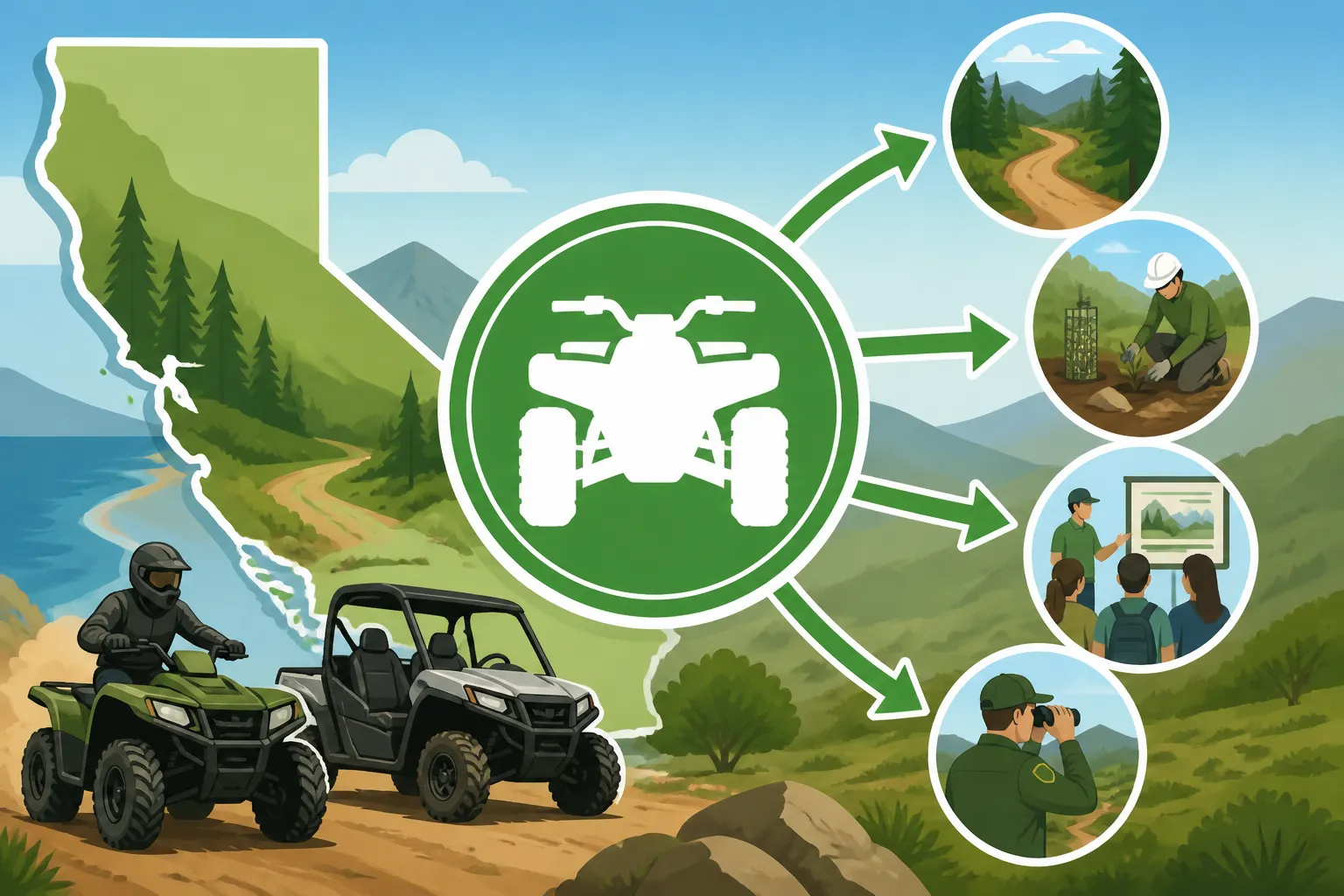
Where Green Sticker Money Goes
It's a common and completely fair question to ask: you pay your Green Sticker registration fee every two years for your ATV or UTV, but where does that money actually go? It's easy to imagine it disappearing into the vast coffers of the state, never to be seen again, but in California, your off-highway vehicle (OHV) registration fees are specifically dedicated to maintaining, enhancing, and expanding the very riding opportunities we all enjoy. This guide will meticulously detail the journey of your Green Sticker dollar, from your pocket to the trails, safety programs, and environmental initiatives that keep California's OHV recreation vibrant and accessible.
The California OHV Trust Fund: Your Dollars at Work
Let's start with the big picture: every dollar you pay for your Green Sticker, Red Sticker, or even the nonresident OHV permit doesn't just vanish into the state's general fund. Instead, it's deposited into a truly unique and powerful financial mechanism called the Off-Highway Vehicle Trust Fund. This isn't just a generic account; it's a dedicated fund, established specifically for the benefit of OHV recreation in California. It's a crucial distinction because it means these funds are protected and legally mandated to be used for OHV-related purposes only, preventing them from being diverted to other state programs.
The fund isn't fueled by registration fees alone, though they are a significant component. It also receives a proportionate share of the gas taxes paid at the pump by OHV users – recognizing that while you're not driving on public roads, you're still contributing to fuel taxes, and a portion of that should come back to support the land you do ride on. Additionally, sales and use tax collected on the purchase of OHVs also contributes to this fund. So, whether you're topping off your tank before a desert trip or buying that shiny new side-by-side, a slice of that financial pie is earmarked for the OHV Trust Fund. This comprehensive approach ensures a steady stream of revenue to support the diverse needs of off-highway recreation across the Golden State. It's a testament to the foresight that recognized the need for sustainable funding to manage and preserve these precious riding areas. Understanding [California OHV Registration Cost] can help clarify how these various fees are structured, but the underlying principle is that these funds are specifically set aside for your riding enjoyment and safety.
When you fork over your money for your [California's Green Sticker Explained], you're not just buying a decal; you're investing in a system. The registration fee, for example, is part of the overall [California OHV Registration Two-Year Cycle]. This fund is the primary source of revenue for the California State Parks' Off-Highway Motor Vehicle Recreation (OHMVR) Division. This division, often working behind the scenes, is the engine that drives the management, protection, and promotion of OHV opportunities. Without this dedicated funding, the infrastructure and resources necessary to maintain safe and enjoyable riding environments simply wouldn't exist. It's a self-sustaining model, where the users directly fund the resources they consume, ensuring that the passion for off-roading continues to thrive for generations to come. Many wonder [What California's OHV Fees Pay For], and the answer truly encompasses a wide array of benefits beyond just trails.
Funding Our Riding Havens: SVRA Operations and Maintenance
One of the most direct and visible ways your Green Sticker money is put to use is in the operation and maintenance of California's State Vehicular Recreation Areas (SVRAs). These are incredible, dedicated parks managed by the state, specifically designed for off-highway vehicle use. Think of places like Oceano Dunes, Hollister Hills, Hungry Valley, and Ocotillo Wells – these are not just open spaces; they are actively managed environments that require constant attention, staff, and resources.
Your registration fees directly fund the daily grind of keeping these SVRAs running smoothly. This includes everything from the visible tasks like grading and maintaining thousands of miles of trails, ensuring they're safe and enjoyable for all skill levels, to less obvious but equally critical work like maintaining signage so you don't get lost, and managing access points. It also covers essential amenities such as keeping restrooms clean, providing trash collection services (which is no small feat in popular areas), and ensuring fire prevention measures are in place, especially during California's challenging dry seasons. Furthermore, the presence of park rangers, who are often on patrol to ensure safety, assist riders, and enforce regulations, is also supported by these funds.
Consider the alternative: without this funding, these parks would quickly fall into disrepair. Trails would erode, hazards would go unaddressed, and the overall quality and safety of the riding experience would plummet. Imagine trying to navigate an unmaintained trail with obscured signs or finding no facilities available after a long day of riding. This direct investment ensures that when you visit one of [California's State Vehicular Recreation Areas], you're greeted with well-maintained facilities and a safe environment. It even supports the ability to go [Camping at a California SVRA], providing those amenities you rely on during your stay. The money ensures that these unique resources, which are truly jewels for off-road enthusiasts, remain open, safe, and enjoyable for everyone.
Empowering Local and Federal Land Management: Grants for Trails and Safety
Beyond the state-managed SVRAs, a significant portion of the Green Sticker money goes into a robust grant program administered by the OHMVR Division. This program is truly instrumental in supporting OHV recreation on a much broader scale, reaching far beyond the state parks themselves. These aren't just handouts; they are competitive grants awarded to various entities that demonstrate a commitment to improving OHV opportunities.
Who can apply for these grants? It's a diverse group, including cities and counties that manage local riding areas, as well as federal agencies like the U.S. Forest Service and the Bureau of Land Management (BLM), which oversee vast tracts of land that OHV enthusiasts utilize. Even private non-profit organizations that are dedicated to land stewardship and recreation can receive funding. This broad reach ensures that OHV dollars are put to work in many different landscapes and communities across California, from the high Sierra trails to the vast desert expanses. Many of our favorite [California OHV Areas in the National Forests] and BLM lands benefit directly from these grant programs, allowing for improvements that simply wouldn't happen otherwise.
The types of projects funded by these grants are incredibly varied and impactful. They range from the physical construction and repair of trails, ensuring sustainable and challenging routes for riders, to the installation of clear signage and the development of comprehensive mapping resources so you can plan your adventures safely. Grant money also supports critical law enforcement patrols, helping to ensure compliance with rules and regulations and contributing to overall rider safety. Funds are often used for equipment purchases, such as rescue vehicles or specialized trail maintenance machinery, which are vital for emergency response and infrastructure upkeep. Beyond the trails themselves, grants support the development and improvement of staging areas, making it easier for riders to unload, prepare, and access the trails. Crucially, a portion of these grants is also dedicated to environmental protection and habitat restoration projects, ensuring that OHV recreation is conducted responsibly and sustainably. This collaborative effort, driven by these grants, is vital to maintaining and expanding quality OHV experiences across California, making sure that [Grants Built From Sticker Fees] directly impact your riding adventures. When considering transactions related to OHVs, like a private sale, ensuring proper documentation such as a bill of sale (which you can often find templates for through services like LawDepot) is important for maintaining clear ownership and ensuring any fees are properly collected and disbursed through this system.
More Than Just Trails: Education, Safety, and Enforcement
While trail maintenance and facility upgrades are critical, your Green Sticker funds go far beyond just the physical infrastructure. A significant portion is also dedicated to ensuring the safety, education, and responsible enjoyment of off-highway vehicle recreation throughout the state. This includes a multitude of programs that directly benefit riders and indirectly protect the future of OHV access.
Think about safety programs. The OHMVR Division supports ATV safety training courses, which are crucial for new riders, especially youth, to learn proper riding techniques and safety protocols. These programs are designed to reduce accidents and injuries, making the sport safer for everyone involved. Public awareness campaigns, often seen at popular riding areas or in literature, are also funded to remind riders about critical rules, environmental stewardship, and safe practices. This directly supports the health and well-being of the riding community.
Enforcement is another key area. Your fees help fund park rangers, wardens, and even some California Highway Patrol (CHP) efforts focused on OHV recreation. These individuals are on the front lines, performing roadside checks for valid registration, ensuring machines have proper spark arresters, and conducting sound checks to uphold environmental regulations. Their presence helps ensure that everyone is playing by the rules, which in turn preserves riding opportunities and minimizes conflicts with other land users. For instance, the line item for the CHP fee on your registration bill is part of [What California's $54 OHV Registration Fee Broken Down] and directly contributes to these enforcement efforts. When selling an OHV, having a clear legal document like a bill of sale from LawDepot can ensure that the transfer of responsibility is smooth, preventing future issues for both buyer and seller regarding compliance with these enforcement regulations.
Furthermore, a portion of the funds supports vital environmental protection efforts. This includes scientific studies to understand the impact of OHV use, as well as restoration projects for sensitive habitats that might be impacted by unauthorized riding. Monitoring programs help track ecological health and ensure that OHV use is managed sustainably. Finally, a necessary component of any large-scale program is administration. Your fees also cover the administrative costs of running the OHMVR Division itself, from staff salaries to office operations, ensuring that the entire system can function effectively. This overarching support ensures that the beautiful natural landscapes we ride through are preserved for future generations, while providing an excellent experience today.
| Category | Description | Example Use of Funds |
|---|---|---|
| State Vehicular Recreation Areas (SVRAs) | Operation, maintenance, and capital improvements for state-owned OHV parks. | Trail grading, restroom cleaning, ranger salaries, new visitor centers. |
| Local Government Grants | Funding for cities and counties to manage OHV trails and facilities. | Trail construction, signage, staging area development. |
| Federal Land Grants | Support for U.S. Forest Service & BLM lands with OHV access. | Trail rehabilitation, law enforcement patrols, habitat restoration. |
| Safety & Education Programs | Initiatives to promote safe and responsible OHV operation. | ATV safety training courses, public awareness campaigns. |
| Law Enforcement & Compliance | Funding for patrols, inspections, and enforcement of OHV laws. | Park ranger salaries, equipment for sound checks, compliance monitoring. |
| Environmental Protection | Projects to mitigate environmental impacts and restore habitats. | Erosion control, sensitive species monitoring, land rehabilitation. |
| Administration | Overhead costs for managing the OHV Trust Fund and programs. | Staff salaries, office supplies, program oversight. |
When you're dealing with the legal aspects of OHV ownership, perhaps buying or selling a machine, reliable legal documents are key. Platforms like LawDepot can provide customizable templates for things like a bill of sale, ensuring that you have clear records of your transaction, which in turn helps validate the continuous funding cycle that supports our California OHV areas. This ensures transparency and helps maintain the integrity of the system that allocates these important funds. For example, a thorough [California OHV Bill of Sale Requirements] document, often available through legal document services, can make sure all parties are aware of their responsibilities, including maintaining current registration.
Disclaimer
This article is for general informational purposes only and does not constitute professional advice. Laws, prices and regulations vary by location and change over time. Consult a qualified professional for guidance on your specific situation.