How California Rental Fleets Register Machines
One of the most common questions we get from folks heading out to places like Oceano Dunes or Glamis, especially if they’re renting a machine, is how those rental companies even keep track of all their quads and side-by-sides. It can feel like a mountain of paperwork just for one private machine, so imagine dealing with a whole fleet! This guide is here to pull back the curtain and explain the nitty-gritty of how California rental fleets navigate the often-complex world of off-highway vehicle (OHV) registration, ensuring every rental machine you hop on is legal and ready to ride.
The Foundations of OHV Registration for Businesses
When you pull up to a rental counter, whether it's in Pismo Beach or near Glamis, you might not think much about what goes on behind the scenes. But trust me, there's a meticulous process in place to make sure every single machine in their fleet is properly registered and ready for California's public lands. It’s not just about slapping a sticker on a quad; it’s about meeting state requirements that are sometimes even more rigorous for commercial operations.
Why Rental Fleets Need to Register
It might seem obvious, but it’s worth stating: rental fleets, just like individual owners, absolutely must register their OHVs with the state of California. This isn't some arbitrary bureaucratic hurdle; it's a fundamental part of maintaining safety, funding trail systems, and ensuring accountability on our beloved riding areas. When a rental company registers a machine, they're contributing to the very infrastructure that makes our off-road adventures possible. The fees collected from registration go into the Off-Highway Vehicle Trust Fund, which then helps maintain and operate places like our State Vehicular Recreation Areas (SVRAs) and other designated riding areas across the state. Without these funds, our trails and dunes wouldn't be as well-maintained or as accessible.
Beyond funding, registration provides a clear identifier for each machine. Imagine a situation where a rental quad breaks down or, worse, is involved in an accident. A registered machine has a clear paper trail, linking it back to the owner (in this case, the rental company) and making it easier for authorities to identify and track. This level of accountability is crucial when hundreds of machines are being used by dozens of different riders every single day. It protects not only the rental company but also the riders themselves and the integrity of our shared public lands.
The Role of the OHMVR Division
The California Department of Motor Vehicles (DMV) handles the actual issuance of registration documents and identification plates, but the entire system for OHVs is heavily influenced and overseen by the Off-Highway Motor Vehicle Recreation (OHMVR) Division. These two entities work hand-in-hand. You can learn more about their specific roles in [The California DMV and the OHMVR Division]. For rental fleets, this often means interacting with DMV processes while adhering to the guidelines set forth by the OHMVR Division, which dictates things like what types of stickers are needed for certain riding areas or machine types.
Rental companies often deal with the DMV in a more specialized capacity than individual owners. They might have dedicated staff or even work with third-party agents who specialize in fleet vehicle registration. This is because registering dozens, if not hundreds, of machines isn't the same as registering just one or two. It requires a deep understanding of the regulations, a streamlined process for paperwork submission, and efficient tracking systems. They’re essentially managing a mini-DMV operation within their own business to keep everything legal and flowing smoothly.
The OHMVR Division also plays a role in setting standards that indirectly affect rental fleets, such as sound limits and spark arrester requirements. While these aren't registration issues per se, they are critical for operating legally on public land, and a rental fleet must ensure all their machines meet these operational standards after registration. This ensures that when you rent a machine, it’s not only legally registered but also compliant with all the environmental and safety regulations for public land use.
The Specifics of Fleet Registration Documentation
The paperwork for registering a single OHV can feel like a small mountain. Now, multiply that by dozens or even hundreds of machines, and you can imagine the meticulous record-keeping required for a California rental fleet. Efficiency and accuracy are paramount to ensure every machine is street-legal (for off-road purposes, that is!) and ready for customers.
Essential Paperwork for Each Machine
For every single quad, dirt bike, or side-by-side in a rental fleet, a complete set of documentation is required. This typically starts with the California Off-Highway Vehicle Title Application, also known as Form REG 343. You can read more about what this form entails in [What California's Form REG 343 Asks For]. For a fleet, this means having a meticulously filled-out REG 343 for each new machine. Rental companies often purchase machines in bulk from dealerships, which simplifies the initial titling process as the dealership usually handles the Manufacturer's Statement of Origin (MSO) and initial transfer to the rental company.
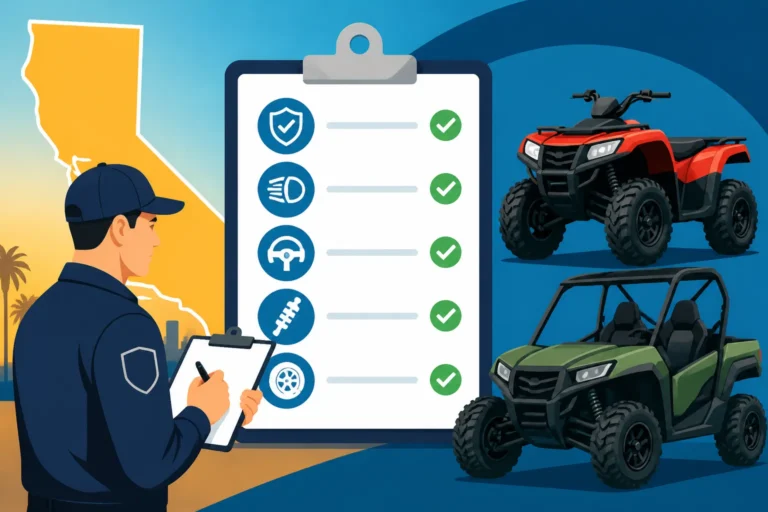
Beyond the application, vehicle verification is a critical step. This involves having a qualified person inspect the vehicle to confirm its identity, ensuring the VIN (Vehicle Identification Number) matches the paperwork and that the machine isn't stolen or illegally modified. This is usually done on California Vehicle Verification Form REG 31. For a large fleet, a rental company might have an arrangement with a licensed verifier to come on-site, or they might transport batches of new machines to a verification station. The efficiency of this process is crucial because machines can't be registered or rented out until verification is complete.
Managing these documents for dozens or hundreds of machines demands robust internal systems. Rental fleets often use specialized software or detailed databases to track each machine's VIN, title status, registration expiration, and other vital details. Think of it as a digital file cabinet for every single quad, ensuring that nothing falls through the cracks and that they can quickly produce any required document for authorities or for internal audits. This level of organization is far beyond what a typical individual owner would need, but it's essential for commercial operations.
Managing Titles and Ownership for Many OHVs
Titling is the bedrock of ownership, and for rental fleets, managing titles for a vast inventory is a complex, ongoing task. Each machine in the fleet needs to have a clear, valid California Certificate of Title, demonstrating that the rental company is the legal owner. This process of [Titling an Off-Highway Vehicle in California] begins when a new machine is purchased, much like a private buyer. However, for a rental company acquiring multiple units, the dealership typically streamlines the process, ensuring all MSOs are correctly submitted to the DMV for initial title issuance.
The challenge for rental fleets comes with the sheer volume. They need systems in place to securely store all physical titles, or to quickly access digital title information if the state offers electronic titling options. When a machine is eventually sold off from the fleet (a common practice as older inventory is cycled out), the title transfer process must be just as seamless. Any delay or error in transferring a title could hold up a sale or create legal headaches for the next owner. Having a clear, consistent process for managing title transfers is vital for their business operations.
To help manage the internal paperwork and agreements for a large fleet, some rental companies might leverage services like LawDepot. While LawDepot doesn't directly handle DMV registration or title applications, it offers templates for various business documents. For example, a rental company might use LawDepot to create standardized bills of sale when they sell off used machines, or to draft internal agreements related to fleet maintenance and usage. These types of supplementary documents, though not DMV-mandated registration forms, are crucial for the smooth operation and legal protection of a large commercial fleet, ensuring consistency across all transactions and machine lifecycles.
Sticker Types and Renewal Cycles for Rental Fleets
Stepping onto any public riding area in California, you'll immediately notice the vibrant colors of OHV stickers: green, red, and tan. For a rental fleet, understanding which sticker applies to which machine, and managing the biennial renewal cycle for a large number of vehicles, is a significant logistical undertaking. It directly impacts when and where their machines can be legally ridden.
Navigating Green, Red, and Tan Stickers
California's OHV stickers — green, red, and tan — each signify different eligibility for riding on public lands. For a rental fleet, the vast majority of their machines will likely carry a [California's Green Sticker Explained]. The Green Sticker is the most desirable as it allows year-round access to all public OHV riding areas in California. Rental companies primarily stock newer machines that meet California Air Resources Board (CARB) emissions standards, making them eligible for the Green Sticker. This ensures their entire fleet can be rented out for use in popular destinations like Glamis or Hungry Valley without seasonal restrictions.
However, a rental fleet might occasionally have machines that fall under the Red Sticker category, especially if they operate older models. [Red Stickers and What Changed in California] highlights the seasonal restrictions these machines face, typically limiting riding to specific times of the year. While a rental company generally avoids machines with Red Stickers to maximize availability, they must be acutely aware of these limitations for any older inventory they might possess. It’s critical for them to educate renters about where and when a Red Sticker machine can be ridden, to avoid citations for their customers and, by extension, for their business.
The Tan Sticker is less common for general rental fleets but might be used by companies specializing in sanctioned events or closed-course rentals. The Tan Sticker designates machines that are strictly for competition or organized events. It’s important for rental companies to correctly identify and register machines based on their intended use, ensuring compliance with [Green, Red and Tan: California's Three Stickers]. For the average recreational rental company, the Green Sticker is king, offering the flexibility and universal access that their customers expect when exploring California’s diverse off-road landscape.
The Two-Year Renewal Process for a Fleet
Managing the registration renewal for a single OHV can sometimes slip people's minds, but imagine doing it for dozens or hundreds of machines every two years! California operates on a [California OHV Registration Two-Year Cycle], with all registrations expiring on June 30th of the expiration year. For rental fleets, this means a massive administrative push every other year to get their entire inventory re-registered. Missing this deadline isn't just an oversight; it incurs [The $27 Late Penalty in California] per machine, which can quickly add up to thousands of dollars in avoidable costs for a large fleet.
To handle this volume, rental companies often employ sophisticated tracking systems. They’ll have detailed databases that flag machines approaching their expiration date, allowing them to initiate the renewal process well in advance. Some larger operations might even have a direct liaison with the DMV or use a third-party service specializing in fleet registration to streamline the submission of renewal paperwork and fees. The goal is to submit everything accurately and on time, minimizing any downtime for their machines which directly impacts their revenue.
The actual process for [Renewing California OHV Registration] for a fleet often mirrors that of an individual, but on a much larger scale. This involves submitting the renewal notice (or a statement of facts if the notice is lost) along with the appropriate fees for each machine. Some rental companies might pay all renewal fees in one large lump sum, while others might process them in batches as new notices arrive or as machines are prepped for the upcoming season. Regardless of the method, precision and timely execution are paramount to keep their entire fleet legal and operational without incurring penalties.
Operational Considerations for Rental Fleets
Beyond the initial registration and ongoing renewals, rental fleets face unique operational challenges that private OHV owners typically don't. These considerations range from the practical aspects of displaying identification to navigating complex tax implications and ensuring overall compliance. Every step is meticulously managed to ensure a smooth operation and a positive experience for their customers.
Displaying Identification Plates and Stickers
Once an OHV is properly registered, it needs to visibly display its California identification plate and current year sticker. For rental fleets, this is a crucial step, and consistency is key across their entire inventory. The identification plate, which acts like a license plate for OHVs, must be securely affixed to the machine in a specific location. For quads, this usually means on the rear, following guidelines like those detailed in [Where the ID Plate Mounts on a Quad]. For side-by-sides, it’s often on the rear or a visible flat surface.
Maintaining the legibility and integrity of these plates and stickers is an ongoing challenge for rental companies. Machines endure heavy use, exposure to dirt, sand, and varying weather conditions. Plates can get bent, scratched, or even come loose. Stickers can peel or fade. Rental staff must regularly inspect each machine, not just for mechanical issues, but also to ensure the identification plate and current sticker are intact, clean, and clearly visible. A missing or unreadable plate can lead to a citation from a ranger, which is not only a hassle for the renter but also a black eye for the rental company.
Rental operations often have a protocol for replacing damaged or lost plates and stickers quickly. They’ll keep spare mounting hardware on hand and understand the process for ordering replacements from the DMV to minimize a machine’s downtime. This vigilance in maintaining proper identification is not just about avoiding fines; it’s about upholding the image of a responsible and compliant business that prioritizes legality and safety for every single machine they put out on the trails or dunes.
Sales Tax and Use Tax Implications
The financial side of operating a rental fleet extends beyond just registration fees. When a rental company acquires new machines, they are subject to California sales tax, just like any consumer. This isn't a simple calculation when you're buying dozens of units at a time. [California OHV Registration and Sales Tax] outlines how these taxes are applied to the purchase price of the vehicle, and for a rental business, this can represent a substantial upfront cost that must be factored into their pricing and financial planning.
Furthermore, if a rental fleet purchases machines from out-of-state dealers or at auctions, they may be subject to California use tax. [California Use Tax on an Out-of-State Quad] ensures that vehicles brought into California for use by residents or businesses (even if purchased elsewhere) contribute their fair share to state revenue. Rental companies must meticulously track where and how each machine was acquired to correctly calculate and remit these taxes to the California Department of Tax and Fee Administration (CDTFA). This requires careful accounting and often the advice of a tax professional specializing in commercial vehicle fleets.
These tax obligations are a significant operational consideration, requiring robust internal accounting systems to track purchases, sales, and transfers. Rental fleets must accurately report these transactions and pay the correct taxes to avoid penalties or audits. It's a complex layer of financial management that underpins the entire business, ensuring that their fleet is not only legally registered but also fully compliant with state tax laws, contributing to the overall economic landscape of off-highway recreation in California.
Specific Fleet Challenges and Best Practices
Operating a large OHV rental fleet in California comes with unique logistical and administrative hurdles that go far beyond what an individual owner faces. One of the biggest challenges is simply keeping track of every single machine throughout its lifecycle – from purchase and initial registration to regular maintenance, usage by renters, and eventual sale. This "paper trail" for hundreds of machines requires extraordinary organization to ensure compliance at all times.
For example, beyond the standard registration, rental companies must also maintain rigorous maintenance logs for each OHV, as well as records of damages, repairs, and safety checks. This isn’t directly registration-related, but it’s part of the comprehensive compliance a commercial operator must uphold. If a machine is involved in an incident, they need to quickly access its complete history, including who last rented it, its maintenance schedule, and its current registration status. This level of detail is critical for liability management and ensuring that their entire fleet is always in safe, legal operating condition.
Implementing robust internal systems and processes is a best practice that differentiates successful rental fleets. This might involve using specialized fleet management software that integrates registration data with maintenance schedules, customer rental history, and even GPS tracking. Furthermore, consistent documentation, perhaps utilizing standardized templates for rental agreements, waivers, and internal checklists (which could be sourced from platforms like LawDepot for general business templates), helps maintain uniformity and legal soundness across all operations. The goal is to minimize administrative errors, ensure maximum uptime for their machines, and ultimately, provide a safe and legal off-road experience for every customer.
Disclaimer
This article is for general informational purposes only and does not constitute professional advice. Laws, prices and regulations vary by location and change over time. Consult a qualified professional for guidance on your specific situation.