Nonresidents and California OHV Identification
Many off-highway vehicle enthusiasts dream of hitting California's legendary dunes and trails, from the vast expanse of Glamis to the unique beach riding at Oceano. However, if you're rolling in from out of state, the tangle of California's OHV identification rules can feel like trying to navigate a sand wash blindfolded. This guide is here to shed light on exactly why nonresidents need specific identification for their ATVs and UTVs in California, what permit you need to get, and how to avoid any unwanted surprises from rangers.
Understanding California's OHV Identification Program
California's off-highway vehicle (OHV) identification program is a unique and comprehensive system designed to manage the use of ATVs, UTVs, dirt bikes, and other off-road vehicles on public lands. It's not just about tracking machines; it's a vital component in funding the very trails and facilities that riders from all over come to enjoy. For many out-of-state riders, the existence of this separate identification system comes as a surprise, especially if their home state's program is less stringent or works differently. But understanding this system is the first step to enjoying California's incredible riding opportunities without a hitch.
Beyond Just a "Sticker"
When we talk about California's OHV identification, people often think simply of a colored sticker – the iconic Green Sticker, for instance. But it's far more than just a visible decal. This system is a sophisticated framework encompassing vehicle emissions standards, funding mechanisms, and enforcement protocols. Unlike street-legal vehicle registration, which focuses on public road use, OHV identification in California is tailored specifically for off-road environments. It signifies that your machine meets certain criteria and contributes to the maintenance and oversight of OHV areas. This distinction is crucial because a regular license plate, even if it allows you to drive on streets, doesn't automatically grant you access to California's off-highway recreational lands. If you're curious about the different types, you can learn more about [California's Green Sticker Explained] or even [Red Stickers and What Changed in California].
The Purpose of California's Program
So, why does California bother with such a specific program just for off-highway vehicles? The reasons are multi-faceted and rooted in environmental protection, sustainable trail maintenance, and rider safety. The fees collected through California's OHV identification program directly feed into the state's Off-Highway Motor Vehicle Recreation (OHMVR) Division. This division uses those funds to operate and maintain State Vehicular Recreation Areas (SVRAs), acquire new riding areas, and provide grants to federal and local agencies for OHV management. [What California OHV Fees Pay For] sheds more light on this. Essentially, your sticker or permit isn't just a bureaucracy; it's an investment in keeping the trails open and safe for everyone. This system ensures that the unique challenges of off-road riding – from dust control to erosion prevention – are addressed, preserving these precious resources for future generations of riders.
Why Nonresidents Need a California OHV ID
It's a common scenario: you've loaded up your rig, driven hundreds of miles, and you're finally at the entrance to Glamis or Hungry Valley, only to be told your machine isn't properly identified. This can be incredibly frustrating, especially if you already have a valid registration from your home state. However, California's rules are specific, and ignoring them can lead to disappointment or, worse, a costly citation. The state's OHV program is designed to cover all machines operating within its public lands, regardless of where they're from, to ensure compliance with its unique standards and funding models.
The "Home State" Rule
In many situations, states operate under a general "home state" rule, meaning if your vehicle is legally registered in your state of residence, it's typically recognized elsewhere. And yes, California generally expects out-of-state machines to be properly identified and registered in their home state first. However, this is where many nonresidents hit a snag. While your home state's registration is necessary, for most states, it isn't sufficient for riding on California's public OHV lands. California maintains an additional requirement for almost all nonresidents. This distinction often creates confusion, as riders assume their existing, valid out-of-state registration should be enough. It’s a point of friction, but it's important to be prepared for this extra step before you ever get to the gate.
What Happens Without Proper ID
The consequences of not having proper California OHV identification can range from inconvenient to downright expensive. Rangers and law enforcement officers regularly patrol SVRAs and Bureau of Land Management (BLM) areas, checking for compliance. You might encounter a checkpoint at the entrance to a popular riding area, like [Sticker Checks at Ocotillo Wells], or receive a random stop on the trails. Without the correct permit, you could be turned away from the riding area after a long drive, wasting precious vacation time and fuel. Even worse, you could be issued a citation, resulting in fines that can quickly add up, easily overshadowing the cost of the permit itself. Imagine planning a dream trip to ride the Imperial Sand Dunes, only to have it cut short because of a missing piece of paper. It's a real and disheartening possibility that careful planning can easily avoid.
The California Nonresident OHV Use Permit: Your Golden Ticket
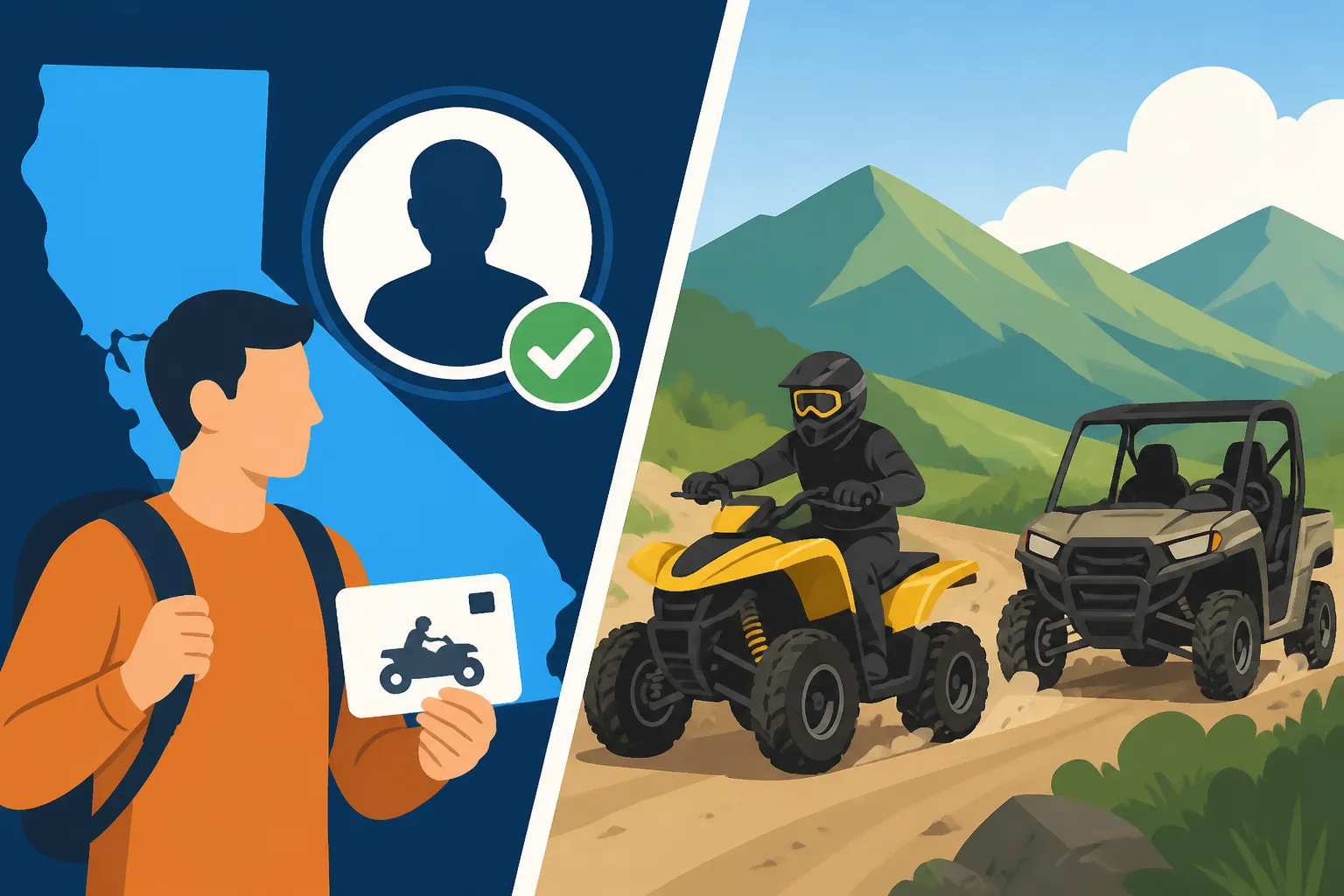
For the vast majority of out-of-state riders, the California Nonresident OHV Use Permit is your essential document for accessing the state's public riding areas. Think of it as your passport to California's vast and diverse off-road playground. This permit specifically addresses the gap between your home state's registration and California's unique requirements, ensuring that you contribute to the program that maintains the lands you want to ride. It’s a small investment for peace of mind and hassle-free enjoyment of your trip.
Who Needs This Permit?
Almost any out-of-state ATV, UTV, dirt bike, sand rail, or other off-highway vehicle intending to operate on California's public lands will require this permit. This applies whether you're planning a single-day excursion or a multi-week adventure. It's not about how long you're staying in the state, but rather where you plan to ride your machine. The permit acts as a temporary California OHV identification, demonstrating compliance with state regulations for visitor vehicles. The only exceptions are specific reciprocity agreements, which we'll delve into shortly. If you're coming from a state like Arizona, Utah, or Idaho, even with a valid registration from there, you will need this California permit to legally ride on public OHV trails and areas in California.
What the Permit Allows
The California Nonresident OHV Use Permit grants you legal, temporary access to California's extensive network of OHV trails, riding parks, and designated open riding areas. It's more than just access; it's a way for visitors to contribute to the ongoing efforts of the OHMVR Division, helping fund the very maintenance and improvements that make California a world-class riding destination. When you display this permit, it signifies to law enforcement and park rangers that you are aware of and compliant with California's unique OHV operating requirements, even as a visitor. It ensures that everyone, resident or nonresident, plays a part in supporting the OHV program, which is dedicated to preserving these riding opportunities for all. For a deeper understanding of what the division does, explore [What the OHMVR Division Actually Does].
Duration and Display
The California Nonresident OHV Use Permit is typically valid for two years, aligning with California's standard OHV registration cycle. This means you can purchase it once and enjoy multiple trips to California's OHV areas within that two-year period, as long as your home state registration remains current. [California OHV Registration Two-Year Cycle] provides more details on this cycle. Once you receive your permit, it's crucial to display it correctly and prominently on your off-highway vehicle. The permit typically needs to be affixed to the left side of the vehicle, usually near the engine or on the fender, where it is clearly visible. This isn't a document to tuck away in your wallet; it needs to be easily identifiable by rangers. It’s also wise to protect your permit from the elements – lamination or a weatherproof holder can prevent it from fading or tearing, especially in dusty or wet conditions. For specific placement instructions, you might find it helpful to look at general guidelines like [Displaying a Permit on the Left Side].
Reciprocity Agreements: Who Gets a Pass?
While the California Nonresident OHV Use Permit is a requirement for most out-of-state riders, there are a couple of very important exceptions. California understands the need for cooperation with its neighbors, especially when those neighbors have robust and comparable OHV programs. These agreements, known as reciprocity, mean that if your machine is properly identified in one of these specific states, you won't need to purchase the California Nonresident OHV Use Permit. This can save riders from these states both time and money, making cross-border adventures much simpler.
The Exceptions: Oregon and Nevada
California maintains reciprocity agreements with just two of its bordering states: Oregon and Nevada. What this means in practice is that if your off-highway vehicle displays a current, valid OHV registration or permit from either Oregon or Nevada, you are generally exempt from needing to purchase California's Nonresident OHV Use Permit. This is a significant advantage for riders from these states, as their home-state identification is recognized as meeting California's basic requirements for operation on public lands. The reason for these specific agreements lies in the fact that Oregon's and Nevada's OHV programs are deemed "substantially similar" to California's in terms of their funding structures, environmental standards, and enforcement mechanisms. So, if you're coming from Bend, Oregon, with your valid permit, you're good to go. Similarly, a valid decal from Las Vegas, Nevada, will be honored. For more on this, check out [An Oregon Permit on California Sand] or [A Nevada Decal at a California SVRA].
Why Other States Don't Qualify
It's a very common misconception that if you have a valid OHV registration from any state, it should be recognized in California. Unfortunately, this is not the case outside of Oregon and Nevada. Riders from popular OHV destinations like Arizona, Utah, or Idaho, despite having their own state's robust OHV programs, will still need to purchase the California Nonresident OHV Use Permit if they plan to ride on California's public lands. This can be a point of frustration for many, as they might have driven a long distance only to learn about this additional requirement. [Why an Arizona Registration Will Not Do in California] explains this particular scenario. The lack of reciprocity with other states often boils down to differences in how their OHV programs are structured, particularly concerning the allocation of funds, specific environmental compliance standards, or the nature of their enforcement efforts. While these differences might seem subtle to an individual rider, they are significant enough in the eyes of California's legal and administrative framework to warrant the separate permit.
Getting Your California Nonresident OHV Use Permit
Acquiring your California Nonresident OHV Use Permit is a relatively straightforward process once you know where to look and what information you need. The key is to get it done before you arrive at your riding destination, so you can hit the trails immediately without any bureaucratic detours. Thankfully, there are several convenient ways to secure your permit, designed to accommodate visitors from near and far. Being prepared with your vehicle's details and a clear understanding of the process will make it a breeze.
Where to Purchase the Permit
While you technically could try to navigate the California DMV system, it's often not the most efficient route for nonresidents, especially when dealing with the intricacies of OHV permits versus standard vehicle registration. [Taking an OHV to a California DMV Field Office] is usually for more complex registration issues. The most convenient option for purchasing a [California's $30 Nonresident Permit] is often online through authorized vendors or directly via the California OHMVR Division's designated permit portal. This allows you to complete the transaction from the comfort of your home, print your permit, and have it ready before your trip even begins. Many authorized OHV dealers and vendors located throughout California, especially those near popular riding areas, also sell these permits over the counter. This can be a last-minute option if you're already in the state, but online purchase is generally recommended to avoid any delays. For anyone needing to create various legal documents, like a bill of sale if you're purchasing a machine, resources like LawDepot can be quite helpful in drafting such paperwork correctly.
Information You'll Need
Before you jump online or head to a vendor, make sure you have all the necessary information at your fingertips. Gathering these details beforehand will significantly streamline the permit application process. You'll typically need your full name, current mailing address, and contact information. For your off-highway vehicle itself, be prepared to provide its make, model, model year, and, most importantly, the Vehicle Identification Number (VIN). You should also have proof of your home state's current OHV registration or title readily available, as this verifies your vehicle's existing legal status. Finally, have your preferred payment method ready. With these details organized, getting your permit should be a quick and painless step in preparing for your California off-road adventure. For a detailed guide on the online purchase process, you can look up [How to Buy a California Nonresident OHV Permit].
Printing and Carrying Your Permit
Once you've successfully purchased your California Nonresident OHV Use Permit, especially if done online, the next critical step is to print it out. A digital copy on your phone, while convenient, is generally not accepted as official proof of identification in the field, particularly because cell service can be non-existent in many remote OHV areas. It's absolutely crucial to have a physical copy of your permit with you at all times while riding. Furthermore, due to the often harsh and dusty conditions of off-road riding, it's highly recommended to protect your printed permit. Laminating it, sealing it in a sturdy zip-top bag, or placing it in a dedicated weatherproof holder on your machine will prevent it from becoming unreadable or damaged. The permit needs to be displayed prominently on the left side of your vehicle, ensuring it's clearly visible to rangers. This adherence to display rules is just as important as having the permit itself. [Carrying Registration Paper on the Sand] offers general advice on keeping your documents safe while riding.
Common Misconceptions and Avoiding Fines
Even with the right permit in hand, there are still a few common pitfalls that can trip up nonresident riders in California. Misunderstandings about street-legal conversions, private land access, and document accessibility are frequent sources of frustration and, potentially, fines. By debunking these myths and adopting best practices for carrying your paperwork, you can ensure your California OHV experience remains nothing but fun. It's all about knowing the nuances of the law and being prepared for various scenarios.
"My Street-Legal Plate is Enough"
This is perhaps one of the biggest misconceptions, especially prevalent among owners of UTVs who have gone through the trouble of making their machines street-legal in their home states, such as Arizona or Utah. While having a street-legal license plate from your state is great for driving on paved roads in your home state and potentially on very limited "combined-use" roads in California, it does not substitute for a California OHV identification (whether it's a resident Green Sticker or the Nonresident OHV Use Permit) when you are on designated off-highway trails or within an SVRA. [An Arizona Street-Legal UTV in California] highlights this specific issue. California's OHV program is distinct from its street-legal vehicle registration. So, while your plated UTV might briefly traverse a short segment of a [California's Combined-Use Highways] to connect trails, it still requires the proper OHV permit for the actual off-road sections. Don't assume your street plate covers your off-road adventures here.
"I'm Only Riding on Private Land"
Another common misconception revolves around riding exclusively on private property. While California's OHV identification program primarily focuses on public lands, it doesn't always completely exempt you if you're on private land. The state OHV permit is typically not required if you're solely riding on private property that you own or have permission to use. However, the nuance comes in how you get to that private land. If you're transporting your OHV on public roads to reach the private property, your machine must either be trailered or, if driven, it needs to be street-legal with appropriate registration and insurance (which often means it still needs the OHV permit for any off-road segment). Moreover, private land riding can still be subject to local noise ordinances or other specific regulations, so it's always wise to check. For those involved in private land transactions or agreements, creating legally sound documents is crucial; resources like LawDepot can be incredibly useful for drafting private land use agreements or bills of sale to protect all parties.
Ensuring Your Documents are Accessible
Having the correct permit is only half the battle; ensuring it's accessible and in good condition is equally important. Rangers and law enforcement routinely conduct checks at entry points to popular OHV areas and during patrols on trails. They'll often ask to see your California Nonresident OHV Use Permit, your home state registration, and potentially a safety certificate if applicable. Keeping these documents in a waterproof, secure location on your machine or on your person is critical. Faded, torn, or mud-splattered permits are hard to read and can lead to unnecessary delays or scrutiny. A clear, legible document makes the interaction with officials smooth and quick, allowing you to get back to enjoying your ride. Being prepared, cooperative, and knowledgeable about the regulations ensures that your California off-road experience is positive and hassle-free.
| Scenario | Home State OHV ID | California Nonresident OHV Use Permit Required? | Reciprocity? |
|---|---|---|---|
| Rider from Arizona on California Public Land | Yes | Yes | No |
| Rider from Oregon on California Public Land | Yes | No | Yes |
| Rider from Nevada on California Public Land | Yes | No | Yes |
| Rider from Idaho on California Public Land | Yes | Yes | No |
| Rider from Utah on California Public Land | Yes | Yes | No |
| Out-of-state machine with a street-legal plate on CA OHV Land | Yes (if applicable) | Yes | N/A |
Disclaimer
This article is for general informational purposes only and does not constitute professional advice. Laws, prices and regulations vary by location and change over time. Consult a qualified professional for guidance on your specific situation.